The short version
Twice-baked Italian biscuits, dry and hard enough that they're meant to be dipped — traditionally in vin santo, on a board in mascarpone or a sweet wine. They're the one thing in the dessert corner substantial enough to feel like a course rather than a nibble.
What it is
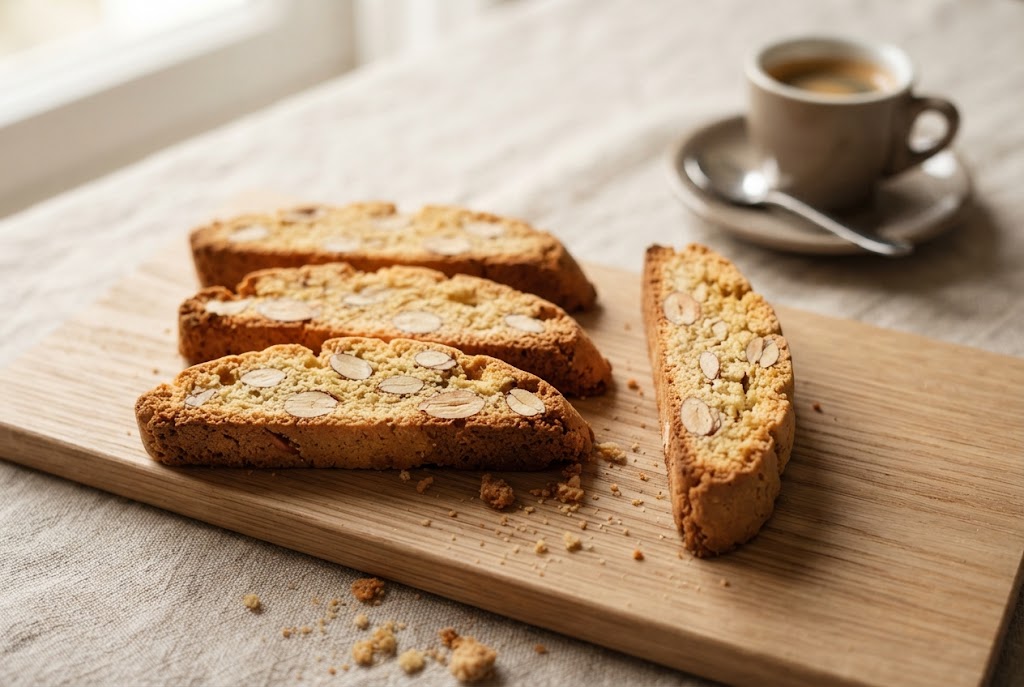
A stiff dough baked in a log, sliced, then baked again to dry out. Tuscan cantucci are the almond original; modern versions come with pistachio, chocolate, cranberry, anise or chocolate-dipped ends. The double bake is what makes them hard and shelf-stable for weeks.
- Taste
- sweet, nutty, faintly of almond extract or anise
- Texture
- very hard and dry, softening when dipped
- Look
- long angled slices with visible whole nuts
The mechanism is porosity. Two bakes drive out nearly all the moisture, leaving a biscuit that's structurally a sponge — it absorbs whatever it's dipped in without falling apart. That makes it the only sweet base on a board that can carry a wet topping the way a cracker carries cheese.
What it pairs with — and why
| Pair it with | Why it works |
|---|---|
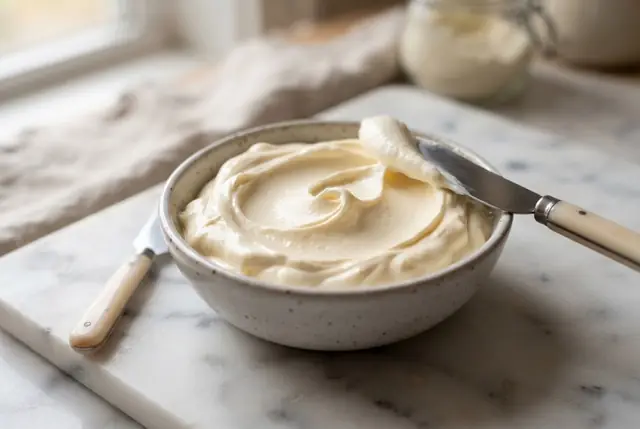
| Mascarpone | Dip the biscotti in it. Hard and dry against soft and rich — the reason both are on the board. |
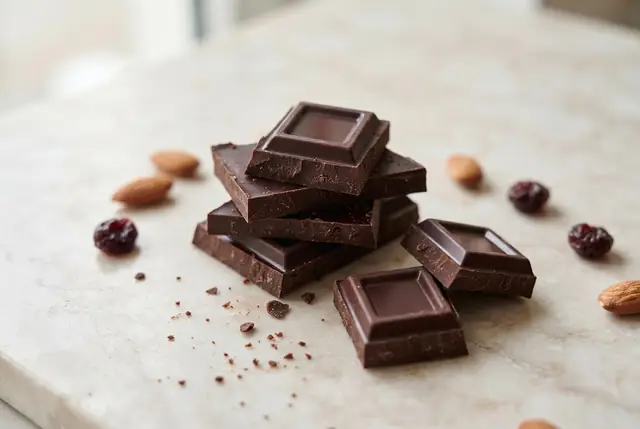
| Dark chocolate | Same corner, and chocolate-dipped biscotti is a product for a reason. |
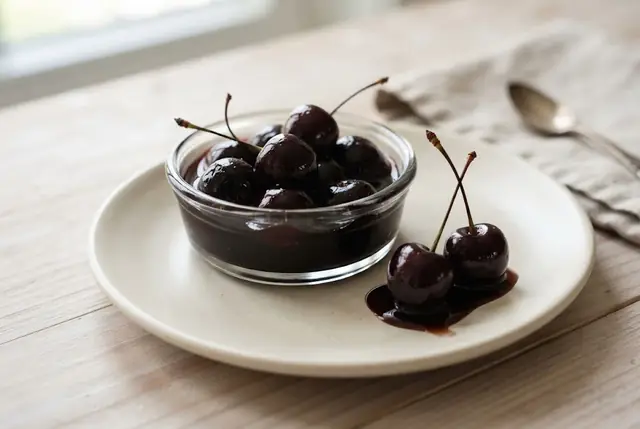
| Brandied cherries | Spoon the syrup over a biscotti. Boozy, sweet, and it softens the biscuit exactly right. |
| Fresh ricotta with honey | Scoop it. The biscotti is the vehicle. |
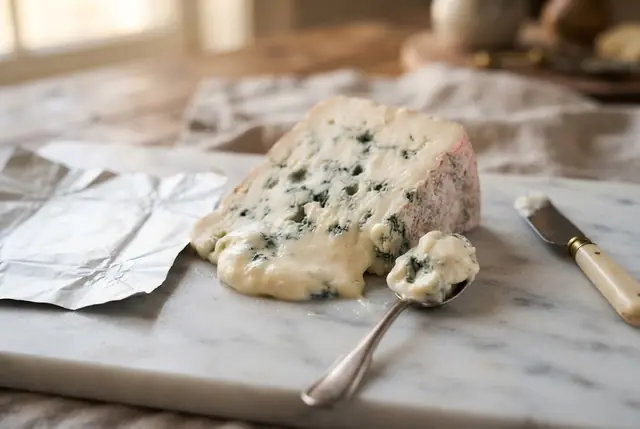
| Gorgonzola | Unexpected and good — sweet nutty biscuit against salt and funk, the same logic as honey. |
| Vin santo, dessert wine, espresso | The traditional service, and the point of the texture. |
Skip it with: savoury cheese and cured meat. Biscotti are sweet and belong at the end.
How to prep it for the board
- Stand them in a jar or glass, or fan them at the edge of the board. They're long and awkward laid flat.
- Break long ones in half so they're a manageable size.
- Put something to dip into next to them — mascarpone, ricotta, or a small glass of dessert wine.
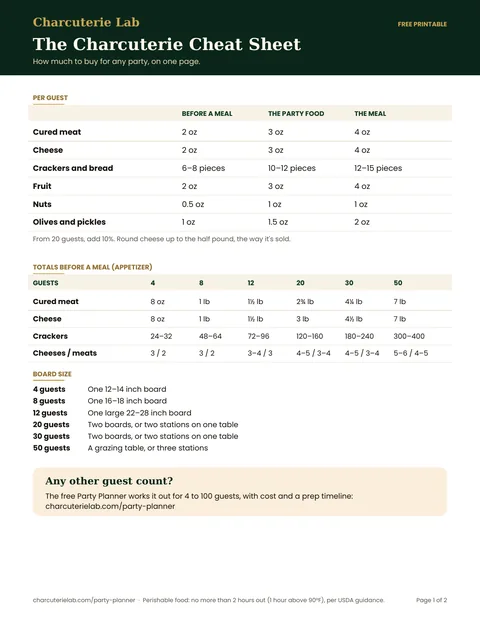
- Serve 0.75 oz per person — one biscotti each.
- Buy or make them small. Restaurant-sized biscotti are too much.
- Keep them sealed. They soften in humidity, which defeats the purpose.
- Fix: too hard to bite? That's correct. Provide something to dip in.
What to buy
| Product | Where | Notes |
|---|---|---|
| Cantucci di Prato | Italian delis, Eataly | The Tuscan original — almond, hard, not too sweet. The best board version. |
| Nonni's biscotti | Any grocery | The widely available brand. Softer and sweeter than traditional. |
| Pistachio biscotti | Italian delis, specialty | Green flecks, excellent with mascarpone. |
| Chocolate-dipped biscotti | Grocery, specialty | Already in the dessert corner. Good with coffee. |
| Homemade | Make it | Straightforward and cheap — flour, sugar, eggs, almonds, baked twice. |
Label check: traditional cantucci contain no butter or oil, which is why they're so hard. Softer supermarket versions add fat.
Skip: anything individually wrapped — the packaging on a board looks wrong.
Quick FAQ
Why is biscotti so hard?
It's baked twice to drive out moisture. The hardness is deliberate — it's designed to be dipped.
What do you dip biscotti in?
Traditionally vin santo. On a board, mascarpone, fresh ricotta, coffee, or the syrup from brandied cherries.
What's the difference between biscotti and cantucci?
Cantucci are the traditional Tuscan almond version, made without butter. Biscotti is the broader term, and modern versions are often softer.
Do they go with cheese?
With sweet cheeses like mascarpone and ricotta, yes — and surprisingly well with gorgonzola.
How long do they keep?
Weeks in a sealed container. They're designed to be shelf-stable.