The short version
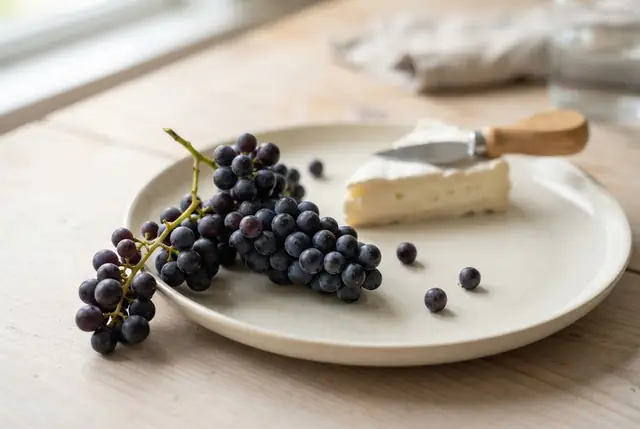
The fruit on more charcuterie boards than any other, and the one most often served badly. Loose grapes roll everywhere and look like a garnish; small clusters snipped with scissors look deliberate and give people something to pick up.
What it is
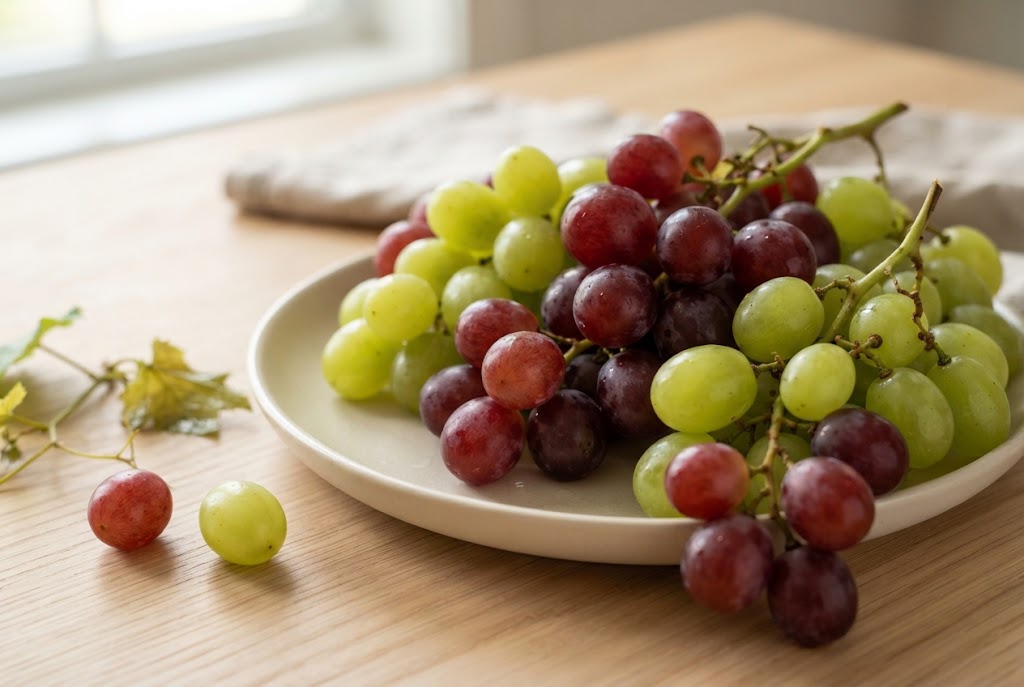
Table grapes are bred for eating rather than wine — thicker skins, lower acid, and usually seedless. The board-relevant ones are red globe and crimson (sweet, firm), green Thompson (crisp, tart), black Concord-type (musky, slip-skin), and the tiny champagne grapes that come in dense little clusters.
- Taste
- sweet, mildly acidic, faintly floral
- Texture
- firm, snapping skin over juicy flesh
- Look
- clusters on woody green-brown stems
Water is the mechanism, and it's why grapes appear on every board. Cured meat and aged cheese are salt and fat with almost no moisture. A grape is 80% water with a little acid — it resets the palate physically as well as by flavour, which is why one between bites makes the next bite of cheese taste new.
What it pairs with — and why
| Pair it with | Why it works |
|---|---|
| Brie and soft cheeses | Cool wet fruit against warm soft fat. The most common bite on any board, and it earns it. |
| Manchego and aged sheep cheese | Sweet juice cutting nutty salt. |
| Aged cheddar | Acid and sugar against sharp acid. |
| Prosciutto and cured ham | Salt and fat, water and sugar. The same logic as melon. |
| Walnuts and almonds | Crunch and tannin against soft juice. |
| Blue cheese | Sweetness blunting salt and funk. |
| Almost anything | Grapes are the least fussy thing on a board. That's the point of them. |
Skip it with: nothing, really. The only failure is presentation — loose grapes scattered across a board look like an afterthought.
How to prep it for the board
- Snip into small clusters with scissors — three to six grapes each. This is the whole page. Clusters look intentional and give people a handle.
- Leave the stems on. A woody stem is what makes it read as fruit rather than as candy.
- Rinse and dry thoroughly. Wet grapes bead water onto the board and soften whatever they touch.
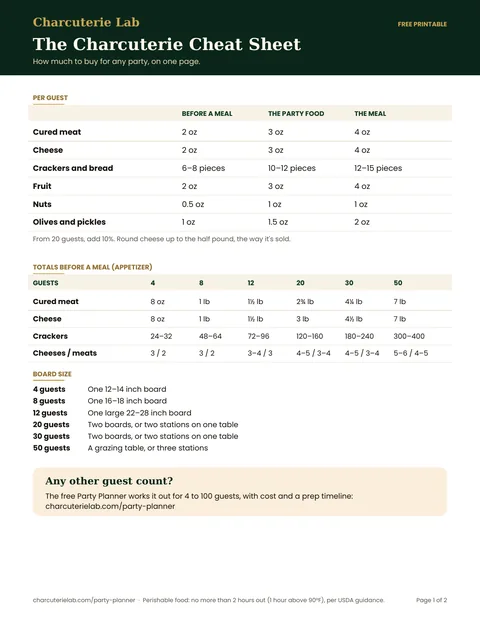
- Serve 2–3 oz per person.
- Use them to fill gaps. Small clusters tucked into empty spaces are the standard way boards get their "abundant" look.
- Serve cold. Unlike cheese, grapes are better straight from the fridge.
- Fix: shrivelled at the stem end? Those go first. Pull them off before the cluster goes out.
What to buy
| Product | Where | Notes |
|---|---|---|
| Red or black seedless | Any grocery | The default. Sweeter and better-looking than green on a board. |
| Champagne grapes | Whole Foods, farmers markets, seasonal | Tiny, dense, spectacular clusters. The best-looking grape you can buy. |
| Cotton candy grapes | Grocery, seasonal | Genuinely taste of spun sugar. A talking point. |
| Concord grapes | Farmers markets, autumn | Slip-skin and musky. Strong flavour — better beside blue cheese than brie. |
| Green Thompson seedless | Any grocery | Tarter and crisper. Good with rich cheeses. |
| Grapes on the vine, boxed | Costco, Whole Foods | Sold as intact clusters. Saves you the scissors. |
Label check: look at the stems, not the fruit. Green pliable stems mean fresh; brown brittle stems mean the bunch has been sitting. A grape that falls off when you lift the cluster is past it.
Skip: pre-loose grapes in a tub. No stems, no clusters, and they're already softening.
Quick FAQ
How do I stop grapes rolling everywhere?
Snip the bunch into small clusters with kitchen scissors. Never put loose grapes on a board.
Red or green?
Red and black look better and taste sweeter on a board. Green are tarter and work well with very rich cheeses.
How much per person?
2–3 oz — roughly one small cluster each.
Should they be cold?
Yes. Unlike cheese, fruit is better straight from the fridge.
What are champagne grapes?
Tiny seedless grapes in dense clusters, also called Zante currants. The most striking grape you can put on a board.