The short version
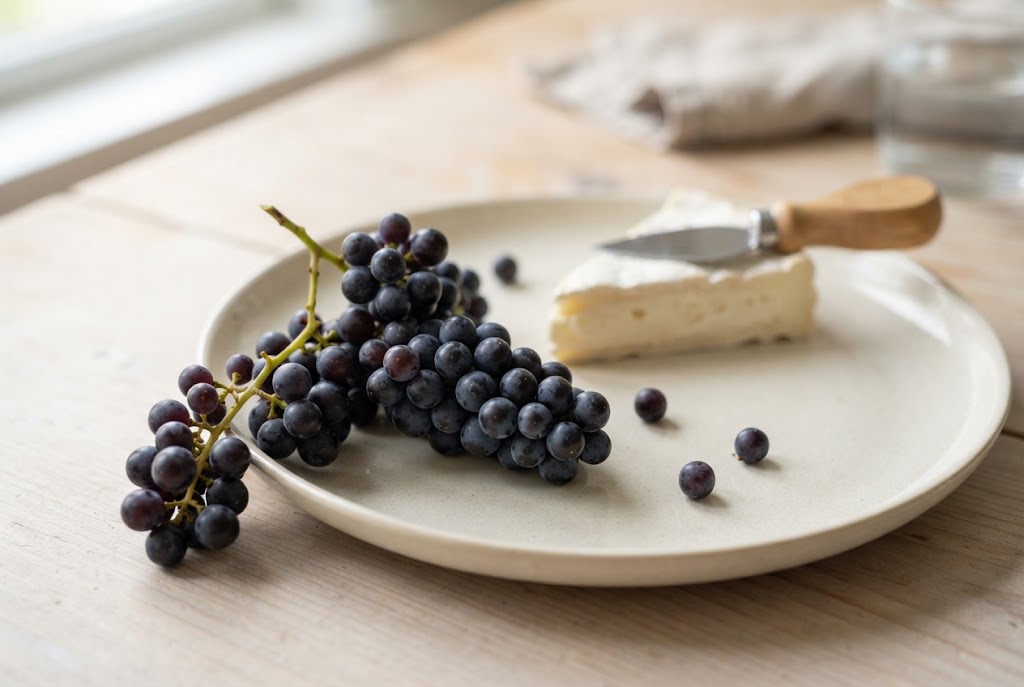
Tiny seedless grapes, each about the size of a peppercorn, growing in dense little bunches. They are the same fruit that becomes a dried currant. On a board they do something no other fruit does: a single small bunch draped over the edge of a cheese makes the whole arrangement look composed, and it takes four seconds. The season is short, so buy them when you see them.
What it is
Zante currants, a very small seedless grape variety. Sold in loose small bunches in late summer. The name has nothing to do with champagne — it comes from the fruit's resemblance to the bubbles.
- Taste
- concentrated sweet grape with a firm acid edge
- Texture
- a lot of skin for the amount of flesh, so they pop rather than squash
- Look
- deep purple-black miniature bunches on fine stems
The mechanism is surface-to-volume ratio. Grape acidity and tannin live mostly in the skin, and a tiny grape has far more skin per mouthful than a large one. That is why champagne grapes taste sharper and more grape-like than table grapes, and why a handful cuts through fat more effectively than the same weight of ordinary ones.
What it pairs with — and why
| Pair it with | Why it works |
|---|---|
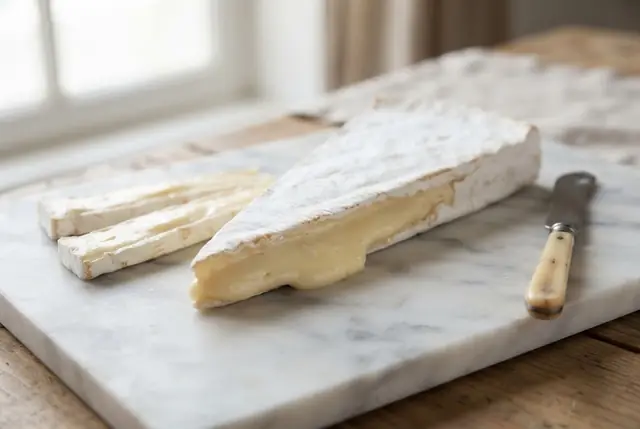
| Brie | The classic grape-and-bloomy-cheese pairing, in a form that looks like it took effort. |
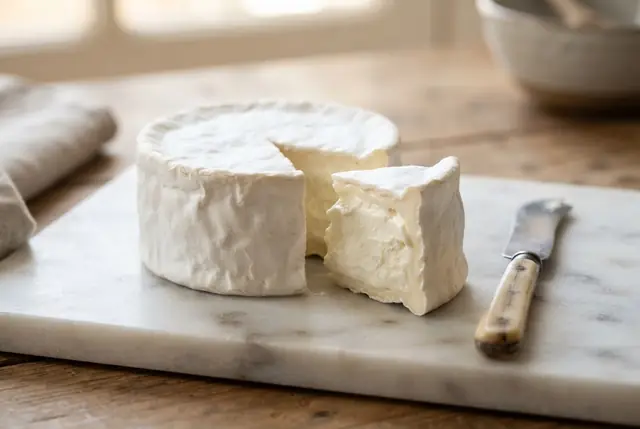
| Triple-crème | Very rich cheese needs acid and water. Small sharp grapes are more effective than large sweet ones. |
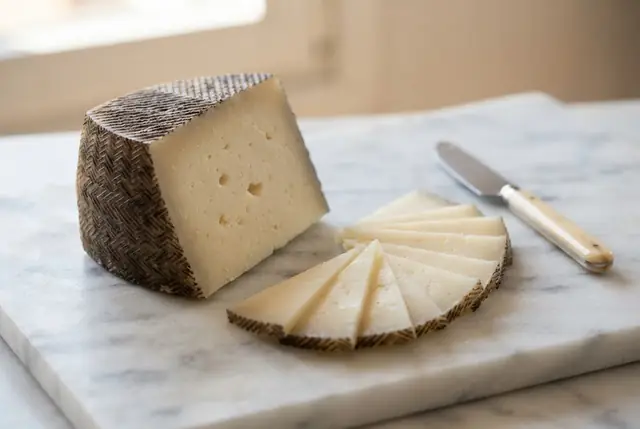
| Manchego | Sheep salt and nuttiness with sweet fruit. A Spanish pairing that works with any small grape. |
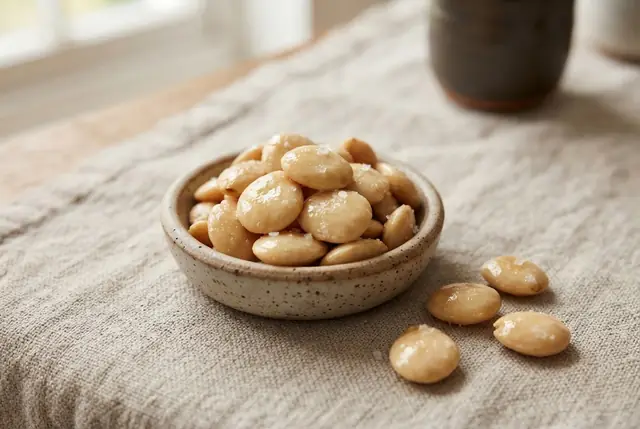
| Marcona almonds | Fat, salt and sweet fruit. Scatter both across the same corner. |
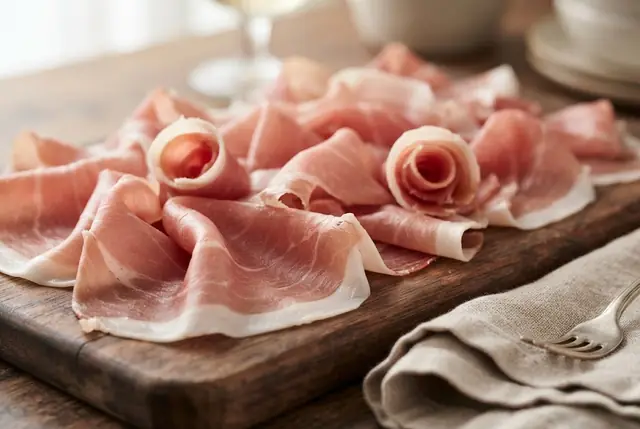
| Prosciutto | Salt and fat cut by acid. Tuck a small bunch under a ruffle of ham. |
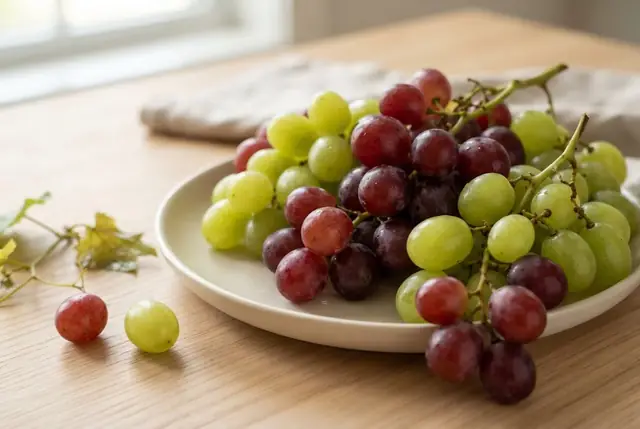
| Ordinary grapes | Two sizes of the same fruit reads as deliberate, and it gives the fruit corner scale. |
Skip it with: nothing in particular. Grapes are the least confrontational thing on any board.
How to prep it for the board
- Rinse and dry thoroughly. Wet bunches make everything around them soggy.
- Cut into small bunches with scissors, keeping the stems intact.
- Never pick them loose. Loose champagne grapes look like spilled beads.
- Drape a bunch over the edge of a cheese or across a gap — this is what they are for.
- Serve 1.5 oz per person, about one small bunch each.
- Add them last so the stems stay tidy.
- Fix: shrivelled or dropping off the stem? They are past it. A fresh bunch is firm and the grapes stay attached when you lift it.
What to buy
| Product | Where | Notes |
|---|---|---|
| Champagne grapes | Farmers markets, upscale grocers, late summer | The real thing. Short season, buy on sight. |
| Small black seedless grapes | Any grocery | The year-round substitute. Not as small, still good. |
| Muscat grapes | Specialty, autumn | Larger but intensely floral. A genuine upgrade in flavour. |
| Concord grapes | Farmers markets, autumn | Slip-skin and very aromatic. Seedy but memorable. |
| Dried Zante currants | Any grocery, baking aisle | The same fruit dried. Useful when the fresh ones are gone. |
Label check: buy by eye. The stems should be green and flexible, not brown and brittle.
Skip: bunches with fruit already loose in the bottom of the punnet.
Quick FAQ
What are champagne grapes?
Zante currants — tiny seedless grapes about the size of a peppercorn, sold in dense small bunches. They have nothing to do with champagne.
When are they in season?
A short window in mid to late summer, roughly July to September. They are hard to find outside it.
Do they taste different from ordinary grapes?
More concentrated and slightly more acidic, because the skin-to-flesh ratio is much higher.
How do you serve them?
In whole small bunches, never picked loose. The bunch is the entire visual point.
How much per person?
About an ounce and a half, or one small bunch each.