The short version
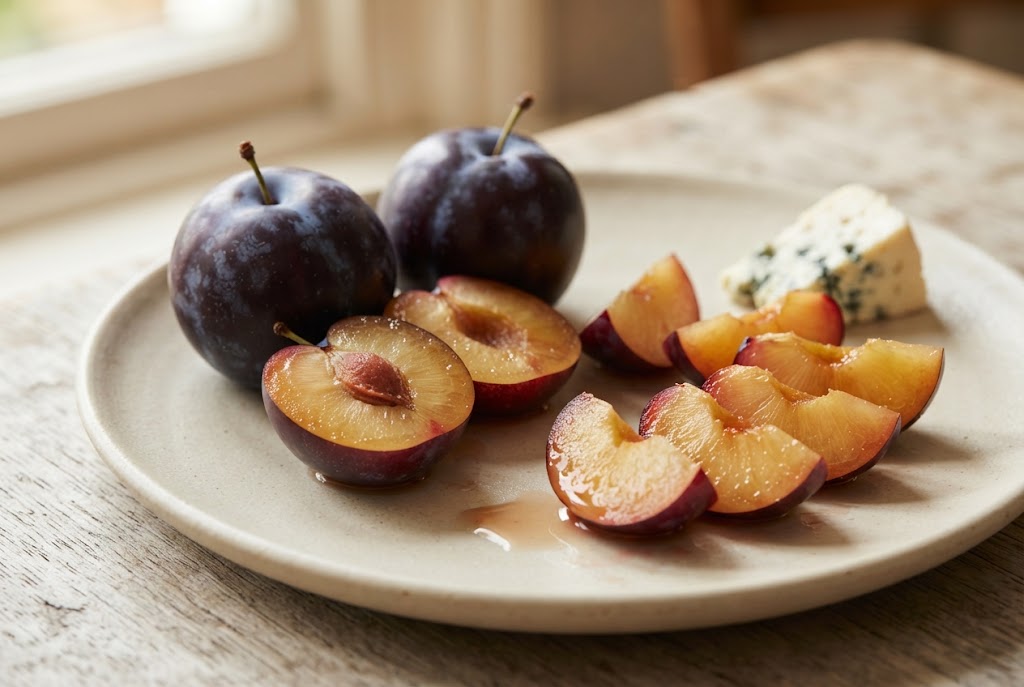
Plums do a job no other board fruit does: deep purple-red against pale cheese is the highest-contrast thing you can lay down. Buy Italian prune plums — small, oval, freestone — because round dessert plums are clingstone and shred when you slice them.
What it is
A stone fruit with a tart skin and a sweeter interior — the flavour gradient is the point. Prune plums (also sold as damsons, Empress, or Italian plums) are firm, dense, and freestone. Round plums like Santa Rosa or black plums are juicier, sweeter, and messier.
- Taste
- tart skin over sweet flesh, faintly wine-like
- Texture
- firm and dense; juicy in the round varieties
- Look
- deep purple to near-black wedges with gold-red interiors
The mechanism is skin tannin. Plum skin carries enough astringency to act like a tiny mouthful of red wine, which is why plums sit better next to blue cheese and aged gouda than a low-acid fruit like persimmon does. The tannin scrubs fat that sugar alone can't reach.
What it pairs with — and why
| Pair it with | Why it works |
|---|---|
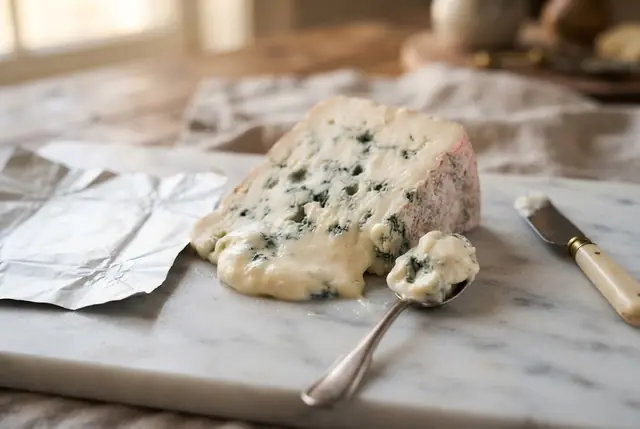
| Blue cheese | Tannic skin and tart flesh against salt and funk — the same reason port works with stilton. |
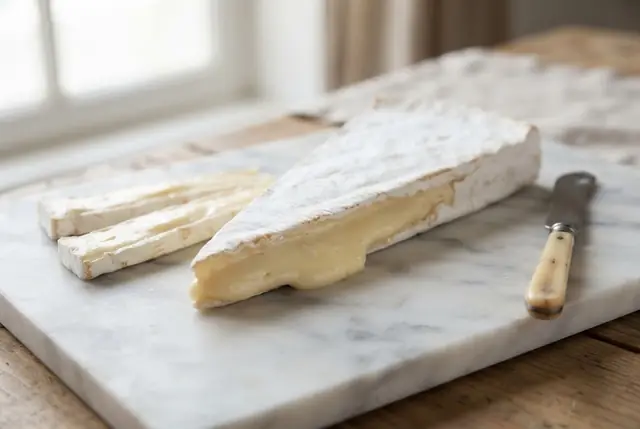
| Brie | Acid cutting soft fat, with a colour contrast nothing else matches. |
| Aged gouda | Caramel and butterscotch notes in the cheese against wine-like fruit. |
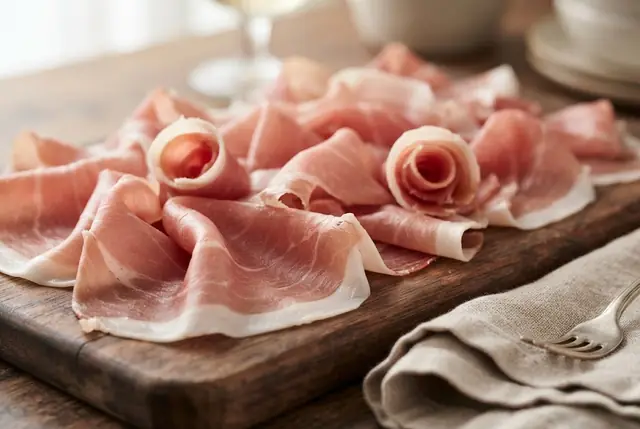
| Prosciutto | Sharper than melon, so it works on a board that's already rich. |
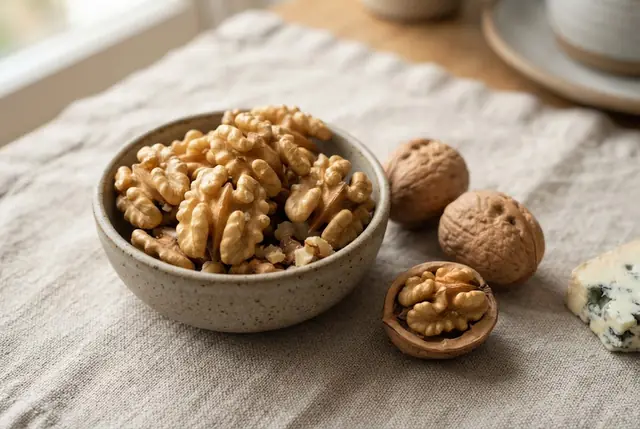
| Walnuts | Two tannins reinforcing each other; both are astringent in the same direction. |
| Fresh goat cheese | Tart on tart, with the plum's sugar arriving a half-second later. |
Skip it with: delicate fresh cheeses like burrata and mozzarella. Plum skin overwhelms them.
How to prep it for the board
- Buy Italian prune plums for slicing. Small, oval, dusty purple. They're freestone and hold a wedge.
- Halve along the seam and twist — with prune plums the pit lifts out. With round plums, cut wedges off the pit instead.
- Leave the skin on. The skin is the colour and half the flavour.
- Cut into sixths or eighths — thick wedges, cut-side up.
- Skip the lemon. Plums brown very slowly; you don't need it.
- Buy slightly firm. A soft plum bleeds onto the board.
- Fix: bland plums? Halve and roast at 400°F for ten minutes with a spoon of honey. They become an entirely different, better ingredient.
What to buy
| Product | Where | Notes |
|---|---|---|
| Italian prune plums | Grocery, farmers markets, Aug–Sep | The board plum. Freestone, firm, clean wedges. |
| Black plums | Grocery, summer | Juicier and sweeter. Cut wedges off the pit. |
| Pluots | Grocery, summer | Plum-apricot cross. Sweeter, firmer, excellent colour. |
| Damsons | UK, farmers markets, autumn | Very tart and small. Better cooked into a paste than served raw. |
| Greengages | Farmers markets, late summer | Green, honeyed, expensive. A different pairing entirely — good with sheep cheese. |
Label check: a whitish dusty bloom on the skin is a good sign — it means the fruit hasn't been over-handled. Wipe it off before serving.
Skip: rock-hard plums with green shoulders and anything already leaking at the stem.
Quick FAQ
Which plums are best for a charcuterie board?
Italian prune plums. They're freestone, firm, and cut into clean wedges that hold their shape.
Do I peel plums?
No. The skin carries the colour and most of the flavour.
Do plums brown on the board?
Barely. They hold much better than apples or peaches.
When are plums in season?
July through September, with prune plums arriving late August.
What if my plums are bland?
Roast the halves at 400°F for ten minutes with honey. Roasted plums are better than mediocre fresh ones.