The short version
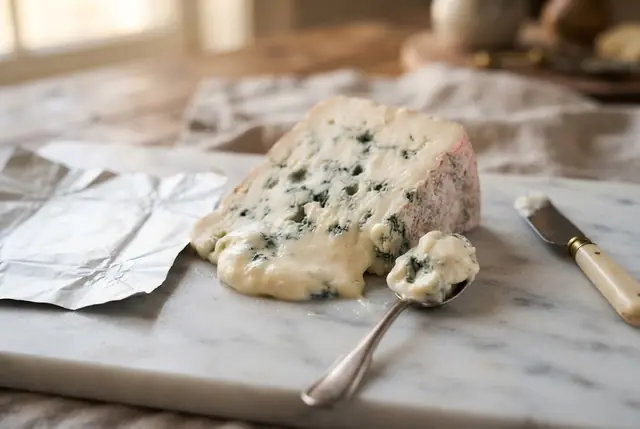
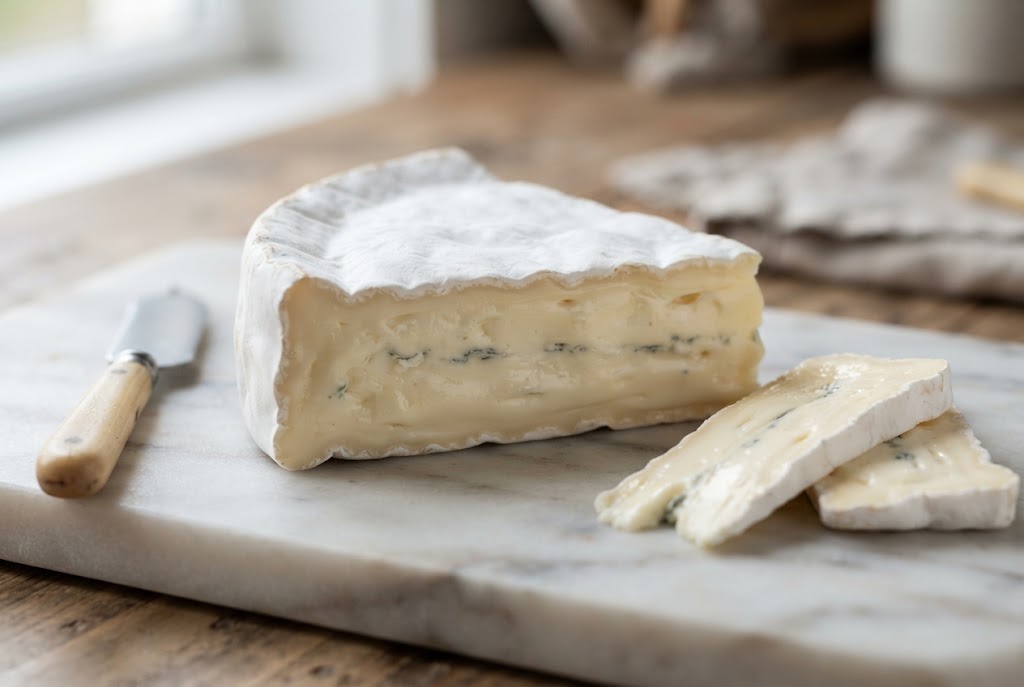
A German cheese that crosses a triple-crème brie with a mild blue: white bloomy rind, rich buttery paste, and a light blue veining through the middle. It's the easiest blue anyone will ever eat, and it's the right cheese for a guest who says they don't like blue.
What it is
Cambozola was created by the Champignon dairy in Bavaria in the 1970s — the name is a portmanteau of Camembert and Gorgonzola, and it's a registered trademark rather than a traditional cheese. Cream is added to the milk, the cheese gets a bloomy white rind like a brie, and Penicillium roqueforti is introduced lightly for the blue.
- Taste
- buttery, rich, mildly tangy, gentle blue note at the finish
- Texture
- soft, dense, spreadable, like a firm triple-crème
- Look
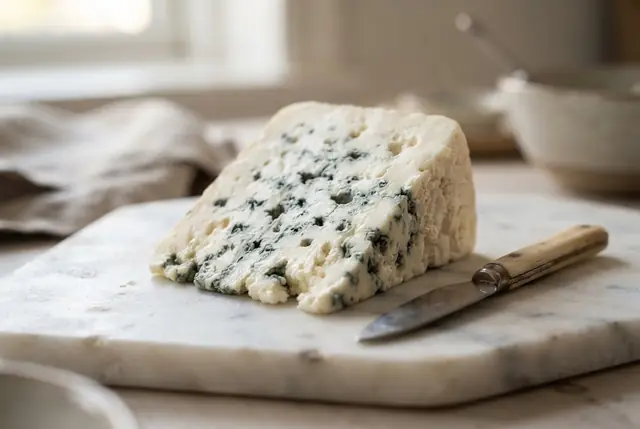
- ivory paste with faint blue-grey veining, white bloomy rind
Cream dilution is the mechanism. Added cream raises the fat content well above a normal blue, and fat coats the palate — which physically blunts the sharp compounds the mold produces. The blue is still there; it just arrives softened and at the end of the bite rather than the start.
What it pairs with — and why
| Pair it with | Why it works |
|---|---|
| Water crackers | Lean and dry against a very rich cheese. A butter cracker here is fat on fat. |
| Fig jam and honey | Sweetness with a gentle blue. Easy and always works. |
| Pear and grapes | Cool acidic fruit cutting a high-fat paste. |
| Walnuts | Tannin against richness. |
| Baguette | Plain bread under a soft spreadable cheese. |
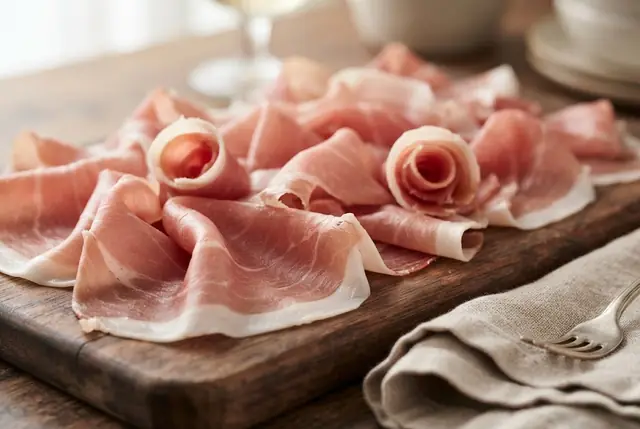
| Prosciutto | Salt against cream — the blue is mild enough not to fight it. |
| Sparkling wine, off-dry Riesling, port | Acid or sweetness against fat and salt. |
Skip it with: Roquefort or Cabrales on the same board — Cambozola tastes like nothing after either. And skip it if you want an actual blue cheese experience; this is deliberately gentle.
How to prep it for the board
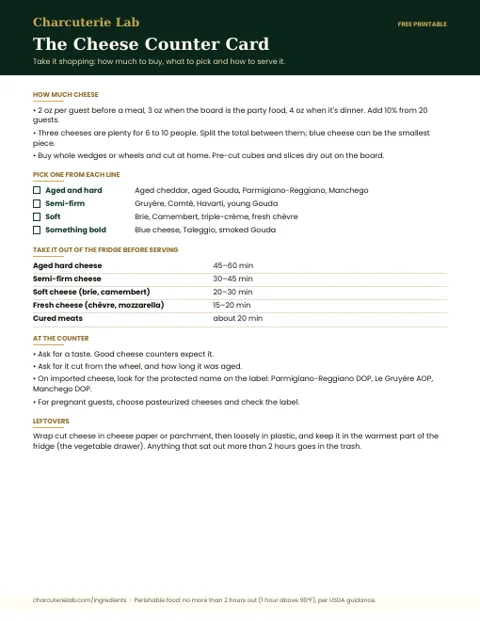
- Temper 45 minutes. It should be soft and spreadable, like a good brie.
- Cut wedges from the center out, keeping rind on each piece.
- Serve 1–1.5 oz per person. People eat more of this than of a real blue.
- Use it as the bridge cheese on a board that also has a serious blue — guests can work up to it.
- Give it a spreading knife, not a hard blade. It spreads more than it slices.
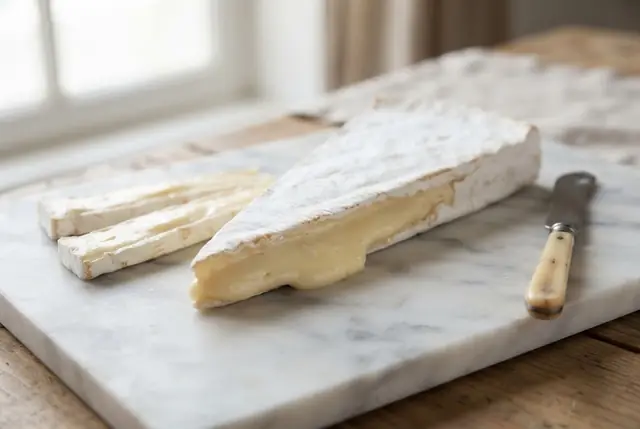
- The bloomy rind is edible, like brie's.
- Fix: if it's still firm, it needs more time out. Cambozola is much better at full room temperature.
What to buy
| Product | Where | Notes |
|---|---|---|
| Cambozola Classic | Most grocery cheese cases | The standard. Widely available and consistent. |
| Cambozola Black Label | Whole Foods, cheese counters | Aged longer, stronger blue, more character. The better board version. |
| Saint Agur | Grocery cheese case, Whole Foods | French creamy blue. Similar gentleness, a little more blue. |
| Gorgonzola dolce | Cheese counters, grocery | The Italian gentle blue — see its own page. |
| Bleu de Bresse | Cheese counters | Another soft French blue in the same register. |
| Trader Joe's Blue Brie | Trader Joe's | A Cambozola-style cheese at a lower price. |
Label check: "Black Label" if you want more blue character. The Classic is noticeably milder.
Skip: buying it if the crowd already likes blue cheese. They'll find it tame, and there are better cheeses at the price.
Quick FAQ
Is Cambozola a real cheese or a brand?
Both — it's a genuine German cheese, invented in the 1970s, but the name is a trademark rather than a traditional designation.
Is it actually blue cheese?
Yes, with Penicillium roqueforti veining. It's just very mild, because the added cream blunts the sharpness.
Can you eat the rind?
Yes, it's a bloomy rind like brie's.
What if my guests don't like blue cheese?
This is the cheese for them. Serve it with honey and don't mention the word blue until after they've tried it.
How much per person?
1–1.5 oz. It's rich but people take more of it than of a sharper blue.