The short version
Danablu — a Danish cow's-milk blue created in the 1920s as an affordable answer to Roquefort. Salty, sharp and direct, with none of Roquefort's complexity and about a quarter of the price. It's the workhorse blue, and that's a legitimate role.
What it is
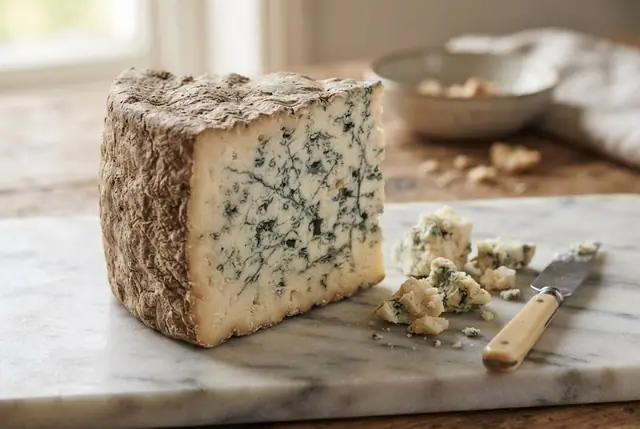
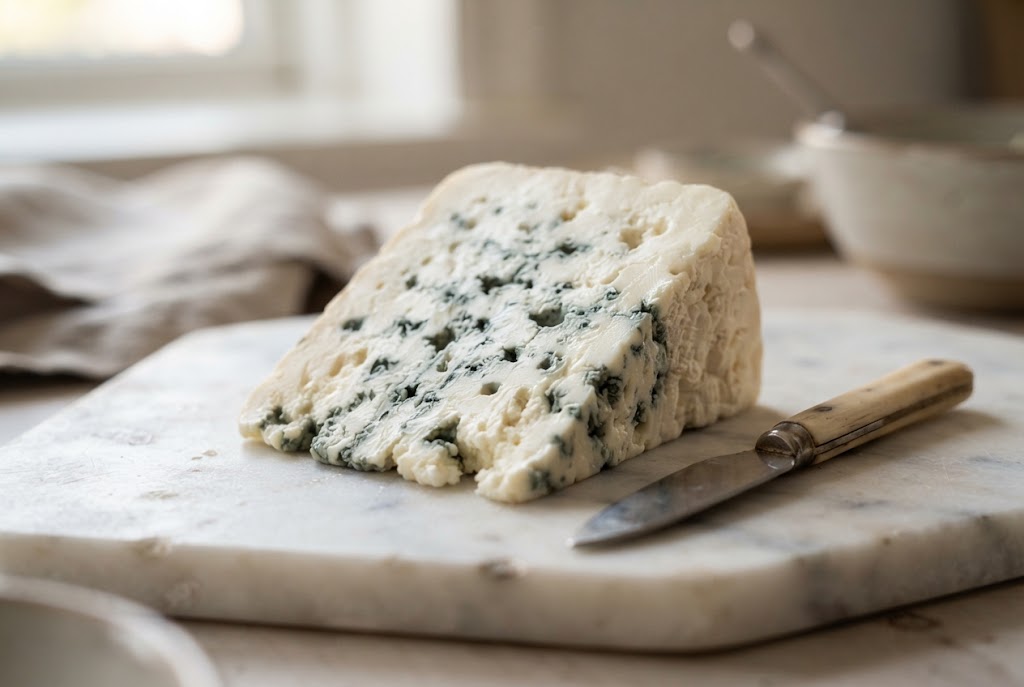
Danish Blue is made from homogenized cow's milk, which is unusual and matters — homogenization breaks up fat globules, making the paste whiter and the texture softer and more uniform. It's aged eight to twelve weeks and heavily veined.
- Taste
- salty, sharp, tangy, straightforward, short finish
- Texture
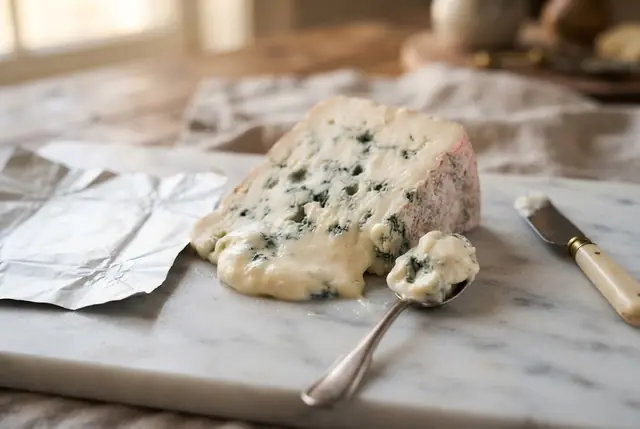
- soft, moist, crumbly, spreadable when warm
- Look
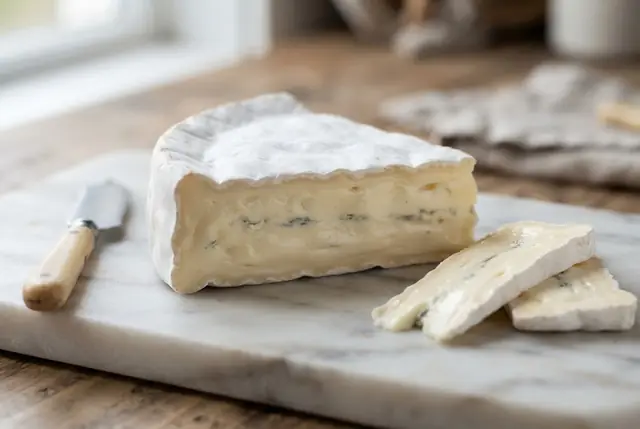
- very white paste with dense blue-green veining
Homogenization is the mechanism, and it explains both the strengths and the limits. Breaking up the fat exposes more surface to lipase enzymes, so flavor develops fast — which is how a two-month cheese tastes this sharp. It also means the flavor is one-dimensional: intensity without the layers a raw-milk blue develops over time.
What it pairs with — and why
| Pair it with | Why it works |
|---|---|
| Honey | Sweet against salt. Non-negotiable with a blue this direct. |
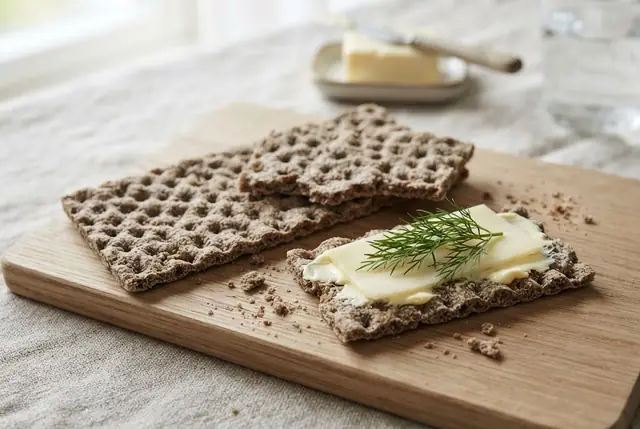
| Rye crispbread | Sour, earthy rye against sharp salt. Danish cheese, Danish bread. |
| Pear and apple | Cool, sweet, acidic relief. |
| Walnuts | Tannin meets blue-mold bitterness, and the crunch breaks up a soft paste. |
| Fig jam | Dense sweetness with enough body to hold. |
| Celery and endive | Bitter crunch against a soft salty paste. |
| Port, sweet sherry, dark beer | Sugar or malt against salt. |
Skip it with: delicate fresh cheeses, smoked cheeses, and other blues. Danish Blue next to Stilton or Roquefort reads as the cheap one, which it is — but on its own board it does the job perfectly well.
How to prep it for the board
- Temper 45 minutes. Cold, it's mostly salt; warm, it softens toward spreadable and improves considerably.
- Crumble it rather than slicing. It's soft and moist and it doesn't hold a clean cut.
- Serve three-quarters to an ounce per person.
- Give it its own knife.
- Put honey beside it. This cheese is sharp without much complexity, and sweetness is what makes it interesting.
- Use it for cooking as well — it melts into dressings and sauces better than firmer blues, which makes a wedge go further.
- Fix: browning at the cut face is oxidation. Trim thinly.
What to buy
| Product | Where | Notes |
|---|---|---|
| Danablu (Danish Blue) PGI | Most grocery cheese cases | The protected Danish version. Cheap and reliable. |
| Castello Danish Blue | Grocery cheese case | The most widely distributed brand. |
| Castello Creamy Blue | Grocery cheese case | Softer and milder. A good entry point for nervous guests. |
| Saint Agur | Grocery cheese case, Whole Foods | French, creamy, mild and widely liked. A better board blue at a small premium. |
| Gorgonzola dolce | Cheese counters, grocery | The gentler Italian option — see its own page. |
| Stilton | Whole Foods | The step up in complexity — see its own page. |
Label check: "Danablu" or a PGI mark for the genuine Danish product. Much of what's sold as generic "blue cheese" in the US is domestic and often sharper.
Skip: pre-crumbled blue cheese in a tub for board use. It's dried and often anti-caked, and it looks like salad topping.
Quick FAQ
Is Danish Blue a good cheese board blue?
Yes, as the budget option. It's sharp and direct rather than complex, and it needs honey beside it — but it does the job.
Why is it so white?
The milk is homogenized, which breaks up the fat and lightens the paste. It also speeds up flavor development.
Danish Blue or Gorgonzola?
Gorgonzola dolce is gentler and creamier. Danish Blue is sharper and cheaper. For a nervous crowd, Gorgonzola.
What's Saint Agur?
A French creamy blue, mild and widely liked. A good step up from Danish Blue for a small premium.
How much per person?
Under an ounce.