Quick Answer: In the US, cheese made with pasteurized milk is generally considered safe during pregnancy, including cheddar, Parmesan, Swiss, Gouda, mozzarella, feta, goat cheese, cream cheese and string cheese. Avoid cheese made with raw (unpasteurized) milk and queso fresco-type cheeses unless they're heated until steaming hot. UK advice is stricter on soft white-rind and soft blue cheeses like brie and gorgonzola, which it says to eat only cooked. Check labels for "pasteurized," and ask your doctor or midwife if you're unsure.
This is general food-safety information from US and UK health agencies, not medical advice. Your doctor or midwife knows your situation.
Why cheese matters in pregnancy: Listeria
The concern is Listeria, a bacterium that's rare but more dangerous in pregnancy. Pasteurizing milk kills it, which is why the rules center on pasteurized versus raw milk. (FDA)
What US health agencies say
- Choose: cheese made with pasteurized milk, including hard cheeses like Asiago, cheddar, Parmesan and Swiss, and soft cheeses like cottage cheese, cream cheese, string cheese, feta and mozzarella. (CDC)
- Avoid: any cheese made with raw milk, and queso fresco, queso blanco and requesón, even when made with pasteurized milk, unless heated until steaming hot. (FDA, CDC)
What UK advice says (stricter on soft cheese)
The NHS agrees that hard cheeses are fine, even unpasteurized ones, and that pasteurized soft cheeses like mozzarella, feta, cream cheese, ricotta, halloumi and goat's cheese without a white rind are fine. But it says mould-ripened soft cheeses with a white rind (brie, Camembert, rinded goat's cheese) and soft blue cheeses (gorgonzola, Danish blue, Roquefort) should be eaten only when cooked until steaming hot, pasteurized or not. (NHS)
If you want the most cautious approach, follow the UK advice for brie and blue cheese.
Cheese-by-cheese list for a board
| Cheese | US guidance (pasteurized) | UK guidance | Notes |
|---|---|---|---|
| Cheddar | Safe | Safe | Aged cheddar is a great board anchor |
| Parmesan / Parmigiano-Reggiano | Safe | Safe | Hard cheese |
| Gouda, aged Gouda | Safe | Safe | |
| Swiss, Gruyère, Comté | Safe | Safe | Hard cheese |
| Manchego | Safe if pasteurized | Safe | Some Manchego is raw milk; the NHS still counts it as hard cheese |
| Provolone, Havarti, Monterey Jack, pepper jack | Safe | Safe | |
| Fresh mozzarella, burrata | Safe | Safe | Check the label says pasteurized |
| Feta | Safe | Safe | |
| Fresh goat cheese (no rind) | Safe | Safe | |
| Cream cheese, Boursin, ricotta, cottage cheese | Safe | Safe | |
| Brie, Camembert, triple-crème | Safe if pasteurized | Cook until steaming hot | Baked brie fits both |
| Soft blue: gorgonzola, Roquefort, Danish blue | Safe if pasteurized | Cook until steaming hot | Roquefort is traditionally raw milk |
| Queso fresco, queso blanco, panela-style | Heat until steaming hot | Not covered the same way | Agencies say heat it even when pasteurized |
| Any raw-milk cheese (except hard cheese in the UK) | Avoid unless heated | Cook soft ones | Read the label |
How to read a cheese label
- Look for "made with pasteurized milk" on the label or ask at the cheese counter.
- "Raw milk" or "lait cru" means unpasteurized.
- Imported specialty cheeses are more likely to be raw milk, so check them carefully.
A pregnancy-safe cheese board
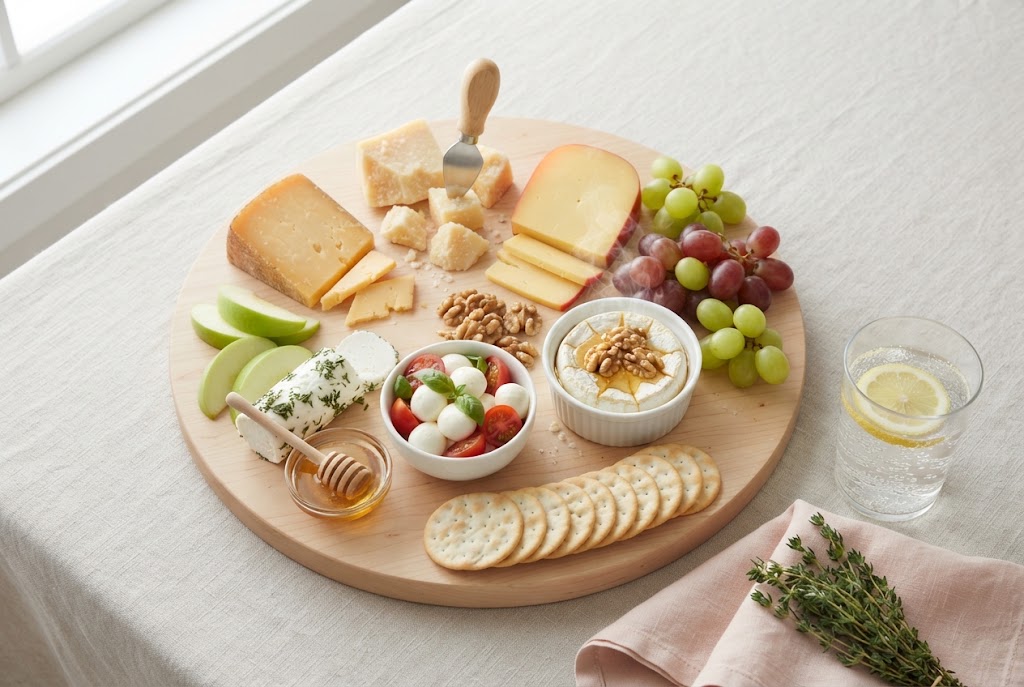
Build it around hard cheese and pasteurized soft cheese: an aged cheddar, Parmesan chunks, a Gouda and a log of fresh goat cheese. For a soft, gooey centerpiece that fits both US and UK advice, serve baked brie hot from the oven. Cured meats need care too: our pregnancy-safe charcuterie board covers prosciutto crisps and other swaps, and can you eat prosciutto while pregnant explains the meat side.
Sources
- FDA: Listeria and Food Safety for Moms-to-Be
- CDC: Preventing Listeria infection
- NHS: Foods to avoid in pregnancy
FAQ
What cheeses are safe during pregnancy?
In the US, cheese made with pasteurized milk is generally considered safe, including cheddar, Parmesan, Swiss, Gouda, mozzarella, feta, cream cheese, cottage cheese and string cheese. The exception is queso fresco-type cheese, which should be heated until steaming hot.
Can I eat brie while pregnant?
US agencies treat pasteurized brie like other pasteurized cheese. UK advice is stricter: eat brie, Camembert and other white-rind cheeses only cooked until steaming hot, like baked brie. Ask your doctor which advice to follow.
Is blue cheese safe during pregnancy?
Pasteurized blue cheese falls under the US pasteurized-cheese guidance. The UK says soft blue cheeses such as gorgonzola and Danish blue should be cooked until steaming hot.
Is Parmesan safe during pregnancy?
Yes. Hard cheeses like Parmesan are considered safe. The CDC lists pasteurized hard cheeses as a safer choice, and the UK's NHS says hard cheese is fine even when made from unpasteurized milk.
Why is queso fresco a problem even when pasteurized?
Both the FDA and CDC say to avoid unheated queso fresco-type cheeses even when they're made with pasteurized milk. These fresh, moist cheeses can pick up Listeria during cheesemaking after the milk is pasteurized, so heat them until steaming hot.