Quick Answer: Yes, you can eat the rind on brie. The white coat is an edible mold, Penicillium camemberti (also called P. candidum), added on purpose by the cheesemaker, and it's part of the flavor. Leave it off only if you don't like it, if the cheese smells strongly of ammonia, or if you see pink, black or green spots. Pregnant guests should eat brie only cooked until steaming hot.
What the rind on brie actually is
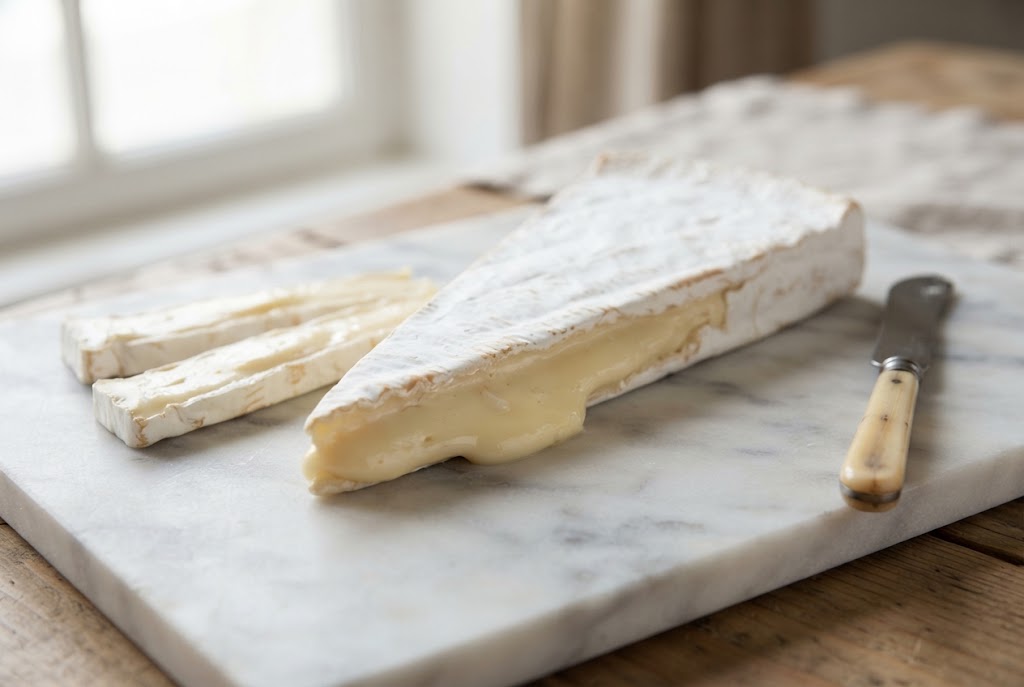
Brie is a bloomy-rind cheese. After the curds are shaped, the wheels are sprayed or inoculated with a white mold, mostly Penicillium camemberti, often with a little Geotrichum candidum yeast. Over a few weeks that mold grows into the soft, velvety coat, and it ripens the cheese from the outside in. That's why a ripe brie is runny just under the rind and firmer in the center. (Cheese Scientist)
So the rind isn't packaging. It's the reason brie tastes and feels like brie.
What does brie rind taste like?
Mild, earthy and a little mushroomy, with a faint bitterness that grows as the cheese ages. On a young supermarket brie it's barely noticeable. On a riper, more traditional brie it tastes of mushrooms and cellars, and it balances the rich, buttery paste.
Texture is the bigger difference for most people: the rind is slightly chewy and dry next to the creamy inside.
Should you eat it?
Cheesemongers generally say yes, and culture magazine's monger puts it simply: the rind is edible, and eating it is a matter of taste. Try a bite with the rind and one without, then decide. There's no etiquette rule that says you must.
What is bad manners is scooping the soft middle out of a wheel and leaving the rind behind for everyone else. On a shared board, cut a proper wedge that includes some of the rind and some of the center.
When not to eat the rind
- A strong ammonia smell. A faint whiff is normal on ripe brie. A sharp smell that doesn't fade after the cheese has breathed for 20 to 30 minutes means it's overripe.
- Pink, black or green mold. Brie's rind should be white to ivory, sometimes with light brown streaks. Other colors mean something has gone wrong. (Cheese Scientist)
- A sticky, slimy or cracked, hard rind. Signs the cheese is past its best.
- Pregnancy. The NHS advises that mould-ripened soft cheeses like brie are eaten only when cooked until steaming hot. Baked brie, rind and all, is fine; cold brie on a board isn't.
How to serve brie with the rind on a board
- Take it out of the fridge 20 to 30 minutes before serving. Cold rind tastes waxy and the paste stays firm.
- Leave the wheel whole, or cut the first wedge yourself. Guests copy the first cut.
- Cut wedges from the center out, like a cake, so every piece has rind and center.
- Give it its own knife so it doesn't drag over the hard cheeses.
- Pair it with something sweet (fig jam, honey, grapes) and something crunchy (baguette, walnuts) to balance the earthy rind.
What about other cheese rinds?
| Rind | Examples | Eat it? |
|---|---|---|
| Bloomy (white mold) | Brie, Camembert, triple-crème, Humboldt Fog | Yes |
| Washed (orange, sticky) | Taleggio, Époisses | Yes, if you like the funk |
| Natural, on aged cheese | Gruyère, aged Gouda edges, Manchego | Edible but tough; most people cut it off |
| Wax | Babybel, many Goudas | No |
| Cloth or bark | Clothbound cheddar, Vacherin | No |
Camembert's rind is the same kind of mold as brie's, so the same answer applies. See brie vs. Camembert for how the two differ.
Sources
- Cheese Scientist: Can You Eat the Rind of Brie?
- culture: Can I eat the rind of Brie?
- NHS: Foods to avoid in pregnancy
FAQ
Can you eat the rind on brie?
Yes. The white rind is an edible mold, Penicillium camemberti, added on purpose by the cheesemaker. It's part of the flavor, but eating it is a matter of taste.
What does brie rind taste like?
Mild, earthy and mushroomy, with a faint bitterness that grows as the cheese ages. It's slightly chewy next to the creamy center.
When should you not eat brie rind?
When the cheese smells sharply of ammonia, or shows pink, black or green mold. During pregnancy, eat brie only cooked until steaming hot.
Is it rude to cut the rind off brie?
No, but don't scoop the soft middle out of a shared wheel. Cut a wedge that includes rind and center, then leave the rind on your own plate if you prefer.
Can you eat Camembert rind?
Yes. Camembert has the same kind of white bloomy rind as brie.