Serving Blue Cheese? Cheese Board Field Guide $5 · printable PDF
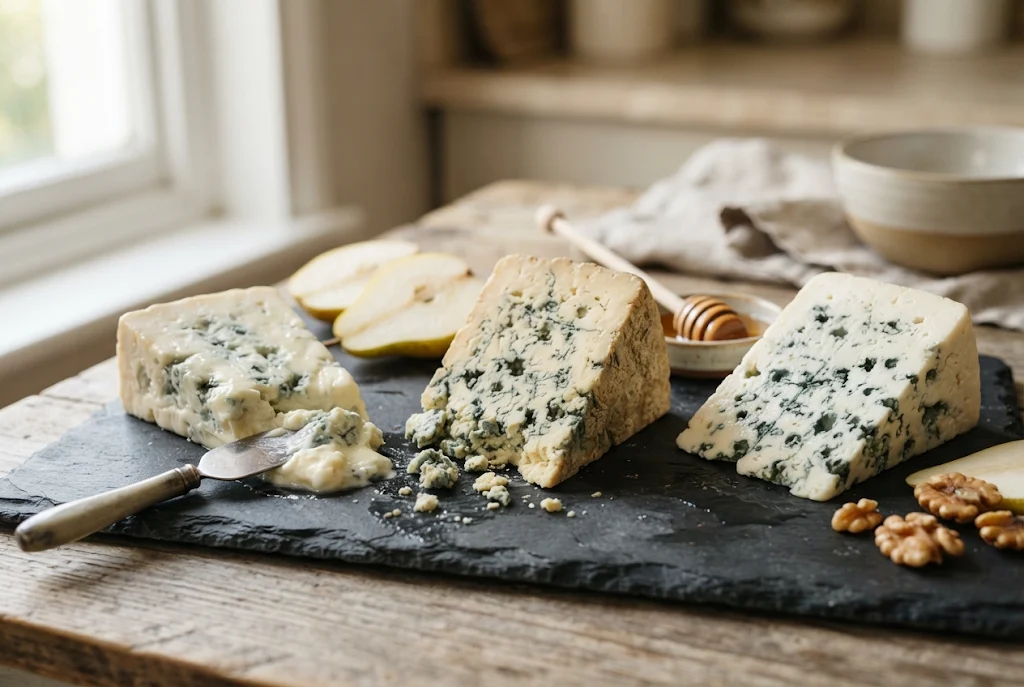
Blue cheese is any cheese with Penicillium roqueforti (or its cousin P. glaucum) running through it in blue-green veins. Gorgonzola, Stilton, Roquefort, Danish Blue, Cambozola and American blues like Rogue River and Maytag all belong here. They range from soft and sweet to crumbly and fierce, but every one is salty and sharp, and every one wants something sweet beside it.
What it is
Where it comes from, taste, texture and why it behaves the way it does
Cheesemakers add the mold to the milk, then pierce the young wheels with steel needles. Air gets into the channels and the mold turns blue along them. The mold breaks down fat as the cheese ages, which is where the peppery, savory, slightly mushroomy bite comes from.
- Taste
- salty, tangy, peppery, savory; creamy blues taste sweet and milky
- Texture
- from spoonable (Gorgonzola dolce) to crumbly (Stilton, Roquefort)
- Look
- ivory to white paste with blue-green veins or pockets
The style decides the pairing. A soft, mild blue works with almost anything sweet. A firm, salty, aged blue needs stronger partners: dark honey, dates, port.
What it pairs with — and why
| Pair it with | Why it works |
|---|---|
| Honey | Sweet against salt. The single best thing to put beside any blue. |
| Pears and apples | Cool, juicy and sweet. They calm the bite. |
| Fig jam and dates | Dense sweetness that holds up to a strong cheese. |
| Walnuts and candied pecans | Tannic, crunchy nuts against a soft, salty paste. |
| Dark chocolate | Bitter cocoa and salty blue: a dessert-board favorite. |
| Dried cranberries | Tart and sweet, a holiday match for Stilton. |
| Prosciutto | Silky, mild ham that doesn't fight the cheese. |
| Port, Sauternes, Moscato, stout | Sweet or malty drinks against salt. |
Skip it with: delicate fresh cheese like mozzarella or burrata, which taste of nothing next to it, and heavy smoke, which clashes with the mold.
More that pair well: Honey, Pears, Walnuts, Fig Jam, Medjool Dates, Dark Chocolate, Apples, Candied Pecans, Dried Cranberries, Honeycomb, Prosciutto di Parma, Grapes, Oatcakes, Walnut Raisin Bread
How to prep it for the board
- Temper 45 minutes. Cold blue tastes mostly of salt.
- Crumble firm blues, wedge creamy ones. Stilton and Roquefort break into chunks; Gorgonzola dolce wants a spoon or a butter knife.
- Give it its own knife so the mold doesn't reach the other cheeses.
- Put honey or jam right beside it.
- Place it away from mild cheeses so its smell doesn't take over.
- Serve less than you think: under an ounce a person.
What to buy
| Style | Examples | Best for |
|---|---|---|
| Soft and mild | Gorgonzola dolce, Cambozola | Nervous guests and mixed crowds |
| Firm and balanced | Stilton, Rogue River Blue, Maytag | Cheese lovers and holiday boards |
| Bold and salty | Roquefort, Cabrales | The brave, with port |
| Budget | Danish Blue | Big boards and cooking |
For brands we'd buy, see the best blue cheese brands.
Skip: pre-crumbled blue cheese in a tub. It's dry, and it looks like salad topping on a board.
Quick FAQ
What goes with blue cheese on a charcuterie board?
Something sweet first: honey, fig jam, pears or dates. Then walnuts or pecans and plain crackers. Prosciutto is the best meat beside it.
Which blue cheese is best for a board?
Gorgonzola dolce for a mixed crowd, Stilton or Rogue River Blue for cheese lovers, and Roquefort for the boldest flavor.
Is the mold in blue cheese safe?
Yes. The blue veins are added on purpose. Fuzzy mold on the cut face of an old piece is different: trim it off, or throw the piece out if it smells off.
How much blue cheese per person?
Under an ounce.