The short version
A cave-aged blue from the Picos de Europa in Asturias, made from a blend of cow's, sheep's and goat's milk. It is stronger than Roquefort — genuinely, not as a boast. Serve half an ounce, put honey and cider beside it, and warn people.
What it is
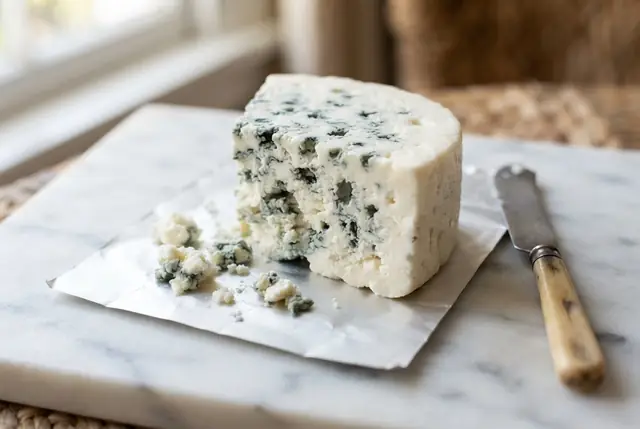
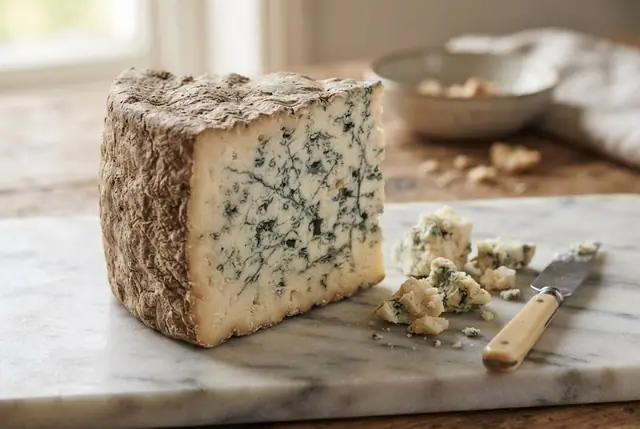
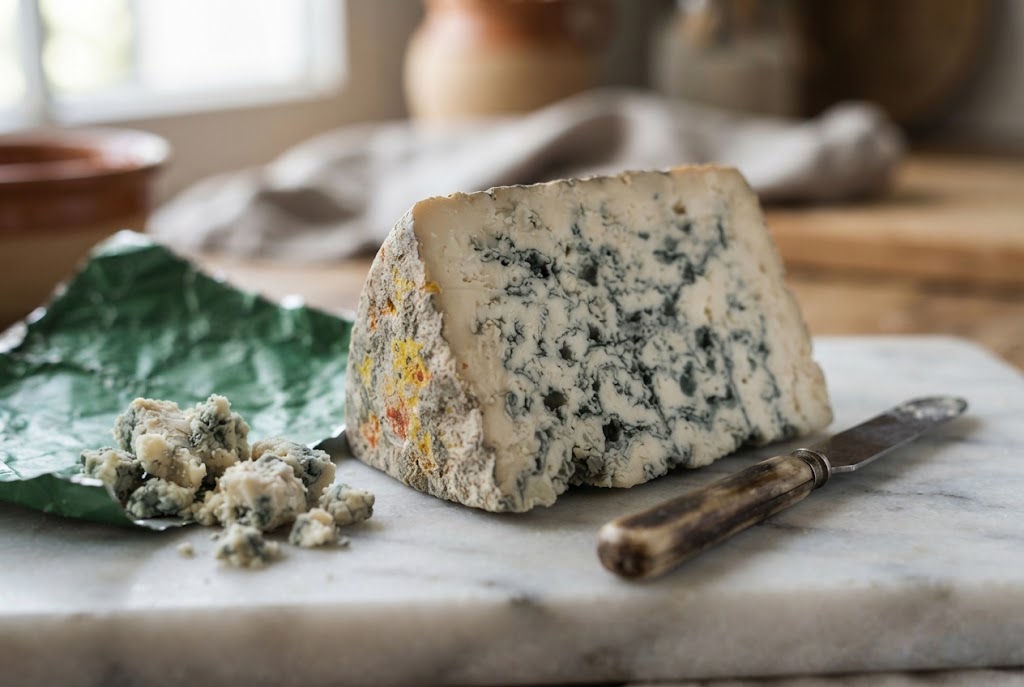
Cabrales DOP is made in a handful of Asturian villages and aged two to four months in natural limestone caves in the mountains, where humidity approaches saturation. No mold is added — the Penicillium comes from the cave air. In summer, milk from all three animals is blended; in winter it's cow's milk only. Traditionally wrapped in sycamore or maple leaves.
- Taste
- extremely sharp, salty, spicy, acidic, long finish
- Texture
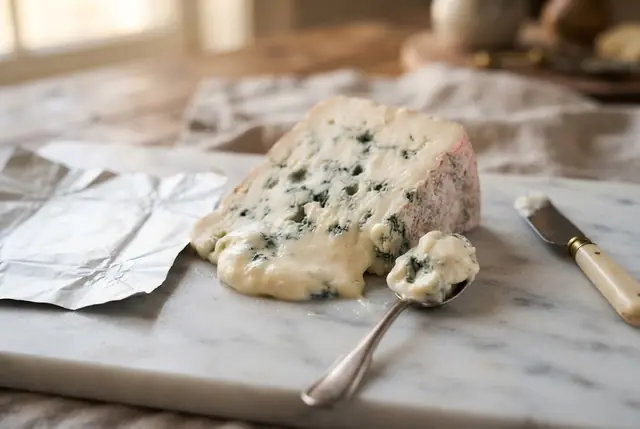
- moist, crumbly, sticky, sometimes almost spreadable
- Look
- ivory paste heavily veined blue-green, thin sticky natural rind in grey and ochre
Wild mold in a saturated cave is the mechanism. Commercial blues are inoculated with a selected P. roqueforti strain and aged in controlled conditions. Cabrales gets whatever the cave has and a humidity level that pushes mold growth hard — which produces a much more aggressive, less predictable cheese.
What it pairs with — and why
| Pair it with | Why it works |
|---|---|
| Asturian cider (sidra) | The regional pairing. Sharp, dry, acidic cider is the only drink that stands up. |
| Honey | Essential rather than optional. Cabrales without sweetness is punishing. |
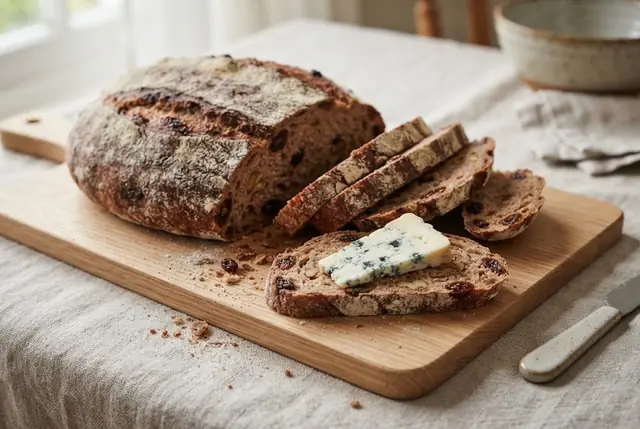
| Walnut raisin bread | Sweet, tannic and substantial enough to carry it. |
| Membrillo (quince paste) | Dense floral sweetness against extreme salt. |
| Fresh pear | Cool sweet water as relief. |
| Walnuts | Tannin meeting blue bitterness. |
| Sweet sherry — PX, Oloroso | Spanish, sweet and fortified. Sugar against salt. |
Skip it with: everything mild, everything smoked, and anything you want guests to taste afterwards. Cabrales flattens the palate for several minutes.
How to prep it for the board
- Serve half an ounce per person. Less than any other cheese in this section.
- Warn people. "This is the strongest thing on the board" is a service, not a spoiler, and it stops someone taking a Stilton-sized piece.
- Temper 45 minutes.
- Give it its own small plate, off the main board if possible. The aroma travels.
- Put honey and membrillo directly beside it with their own spoons.
- Serve it last in any tasting order.
- Fix: wrap in foil and double-bag it in the fridge. Cabrales will scent everything around it within a day.
What to buy
| Product | Where | Notes |
|---|---|---|
| Cabrales DOP | Cheese counters, specialty shops, Spanish grocers | The real thing. Look for the DOP label and the leaf wrapping or its imprint. |
| Valdeón (Queso de Valdeón) | Cheese counters, Whole Foods | Wrapped in sycamore leaves, from León. Gentler and easier to find. |
| Picón Bejes-Tresviso | Specialty shops | Another Picos de Europa blue. Similar intensity. |
| Roquefort | Whole Foods, cheese counters | The step down in intensity — see its own page. |
| Bleu d'Auvergne | Cheese counters | Much gentler cow's-milk blue — see its own page. |
| Spanish specialty grocer | Local, or online | Best chance of finding genuine DOP Cabrales. |
Label check: the DOP mark. Much of what's sold as Cabrales outside Spain is Valdeón, which is a good cheese but a milder one.
Skip: serving it to a general crowd. This is a cheese for a board where at least some guests are enthusiasts.
Quick FAQ
Is Cabrales stronger than Roquefort?
Yes. Wild cave mold, near-saturated humidity and a three-milk blend make it noticeably more aggressive.
What are the leaves for?
Traditionally sycamore or maple leaves wrapped the cheese during aging. Modern DOP cheese is usually wrapped in foil printed with a leaf pattern.
What do I serve with it?
Honey and Asturian cider, at minimum. It's punishing without sweetness.
How much per person?
Half an ounce. Genuinely.
Is Valdeón the same thing?
No — Valdeón is a related leaf-wrapped Spanish blue from León. Similar look, gentler cheese, easier to find.