The short version
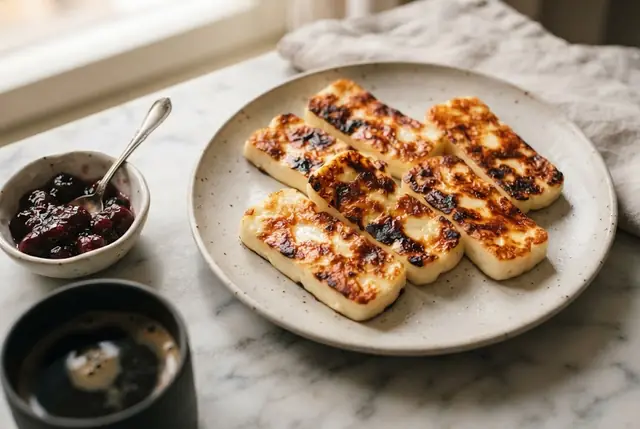
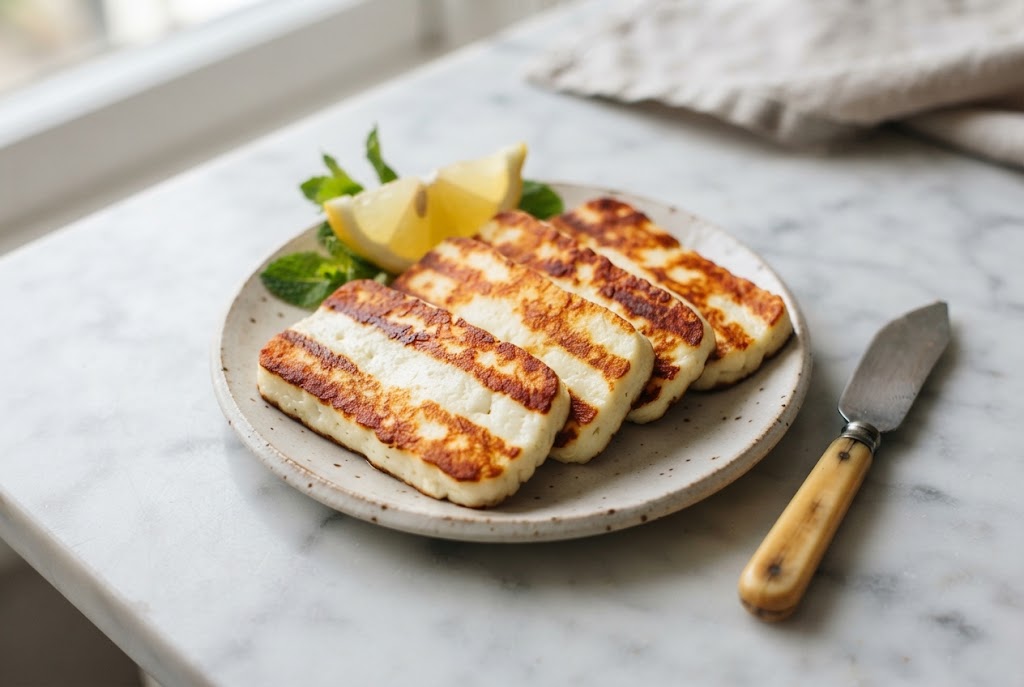
A firm, salty Cypriot cheese with an unusually high melting point — you can put it straight in a hot pan and it browns instead of running. Two minutes a side and you have a hot, squeaky, golden-crusted thing that nothing else on a board resembles.
What it is
Halloumi is made from sheep's and goat's milk, sometimes with cow's milk added. The curd is heated to a high temperature before shaping, which denatures the proteins and locks the structure in place. That's why it holds its shape in a pan. It's then folded with mint and stored in brine.
- Taste
- salty, milky, faintly minty, savory
- Texture
- firm and squeaky raw; crisp-crusted and chewy when seared
- Look
- white folded slabs, browning to deep gold when cooked
Protein denaturation is the mechanism, and it's what makes halloumi unique on a board. Most cheeses melt because their protein network relaxes with heat. Halloumi's was already set by high-temperature curd cooking, so heat browns the surface without collapsing the interior — grilling is the intended use, not a trick.
What it pairs with — and why
| Pair it with | Why it works |
|---|---|
| Lemon, squeezed over hot | Acid on salt and fat, immediately off the pan. This is the traditional service and it's non-negotiable. |
| Hot honey | Sweet and heat over salty crust. The pairing that converts people. |
| Watermelon and mint | Cool and sweet against hot and salty. Summer's best contrast. |
| Za'atar and olive oil | Herbal, sesame, sumac — the regional seasoning. |
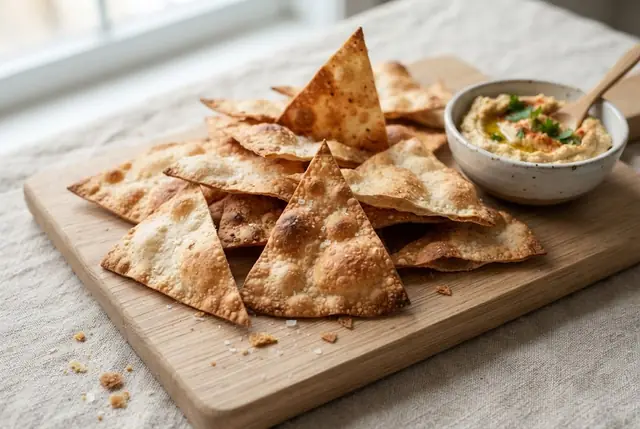
| Pita chips and warm flatbread | Something to hold a hot slab. |
| Roasted red peppers and olives | Sweet, smoky, briny neighbors. |
| Cold beer, dry rosé, assyrtiko | Cold and acidic against hot and salty. |
Skip it with: delicate fresh cheeses, and anything you want to stay cold — halloumi is served hot and it dominates the corner of the board it sits in.
How to prep it for the board
- Slice about ⅓ inch thick. Thinner burns before the inside warms; thicker stays squeaky in the middle.
- Pat it completely dry. Surface brine steams instead of browning, and that's the usual reason halloumi comes out pale.
- Dry pan, medium-high, 2 minutes a side until deep gold. It has enough fat — added oil mostly spatters.
- Squeeze lemon over it the second it leaves the pan.
- Serve it immediately, in a small warm dish beside the board. Halloumi cools into rubber within about ten minutes.
- Serve 1–2 oz per person, cooked in batches so there's a hot one later.
- Fix: gone rubbery? Back in the pan for thirty seconds. It recovers once, not twice.
What to buy
| Product | Where | Notes |
|---|---|---|
| Cypriot PDO halloumi | Cheese counters, Middle Eastern markets, Whole Foods | Sheep and goat milk, the real thing. Saltier and better. |
| Trader Joe's Halloumi | Trader Joe's | Cheap, widely liked, good for a first attempt. |
| Mt Vikos Halloumi | Whole Foods, grocery | Widely available and consistent. |
| Middle Eastern market halloumi | Local markets | Best selection and price. Often several brands. |
| Grilling cheese / queso para freír | Latin markets, grocery | The same category under other names. Works identically. |
| Bread cheese (juustoleipä) | Grocery cheese case, Wisconsin brands | Finnish relative. Milder, also pan-fries. |
Label check: sheep's and goat's milk means a more traditional, saltier cheese. All-cow versions are milder and browner but less distinctive.
Skip: pre-sliced halloumi in dry packaging if a brined block is available. Brine keeps it from drying at the edges.
Quick FAQ
Why doesn't halloumi melt?
Its curd is heated to a high temperature during making, which sets the protein structure before it's ever shaped. Heat browns it rather than collapsing it.
Do I need oil in the pan?
No. It has enough fat of its own, and added oil mostly spatters.
Can I serve it cold?
You can, but it's squeaky and very salty. Searing is the point.
How much per person?
1–2 oz, cooked in batches so it stays hot.
What if it goes rubbery?
Back in the pan for thirty seconds. It recovers once. Cook less at a time instead.