The short version
Tunisia's chili paste: dried red chilies rehydrated and ground with garlic, caraway, coriander and olive oil. It is hot, but the point is the spice underneath the heat — caraway in particular gives it a flavour no American hot sauce has. On a board it is the item that makes people ask what something is.
What it is
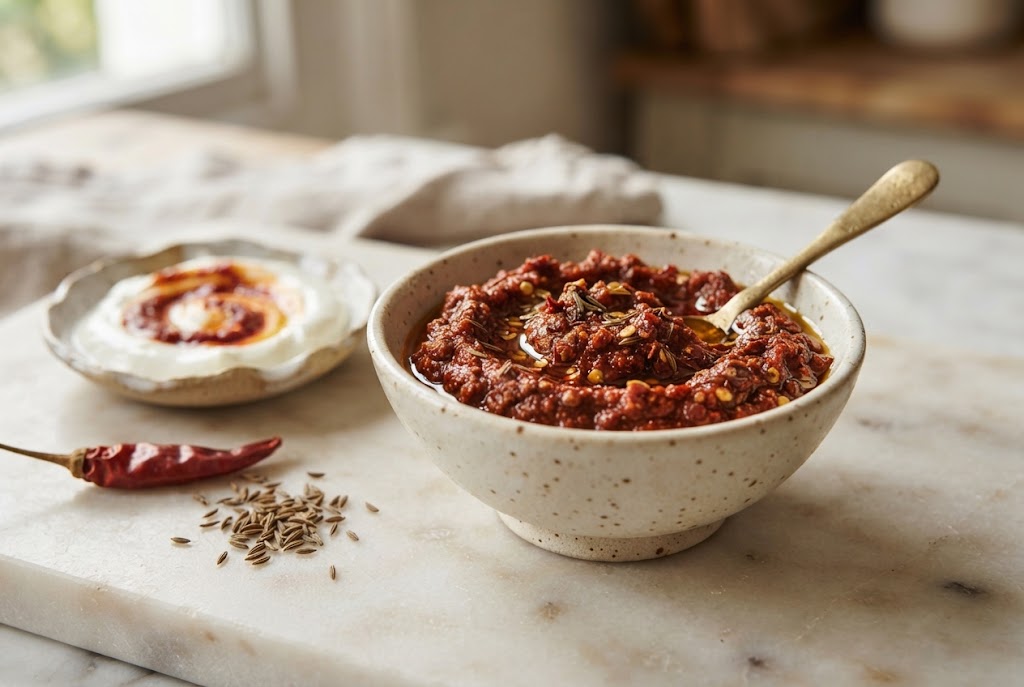
A cooked paste rather than a fermented sauce. The chilies are dried, soaked and milled, which gives harissa its brick colour and thick, spoonable body. Recipes vary by region and household; some are close to pure chili, others carry a lot of caraway and coriander.
- Taste
- smoky roasted chili, garlic, and a distinct caraway note
- Texture
- thick and slightly grainy, oil sitting on top
- Look
- deep brick red, matte
The mechanism is dried chili rather than fresh. Drying concentrates sugars and removes the green vegetal edge that fresh chilies carry, so harissa reads as deep and savoury where a fresh chili sauce reads as sharp. That depth is why it can sit next to cheese without simply burning through everything else.
What it pairs with — and why
| Pair it with | Why it works |
|---|---|
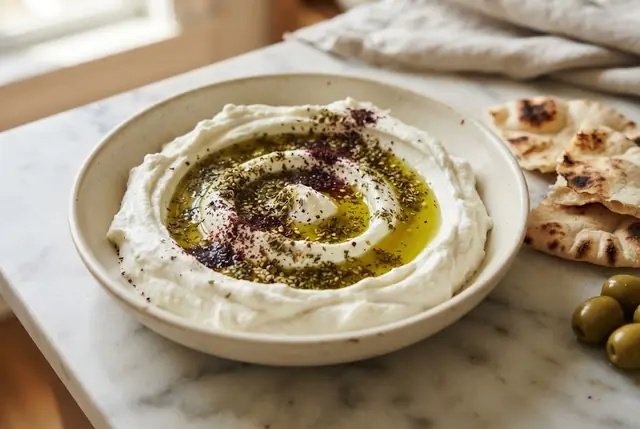
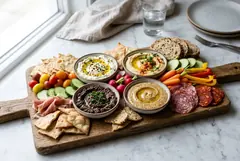
| Labneh | The definitive pairing. Cold thick yogurt with a spoonful of harissa swirled through and oil over the top. |
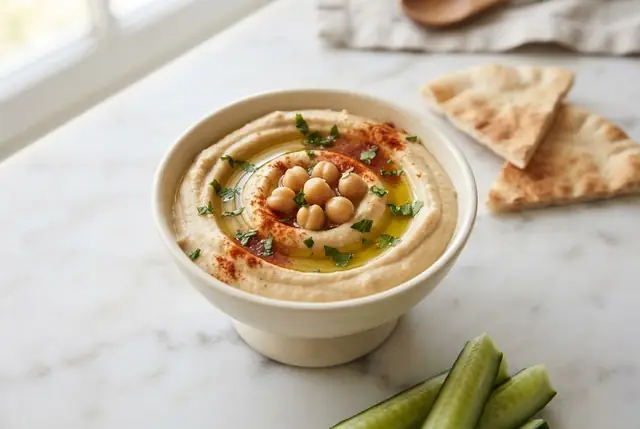
| Hummus | Same logic, and it fixes the one thing plain hummus lacks. |
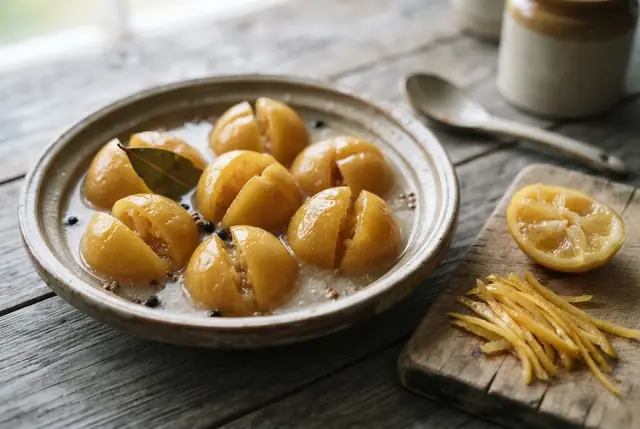
| Preserved lemons | Both Moroccan and Tunisian staples. Salt-sour against smoky heat. |
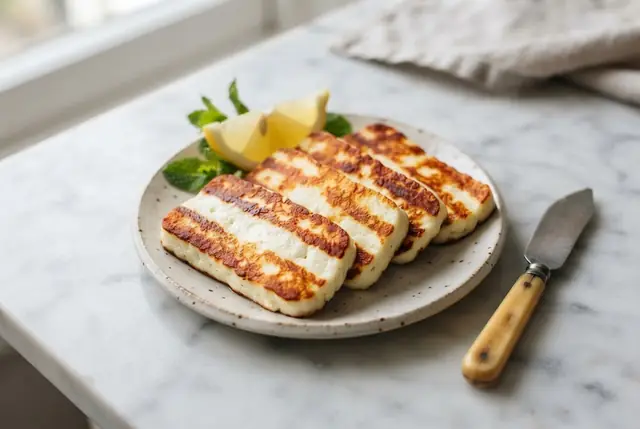
| Halloumi | Squeaky salty cheese wants heat. Grill the halloumi and dab harissa on top. |
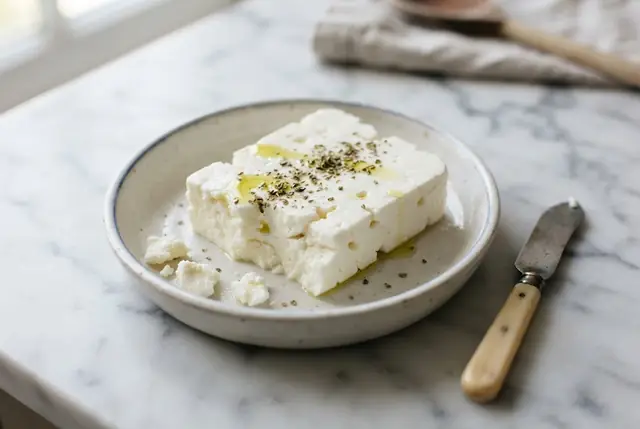
| Feta | Salt and acid against chili and garlic. A two-ingredient answer to a dull board. |
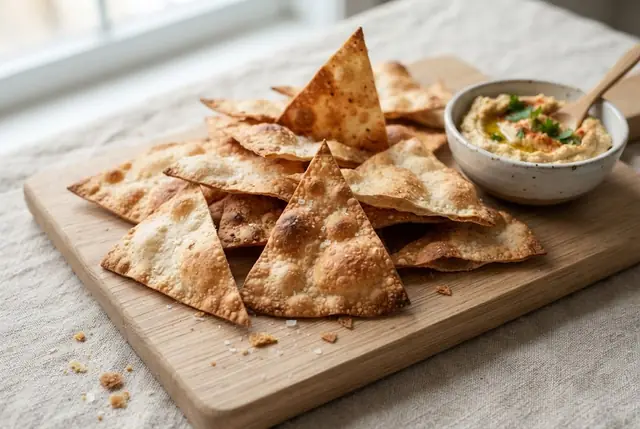
| Pita chips and flatbread | Neutral sturdy carriers. Harissa is too strong to eat alone. |
Skip it with: delicate bloomy cheese and fine French charcuterie. Harissa flattens both.
How to prep it for the board
- Serve in a very small bowl. Portions here are teaspoons.
- Stir the oil back in before serving.
- Loosen it with olive oil or a spoonful of yogurt if you want it dip-able rather than dab-able.
- Put a small spoon in it. Nobody should be dipping a cracker straight into harissa.
- Set it beside something cool — labneh, yogurt, fresh cheese — so guests can temper it themselves.
- Warn people once. Its colour does not communicate how hot it is.
- Fix: too hot for the room? Fold it into labneh or yogurt at three parts dairy to one part harissa. It becomes a pink dip everyone will eat.
What to buy
| Product | Where | Notes |
|---|---|---|
| Rose harissa | Specialty grocers, Middle Eastern shops | Floral, softer, the easiest version to like. The one to start with. |
| Tunisian harissa in a tube | Middle Eastern grocers | Concentrated and properly hot. Keeps for months in the fridge. |
| Jarred harissa paste | Most grocery stores now | Looser and milder. Fine, and the easiest to spoon. |
| Harissa with preserved lemon | Specialty | Already carries the acid. Very good with cheese. |
| Powdered harissa spice | Spice shops | A seasoning, not a paste. Useful for dusting, not for a board bowl. |
Label check: chili should be first and oil second. Tomato paste high in the list means a milder, sweeter product.
Skip: anything labelled harissa that is bright orange and pourable. That is a hot sauce wearing the name.
Quick FAQ
How hot is harissa?
Moderate, and more aromatic than fiery. The heat arrives after the flavour rather than instead of it, which is what separates it from a hot sauce.
What is rose harissa?
Harissa with dried rose petals added. Softer, more floral and slightly less hot. Many people prefer it on a board.
Tube or jar?
Tubes are concentrated and keep for months. Jars are looser and better for spooning straight onto a board.
What do I serve it with?
Labneh, hummus, halloumi and feta. It wants something cool and dairy beside it.
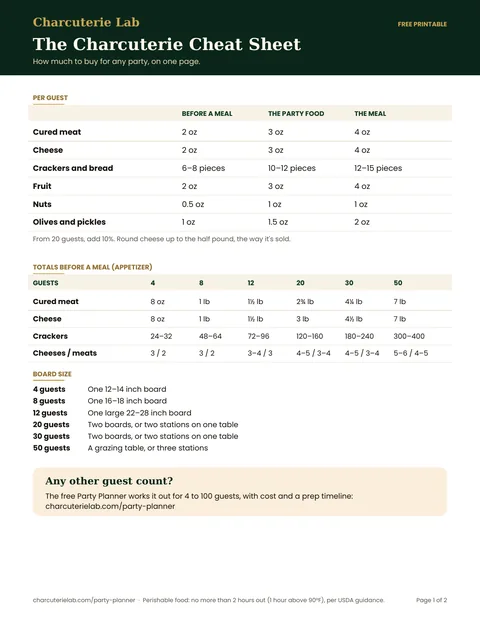
How much per person?
A quarter ounce. It is there to be dabbed, not scooped.