The short version
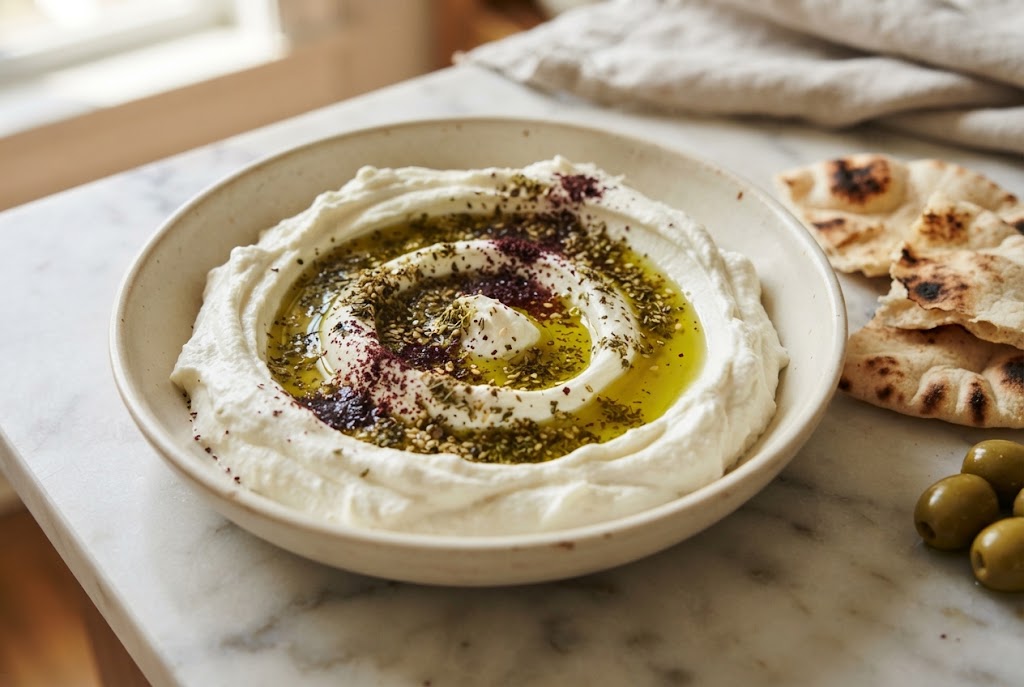
Yogurt with the whey strained out until it is thick enough to hold a spoon. Salted, spread in a shallow bowl, dented with the back of a spoon and flooded with olive oil. It is the cool, sour, dairy thing that lets you put genuinely hot items on the same board, and it costs less than any cheese.
What it is
A fresh strained cheese from the Levant, made with cow, sheep or goat yogurt. Sold in tubs, sometimes rolled into balls and stored under oil. The longer it strains, the firmer and more sour it gets.
- Taste
- clean lactic sourness, salt, and a lot of dairy sweetness underneath
- Texture
- thick and smooth, somewhere between cream cheese and sour cream
- Look
- bright white, glossy where the oil pools
The mechanism is acid plus straining. Fermentation drops the pH until the milk proteins knit together; straining removes the water. What is left is concentrated dairy fat and protein with almost no sugar — which is why labneh reads as cooling rather than rich, and why it puts out chili heat instead of amplifying it.
What it pairs with — and why
| Pair it with | Why it works |
|---|---|
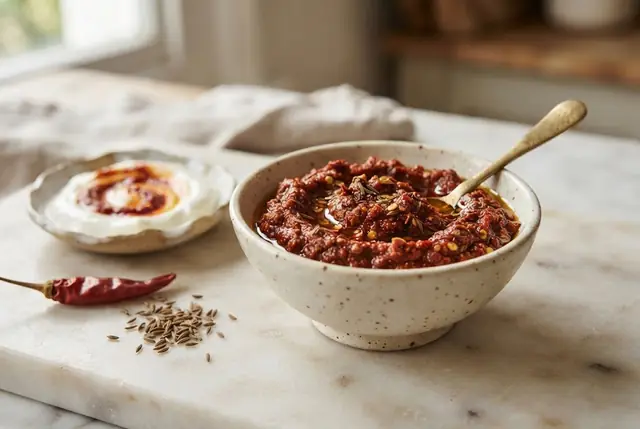
| Harissa | The pairing the whole board is built around. Swirl a spoonful through and let people take both at once. |
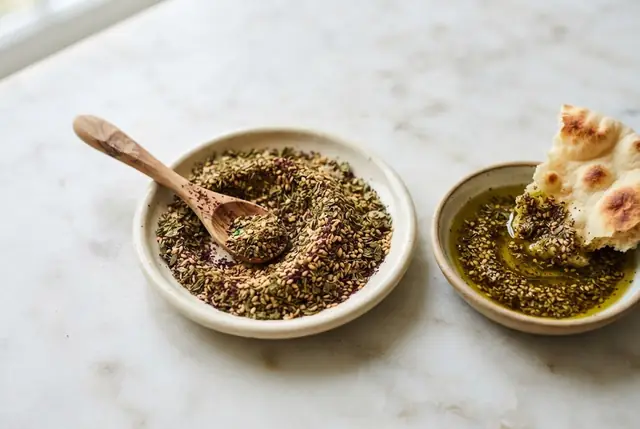
| Za'atar | Sesame, thyme and sumac scattered over the oil. The default finish, and it costs nothing. |
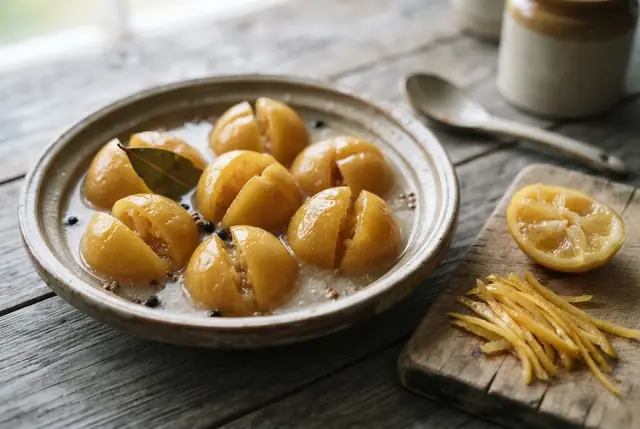
| Preserved lemons | Chopped fine over the top. Salt-sour on lactic-sour is more interesting than it sounds. |
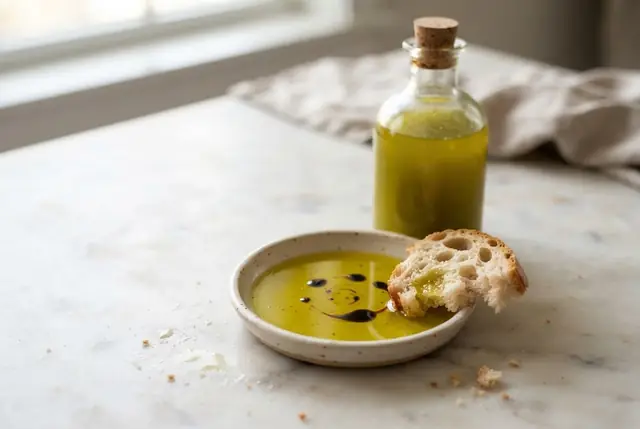
| Olive oil | Not optional. Labneh without a real pour of good oil is half a dish. |
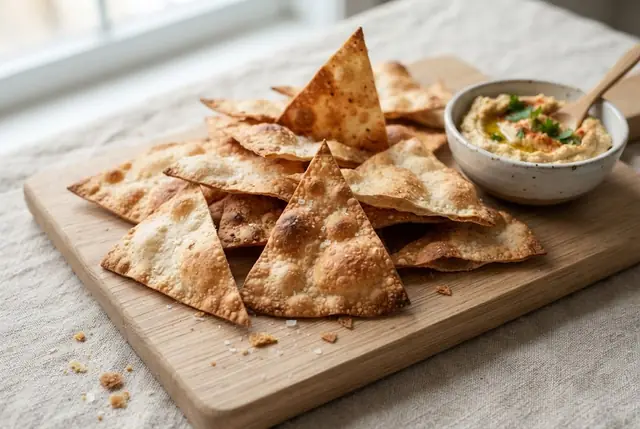
| Pita chips and flatbread | It needs a sturdy scoop. Thin crackers snap in it. |
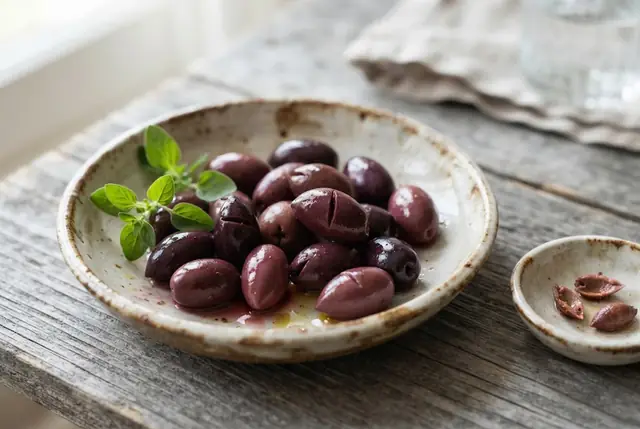
| Kalamata olives | Brine and bitterness against cool dairy — the mezze plate in two items. |
Skip it with: sweet jams. Labneh with honey is good, but labneh with fig jam just tastes like a confused cheesecake.
How to prep it for the board
- Spread it in a shallow bowl, not a deep one. Surface area is the point.
- Dent the surface with the back of a spoon so the oil has somewhere to sit.
- Pour olive oil over it generously.
- Scatter za'atar, sumac or chili flakes.
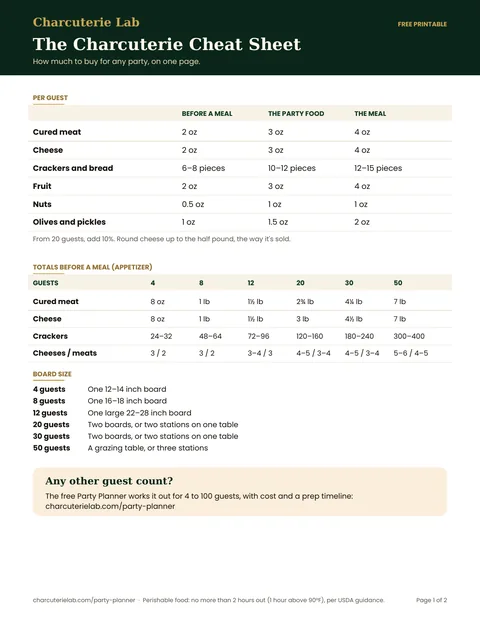
- Serve 1 oz per person. It goes faster than you expect.
- Serve it cold, unlike almost everything else on the board.
- Fix: too stiff to spread? Beat in a spoonful of the yogurt it came from, or a little olive oil, until it slumps slightly.
What to buy
| Product | Where | Notes |
|---|---|---|
| Tub labneh | Middle Eastern grocers, larger supermarkets | The default. Look for a short ingredient list. |
| Labneh balls in oil | Middle Eastern grocers | Firmer, saltier, and they look excellent on a board. Serve them whole. |
| Sheep or goat labneh | Specialty | Tangier and more interesting. Worth seeking out. |
| Strained Greek yogurt | Any grocery | The substitute. Strain it overnight in a sieve and salt it. |
| Homemade | Make it | Full-fat yogurt, a teaspoon of salt per pint, cheesecloth, one night in the fridge. |
Label check: milk and cultures, plus salt. Anything with gums or starch has been thickened rather than strained.
Skip: low-fat versions. They strain to a chalky texture and lose the point.
Quick FAQ
Is labneh a cheese or a yogurt?
Technically a fresh cheese — it is yogurt with the whey strained out. It sits in the spread section of a board rather than the cheese section.
Can I make labneh at home?
Yes, and it is the easiest cheese there is. Salt full-fat yogurt, tie it in cheesecloth and hang it in the fridge overnight.
What do you put on labneh?
Olive oil and za'atar is the classic. Harissa, sumac, chili oil or honey all work.
What is the difference between labneh and Greek yogurt?
Labneh is strained further, so it is thicker and more sour. Greek yogurt is a reasonable substitute if you strain it another few hours.
How much per person?
About an ounce. People take more of it than any other spread on the board.