The short version
A Levantine blend of dried wild thyme, toasted sesame seeds, sumac and salt. It's herbal, nutty and distinctly sour, and a pinch over feta, hummus or a dish of olive oil is the fastest way to make a board look like somebody thought about it. Two dollars a bag.
What it is
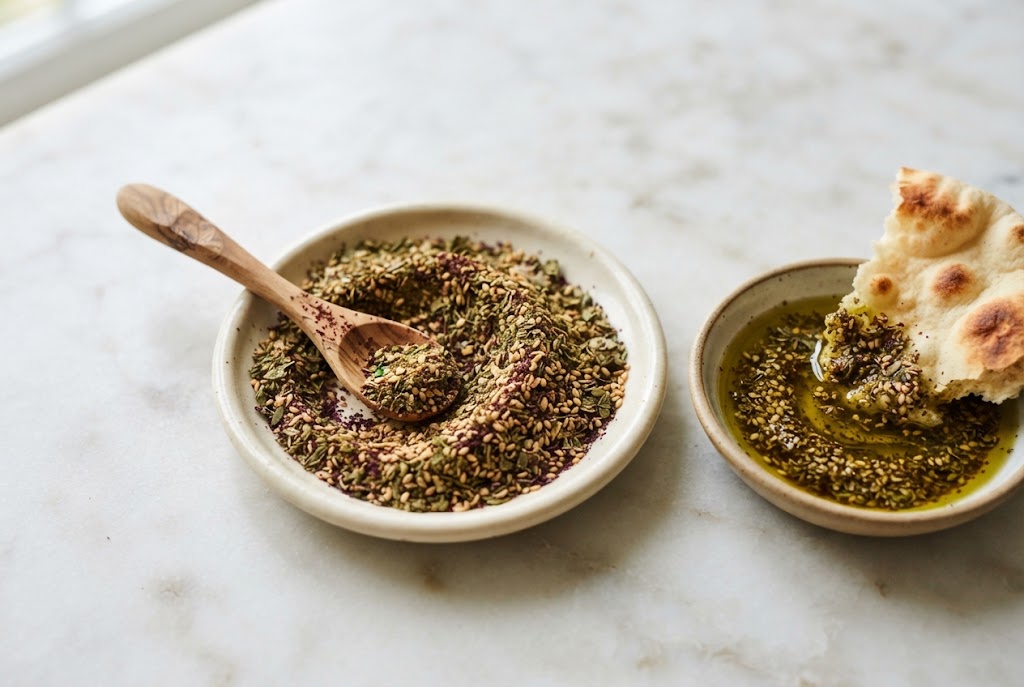
Dried thyme or oregano (traditionally wild Levantine hyssop), toasted sesame seeds, ground sumac, and salt. Regional versions vary: Lebanese za'atar is sumac-heavy and reddish; Palestinian is thyme-forward and greener; Jordanian often adds more sesame.
- Taste
- herbal, sour, nutty, savoury
- Texture
- coarse and dry, with visible sesame
- Look
- dusty green-red, flecked with pale sesame
The mechanism is sumac's acidity in dry form. Almost every way of adding acid to a board involves liquid — vinegar, citrus, pickle brine. Sumac is a dried sour berry, so za'atar delivers real tartness with no moisture, which means it can be sprinkled directly onto bread, cheese or oil without softening anything.
What it pairs with — and why
| Pair it with | Why it works |
|---|---|
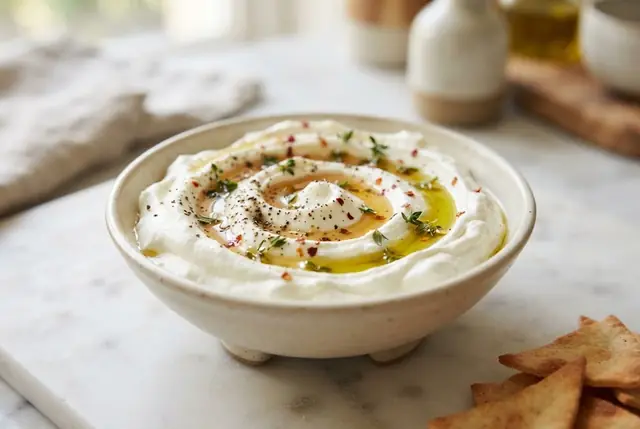
| Whipped feta | Salt and cream with a dry sour herb dusted over. The standard restaurant finish. |
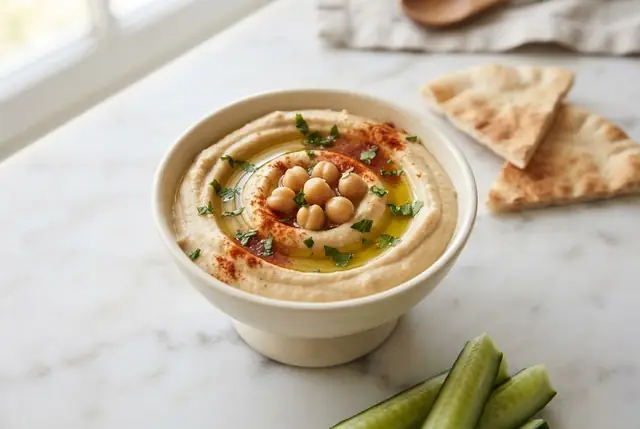
| Hummus | Za'atar and olive oil is the traditional topping, and it adds the acid hummus lacks. |
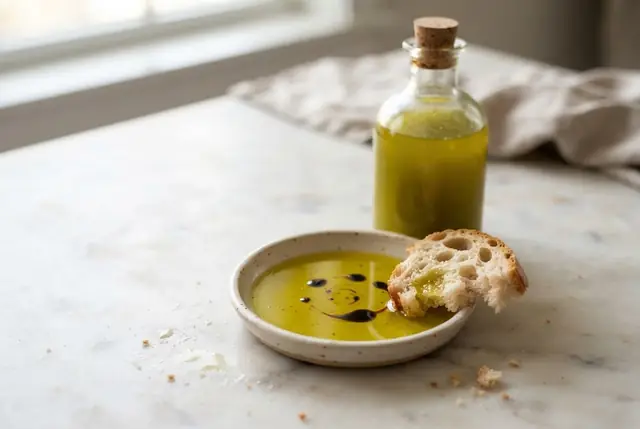
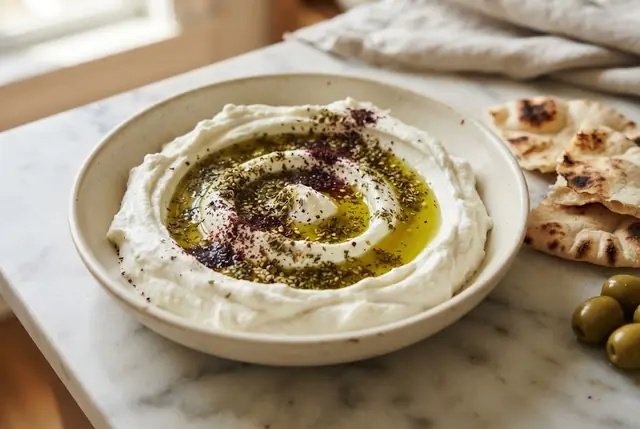
| Olive oil | A dish of oil with za'atar stirred in, and bread to dip. Two ingredients, one course. |
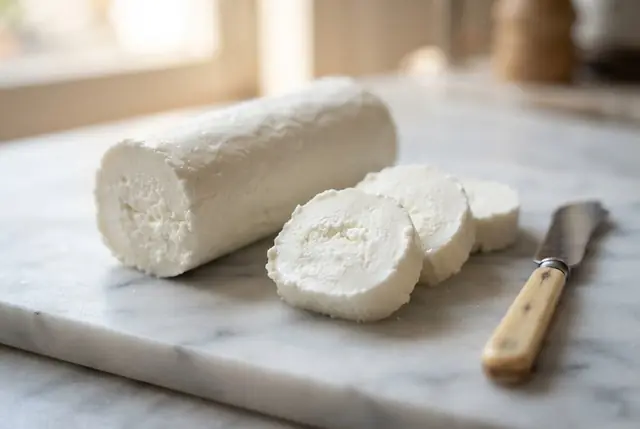
| Fresh goat cheese | Roll a log in it, or scatter over. Tang against tang, with sesame for texture. |
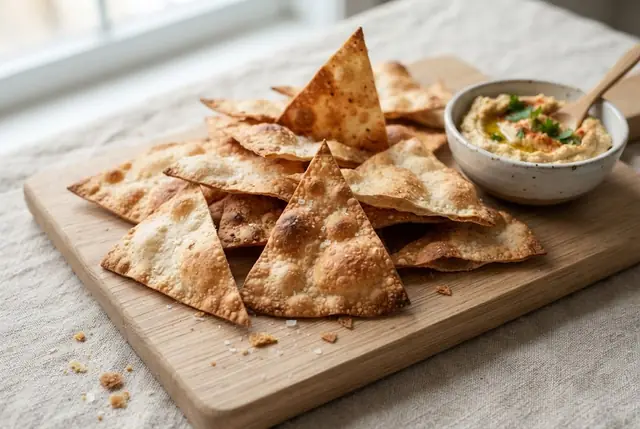
| Pita chips and flatbread | Manakish — flatbread baked with za'atar and oil — is where it comes from. |
| Cucumber and raw vegetables | The Levantine breakfast plate, and it works cold on a board. |
Skip it with: delicate aged cheeses and sweet elements. Za'atar is herbal and sour and belongs on the savoury side.
How to prep it for the board
- Stir it into a shallow dish of olive oil, with bread beside it. That's the traditional service and the best one.
- Or scatter it dry over feta, hummus, or a goat cheese log.
- Serve a small dish of it plain so guests can dip.
- Use a pinch per dish, not a spoonful — the sumac is sour.
- Taste it first. Blends vary enormously in salt and sumac.
- Buy from a Middle Eastern grocer if you can. It's cheaper and much fresher.
- Fix: dusty and flat? Old blend. Za'atar fades within a year, and thyme is the first thing to go.
What to buy
| Product | Where | Notes |
|---|---|---|
| Middle Eastern grocer za'atar | Middle Eastern markets | Cheapest and freshest. Ask which region it's from. |
| Lebanese za'atar | Specialty, online | Sumac-forward, reddish, tart. |
| Palestinian za'atar | Specialty, online | Thyme-forward, greener, more herbal. |
| Burlap & Barrel za'atar | Specialty, online | Single-origin blend. Excellent and pricier. |
| Supermarket za'atar | Grocery, spice aisle | Usually oregano-heavy and salt-heavy. Fine, not exciting. |
Label check: sesame should be visible in the bag, and sumac should be listed. A blend that's mostly salt and oregano is a cheap one.
Skip: anything dusty and uniformly brown. You should see distinct green, red and pale flecks.
Quick FAQ
What is za'atar?
A Levantine blend of dried thyme, toasted sesame seeds, sumac and salt. Herbal, nutty and sour.
Is za'atar spicy?
No. It's herbal and tart, not hot.
How do I use za'atar on a board?
Stir it into a dish of olive oil for dipping, or scatter it over feta, hummus or a goat cheese log.
What is sumac?
A dried, ground sour berry that provides za'atar's tartness. It's how the blend delivers acid without any liquid.
Does za'atar contain allergens?
Sesame, which is a declared allergen in most countries. Worth mentioning when you put it out.