The short version
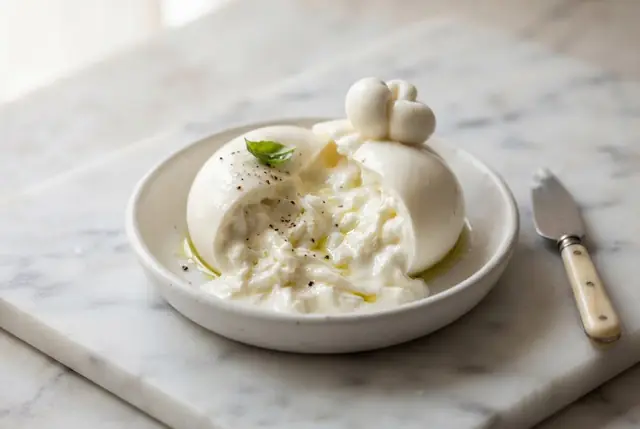
There are two olive oils in a good kitchen: the one you cook with, and the one you finish with. The finishing oil is grassy, peppery and expensive, and its whole job is being poured cold over things. On a board it's what turns burrata from a ball of cheese into a plate.
What it is
Extra virgin olive oil — mechanically pressed, unrefined, with free acidity below 0.8%. Character varies enormously by variety and region: Tuscan oils are grassy and pepper-hot; Ligurian are mild and buttery; Greek and Spanish sit between.
- Taste
- grassy, peppery, faintly bitter, sometimes almond or artichoke
- Texture
- viscous and coating
- Look
- green-gold, cloudy if unfiltered
The mechanism is oleocanthal — the compound responsible for the peppery catch at the back of the throat in a fresh oil. It's an irritant in the same family as ibuprofen, and that slight burn is what makes a good finishing oil register as an ingredient rather than a lubricant. Cooking destroys it, which is why finishing oils are used cold.
What it pairs with — and why
| Pair it with | Why it works |
|---|---|
| Burrata | The pairing that justifies the bottle. Cream with no seasoning meets fat with flavour, plus flaky salt. |
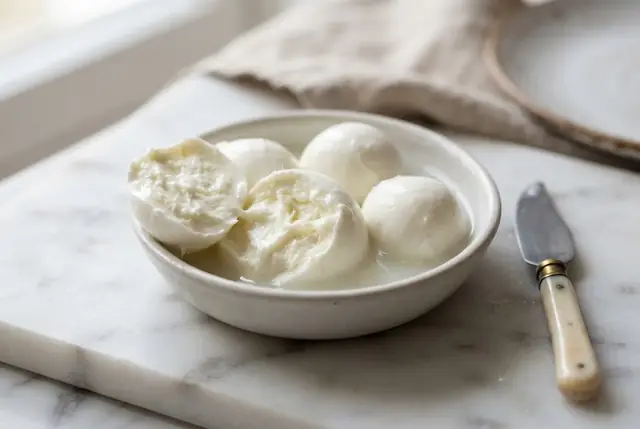
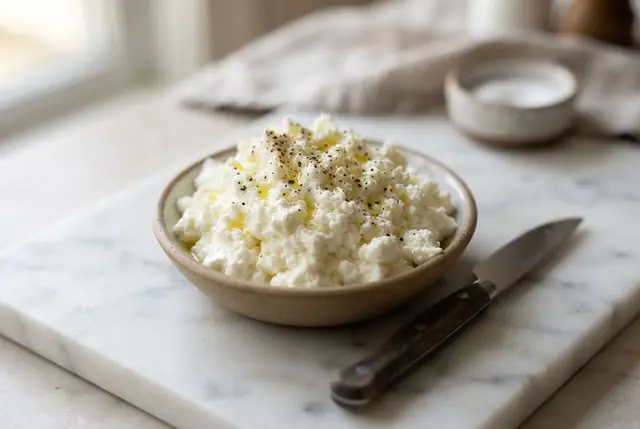
| Fresh mozzarella and ricotta | Same logic. Very mild cheeses are a canvas for oil. |
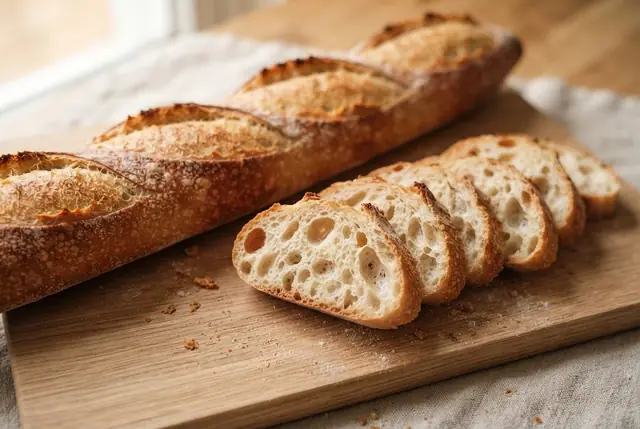
| Baguette and crusty bread | Oil, salt, bread. The Mediterranean's whole argument. |
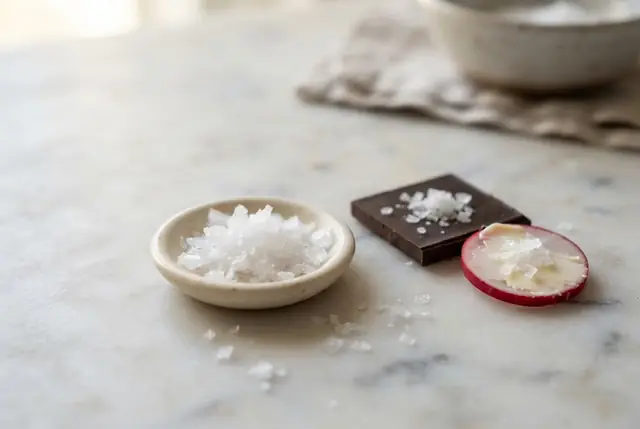
| Flaky sea salt | They're used together every time. Neither works as well alone. |
| Tomatoes and ripe fruit | Oil, salt and acid on something sweet. |
| Hard aged cheese | Drizzle over Parmigiano shards. Unexpected, and very good. |
Skip it with: anything already oily — marinated artichokes, sun-dried tomatoes, oil-cured olives. They bring their own.
How to prep it for the board
- Buy a separate finishing bottle. Cooking oil in a big tin is a different product with a different job.
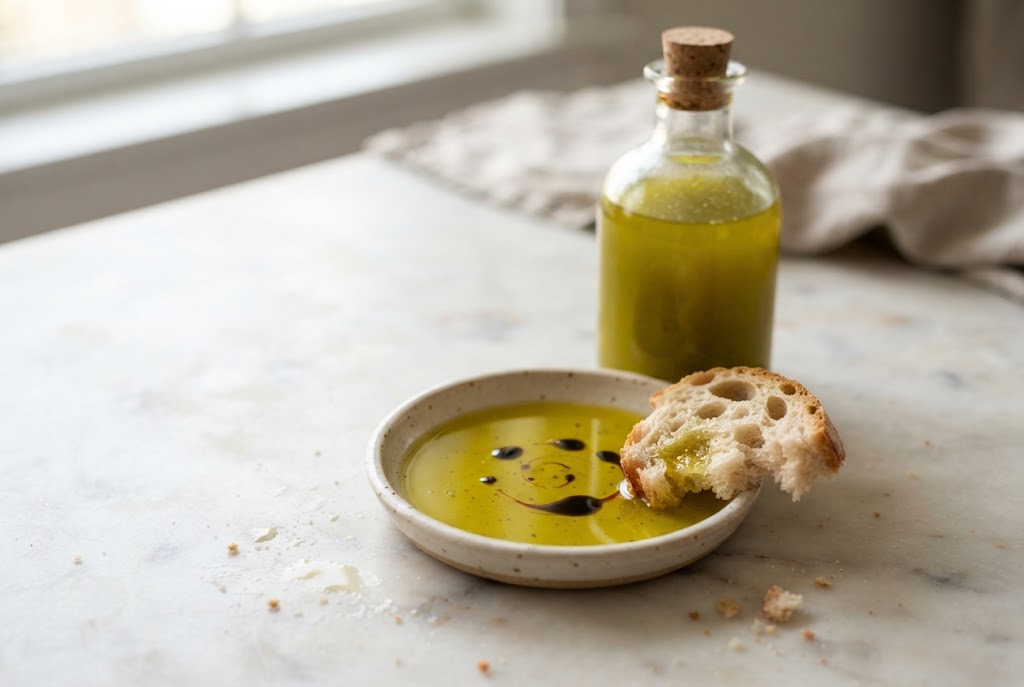
- Pour it into a small bowl for dipping, or drizzle it directly over the cheese.
- Drizzle from height so it spreads rather than pooling in one spot.
- Use it cold, always. Heat destroys the peppery compounds you paid for.
- Finish with flaky salt immediately after the oil.
- Buy a dark bottle or tin and keep it out of light and heat.
- Fix: rancid, crayon-like smell? Oil goes off within a year of pressing. Buy small bottles and check the harvest date.
What to buy
| Product | Where | Notes |
|---|---|---|
| Tuscan or Umbrian extra virgin | Italian delis, specialty | Grassy and peppery. The classic finishing style. |
| Ligurian (Taggiasca) oil | Italian delis | Mild, buttery, delicate. Better on fish and fresh cheese. |
| Greek Koroneiki oil | Greek grocers, specialty | Robust and green. Excellent value. |
| California Olive Ranch | Grocery | Widely available, honest, reasonably priced. Good everyday finishing oil. |
| New-harvest / olio nuovo | Specialty, Nov–Jan | Cloudy, intensely green and peppery. Seasonal and remarkable. |
Label check: look for a harvest date, not just a best-before. Extra virgin in a dark glass bottle or tin, single-origin if possible.
Skip: anything in a clear plastic bottle, and anything labelled "light" or "pure" olive oil — those are refined and have no flavour.
Quick FAQ
What's a finishing olive oil?
An extra virgin oil used cold, poured over food rather than cooked with. Grassier, more peppery, and more expensive than cooking oil.
Why does good olive oil burn my throat?
Oleocanthal, a compound in fresh oil. The peppery catch is a sign of quality, not a fault.
How do I know if olive oil is fresh?
Look for a harvest date on the label. Olive oil is at its best within a year of pressing.
What do I drizzle it on?
Burrata, fresh mozzarella, ricotta, bread, and hard aged cheese. Always with flaky salt.
Should I cook with my finishing oil?
No — heat destroys the compounds you're paying for. Keep a cheaper oil for the pan.