The short version
Sheep's milk cheese aged in brine — salty, tangy, crumbly and much sharper than the crumbled tubs suggest. Buy it as a block in its own brine, not pre-crumbled and dry, and it becomes one of the best-value cheeses on any board.
What it is
Real feta is a protected designation: made in Greece, from sheep's milk or a sheep-and-goat blend, aged in brine for at least two months. Everything else is "feta-style." The brine is not packaging — it's part of the aging, and it keeps the cheese moist and salty right through.
- Taste
- salty, sharp, tangy, faintly barnyardy
- Texture
- firm and crumbly, creamy when good
- Look
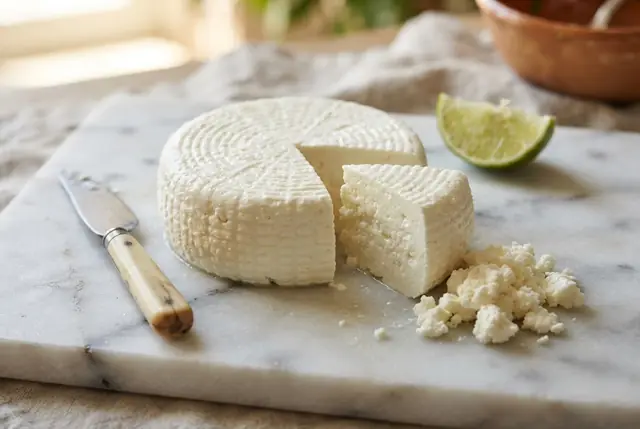
- stark white blocks or slabs, no rind
Salt is the mechanism, and it works outward. Feta is salty enough to season whatever it touches — tomatoes, watermelon, cucumber, olive oil. On a board that means it functions less like a cheese to be tasted alone and more like a seasoning with body, which is why almost every good feta pairing involves something bland and wet.
What it pairs with — and why
| Pair it with | Why it works |
|---|---|
| Watermelon and mint | Salt against water and sugar. The best summer bite in this section. |
| Cucumber and tomato | The Greek salad, taken apart. Feta does the seasoning. |
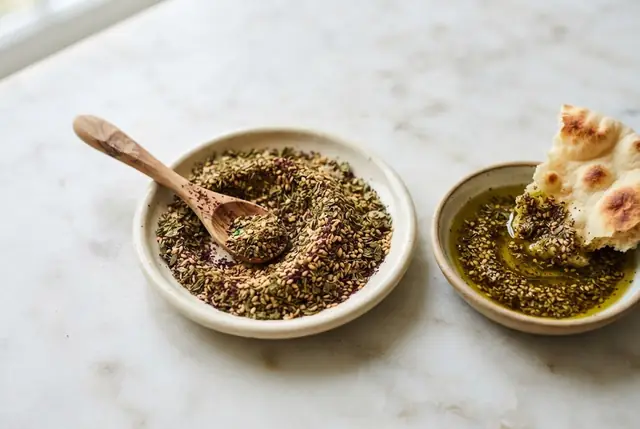
| Olive oil and dried oregano | Not a pairing so much as the traditional service. Pour it over a slab. |
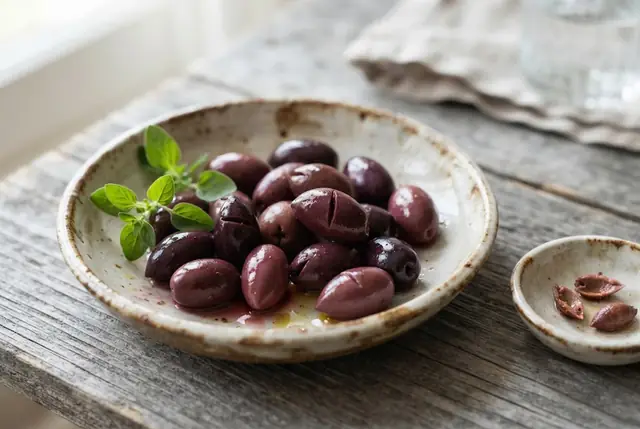
| Kalamata olives | Brine on brine — both are aged in salt, and they read as one thing. |
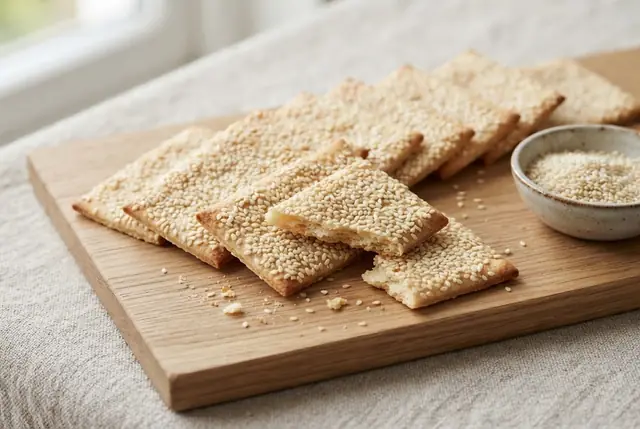
| Pita chips and sesame crackers | Sturdy Mediterranean bases that can take a salty crumble. |
| Honey and hot honey | Sweet against sharp salt. Whipped feta with hot honey is a modern standard. |
| Dry rosé, assyrtiko, retsina, ouzo | Greek and high-acid. |
Skip it with: delicate fresh cheeses like burrata, which lose to the salt, and rich sweet jams — feta wants clean sweetness like honey or fruit, not preserve.
How to prep it for the board
- Buy the block in brine. Pre-crumbled feta is dried and coated to stop clumping, and it's a noticeably worse cheese. This is the whole page.
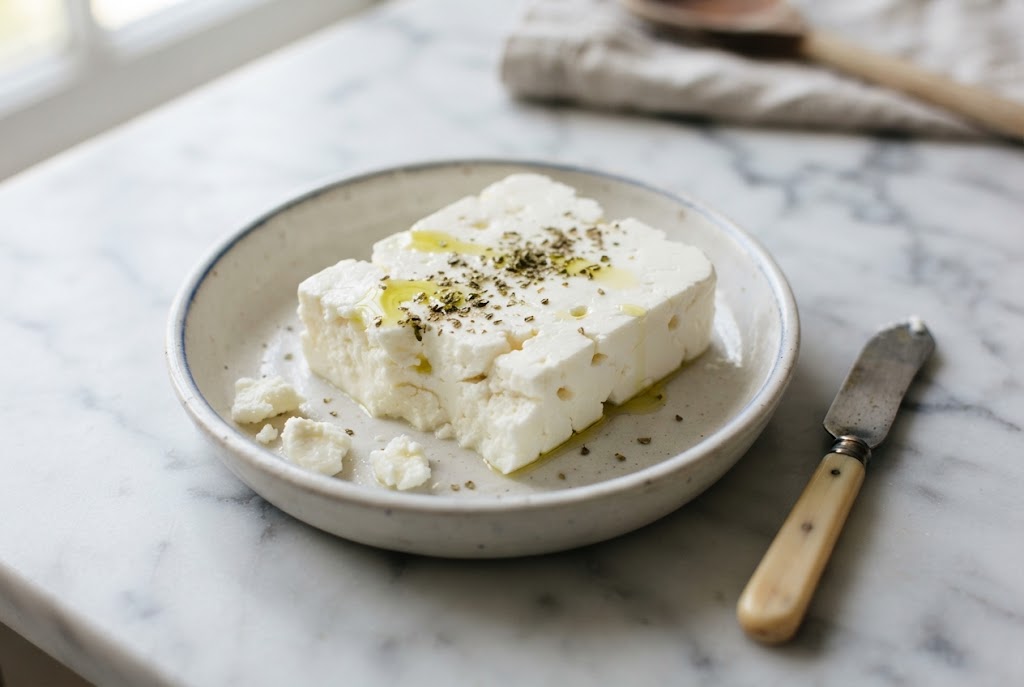
- Serve it as a slab, not crumbles — a rough rectangle with oil poured over it and oregano scattered on top looks like a dish.
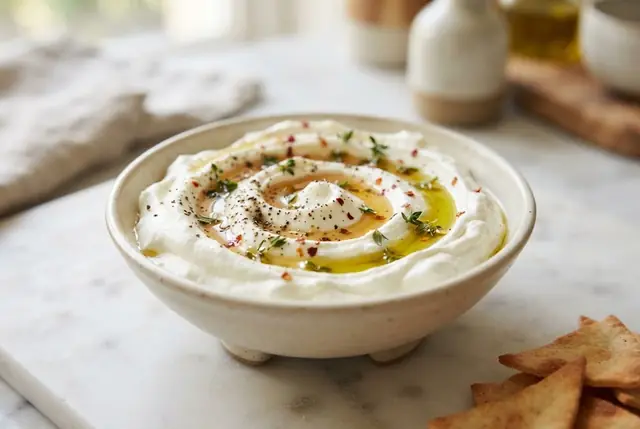
- Or whip it: feta, a splash of olive oil and a spoon of Greek yogurt in a food processor. Two minutes, and it becomes a dip.
- Serve 1–2 oz per person. An 8 oz block serves five to six.
- Rinse it briefly if it's aggressively salty, then pat dry.
- Put it in a shallow dish — it weeps brine and oil.
- Fix: dry and squeaky? Sit it in a little olive oil for twenty minutes. It softens and takes on the oil.
What to buy
| Product | Where | Notes |
|---|---|---|
| Greek feta in brine (PDO) | Cheese counter, Whole Foods, Greek markets | The real thing, sheep's milk. Buy this if you buy one. |
| Dodoni Feta | Grocery cheese case, Greek markets | Widely imported Greek brand. Reliable. |
| Mt Vikos Feta | Whole Foods, grocery | Widely available and good. |
| Bulgarian feta | Cheese counters, Eastern European markets | Creamier and tangier than Greek. Many people prefer it. |
| French feta | Cheese counters | Milder and softer. The gentle entry point. |
| Trader Joe's Feta in brine | Trader Joe's | Cheap and decent. Buy the brined tub, not the crumbles. |
Label check: sheep's milk (or sheep and goat) and packed in brine. Cow's milk "feta" is a different, blander cheese, and dry crumbles are a different product again.
Skip: pre-crumbled feta in a plastic tub. It's dried, often anti-caked, and it's the single biggest reason people think they don't like feta.
Ranked picks: our top-rated feta is Mt Vikos Traditional Feta (4.5 out of 5), and the best value is Athenos Feta Chunk. See the full ranking of the best feta.
Quick FAQ
Is all feta made from sheep's milk?
Real Greek PDO feta is sheep's milk, or sheep with up to 30% goat. Cow's milk versions exist but can't legally be called feta in the EU.
Block or crumbles?
Block, in brine, always. Crumbles are dried and coated.
Why is mine so salty?
It's brine-aged — that's correct. Rinse it briefly and pat it dry if it's too much.
How much per person?
1–2 oz. An 8 oz block serves five to six.
What's the easiest upgrade?
Whip it with olive oil and yogurt, then pour hot honey over the top.