The short version
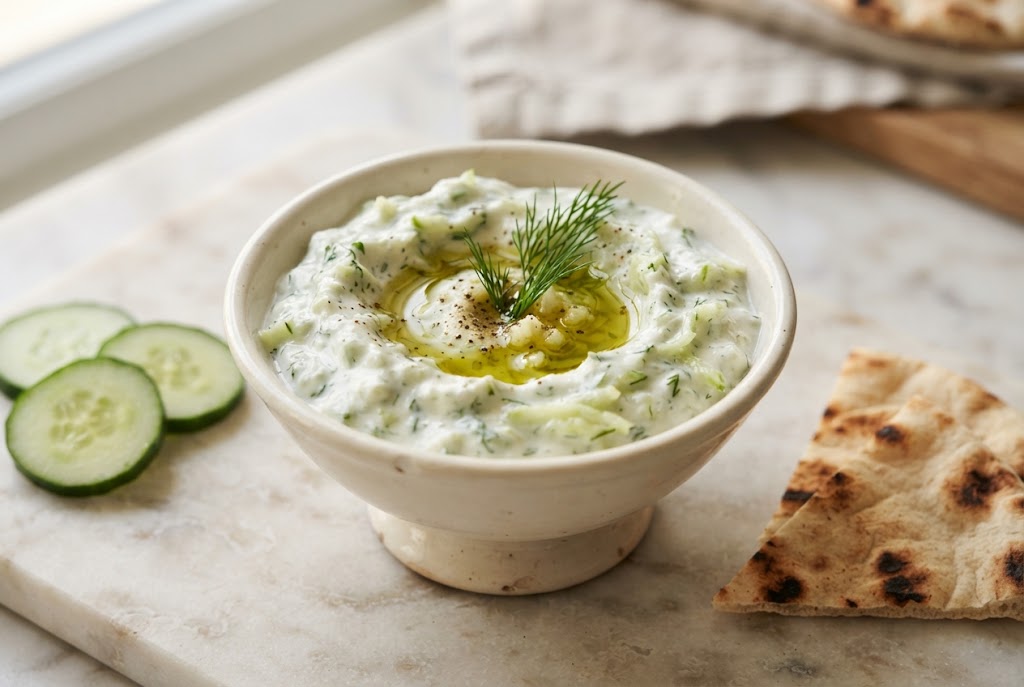
Thick Greek yoghurt with grated cucumber, garlic, dill and lemon. On a board of cured meat and aged cheese it's the only thing that's cold, light and sour, which makes it more useful than its simplicity suggests. The one technique that matters is wringing the water out of the cucumber.
What it is
Strained yoghurt mixed with grated or finely diced cucumber, crushed garlic, lemon or vinegar, olive oil and dill or mint. Turkish cacık is thinner; Indian raita is a related idea with different spicing.
- Taste
- tangy, garlicky, herbal, cooling
- Texture
- thick and creamy with fine cucumber shreds
- Look
- white flecked with green, glossy with oil
The mechanism is lactic acid and water together. Everything else on a board coats the palate; yoghurt's acidity plus the cucumber's high water content strips that coating away. It's the same function a grape performs, but it can be scooped and spread, which makes it work with bread rather than beside it.
What it pairs with — and why
| Pair it with | Why it works |
|---|---|
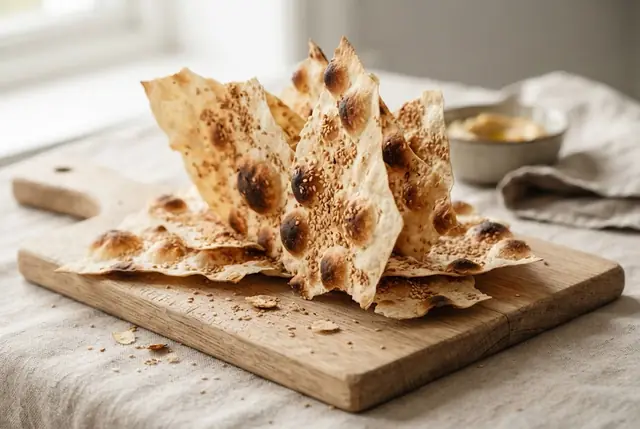
| Pita chips and lavash | The intended base. It's loose, so it needs bread rather than a thin cracker. |
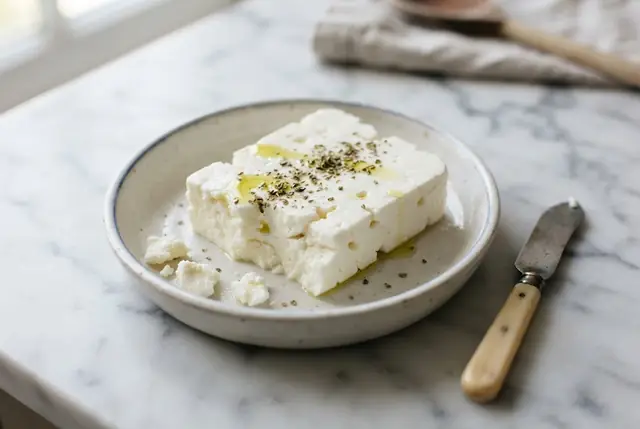
| Feta | Salty and sharp against cool and mild — the two halves of a Greek plate. |
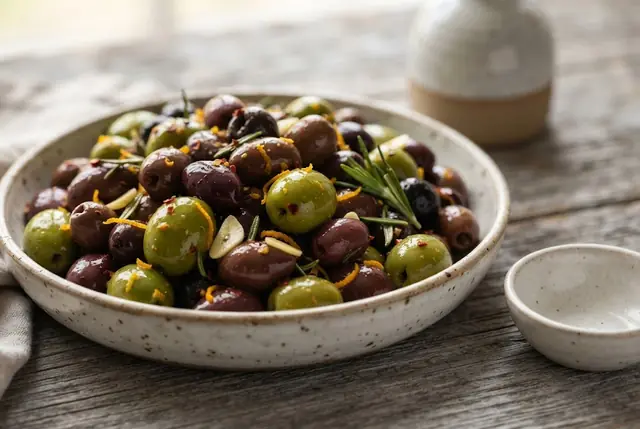
| Olives | Brine against dairy acid. Both cut fat, from different directions. |
| Cucumber and raw vegetables | Doubling down. The cleanest corner of any board. |
| Grilled lamb, kofta, souvlaki | Its native context. Relevant if the board includes hot meat. |
| Spicy salami and hot honey | Yoghurt is what puts out chilli heat. Useful if the board runs hot. |
Skip it with: delicate aged cheeses. Raw garlic is not subtle.
How to prep it for the board
- Grate the cucumber, salt it, and let it sit ten minutes.
- Squeeze it dry in a clean towel — hard. This is the entire recipe's difficulty, and skipping it is why homemade tzatziki turns watery.
- Mix: 1 cup thick Greek yoghurt, the drained cucumber, 1–2 crushed garlic cloves, lemon juice, olive oil, chopped dill, salt.
- Chill an hour. The garlic mellows and the flavours join.
- Serve cold, in a bowl with a spoon, with oil pooled on top.
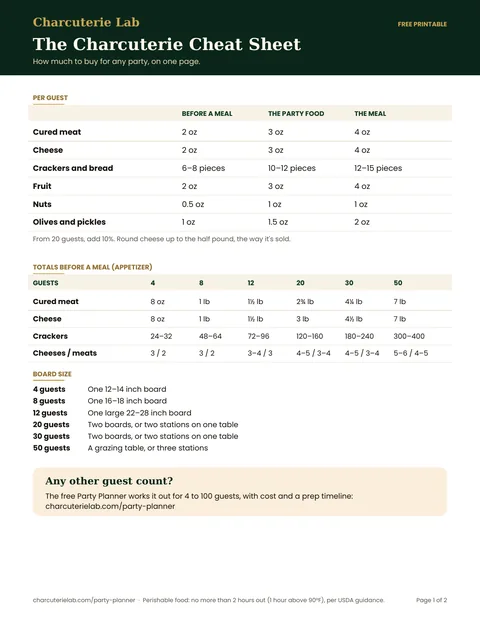
- Serve 0.75 oz per person.
- Fix: too garlicky? It gets stronger as it sits — use one clove, not three, if you're making it ahead.
What to buy
| Product | Where | Notes |
|---|---|---|
| Full-fat Greek yoghurt | Any grocery | The base. Low-fat yoghurt makes thin, sour tzatziki. |
| English or Persian cucumbers | Grocery | Fewer seeds, less water. Better than field cucumbers. |
| Greek deli tzatziki | Greek and Middle Eastern grocers | Usually excellent and properly garlicky. |
| Cedar's or supermarket tzatziki | Grocery | Mild and reliable. Under-garlicked but fine. |
| Turkish cacık | Turkish grocers | Thinner, mintier, sometimes served as a soup. |
Label check: yoghurt and cucumber should lead. Some supermarket versions are mostly sour cream.
Skip: low-fat yoghurt and anything with added starch or gum.
Quick FAQ
How do I stop tzatziki being watery?
Grate the cucumber, salt it, let it sit ten minutes, then wring it out hard in a towel before mixing.
What yoghurt should I use?
Full-fat Greek yoghurt. Low-fat versions make it thin and sour.
What do you serve tzatziki with on a board?
Pita chips, flatbread, raw vegetables, feta and olives.
Can I make it ahead?
Yes, and it's better after an hour. Note that the garlic gets stronger overnight, so go light if you're making it a day early.
Is tzatziki the same as raita?
They're related — both are yoghurt-and-cucumber — but raita uses Indian spicing and is usually thinner.