The short version
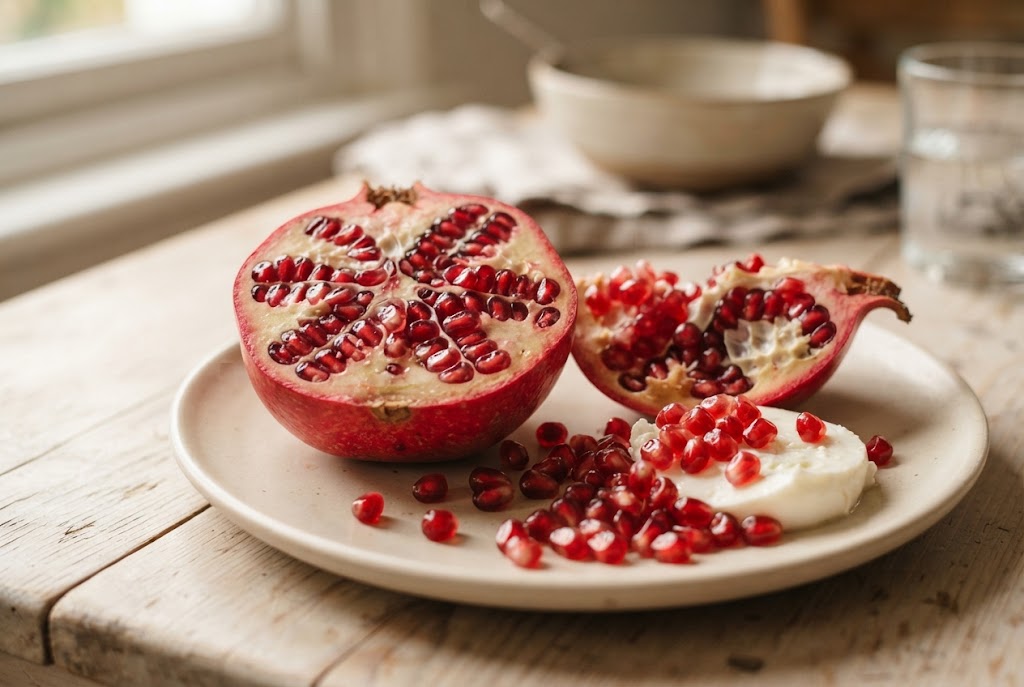
You're serving the seeds — arils — not the fruit. Scattered across a finished board they look like garnets and add sharp bursts of acid. The only real difficulty is opening one without redecorating the kitchen. Do it in a bowl of water.
What it is
A pomegranate is a leathery-skinned fruit packed with hundreds of arils: a crunchy seed inside a sac of tart red juice, separated by bitter white membrane. Peak season is October to January, which makes it the winter board fruit.
- Taste
- sharply tart, sweet, faintly tannic
- Texture
- a burst of juice, then a small crunchy seed
- Look
- translucent ruby beads — the most jewel-like thing available
Scale is the mechanism, and it's why pomegranate works where other fruit doesn't. Everything else on a board is measured in slices and clusters. Pomegranate arils are tiny, so they scatter into the gaps between other ingredients — filling a board visually and adding bursts of acid without taking up a slot.
What it pairs with — and why
| Pair it with | Why it works |
|---|---|
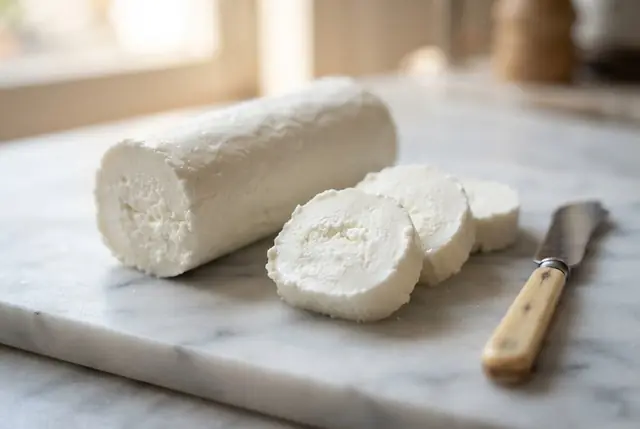
| Fresh chèvre and feta | Tart red beads on stark white cheese. The best-looking pairing in this section. |
| Whipped feta or labneh | Scattered over the top of a dip. Standard in Middle Eastern cooking. |
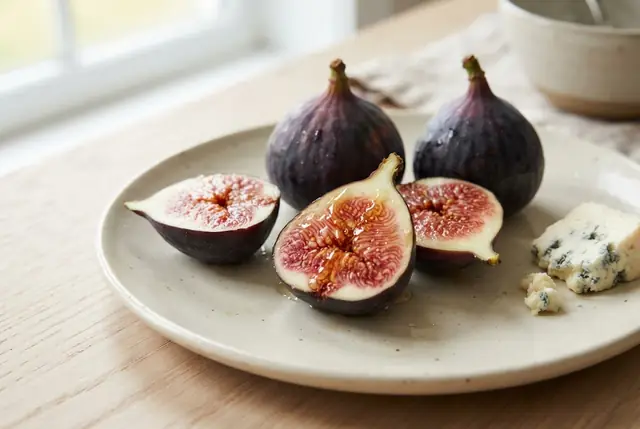
| Blue cheese | Sharp acid cutting salt and funk. |
| Walnuts and pistachios | Persian pairing — pomegranate, walnut and herbs go back centuries. |
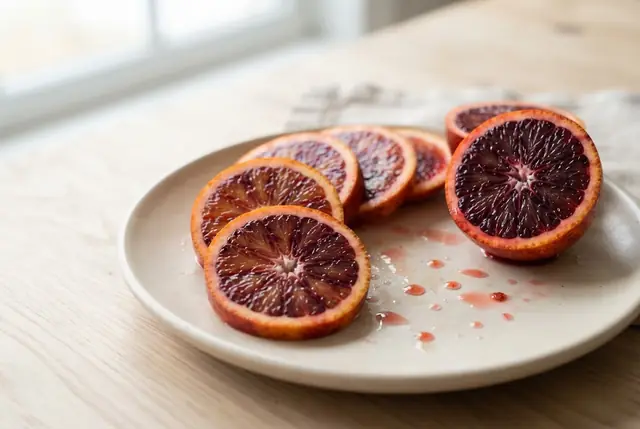
| Blood oranges | Two winter fruits, both red, both acidic. |
| Roasted vegetables and grain salads | Worth knowing — the arils are as useful elsewhere on a table. |
| Sparkling wine, rosé, Prosecco | Bubbles scrub fat the way the seeds scrub the palate, and the wine's acid matches the fruit's rather than fighting it. |
Skip it with: nothing on flavour. The scatter is small enough that it never dominates.
How to prep it for the board
- Open it underwater. Score the skin into quarters, submerge in a bowl of water, and break it apart with your hands. The arils sink, the white membrane floats. Skim the membrane, drain the arils. No spraying, no stained shirt.
- Skip the wooden-spoon method — hitting a halved pomegranate over a bowl works but sprays juice everywhere.
- Dry the arils on a towel before they go near cheese.
- Scatter, don't pile. Spread them across the finished board so they land in the gaps.
- Serve one to two tablespoons per person.
- Do it last, after everything else is in place.
- Fix: arils keep three to four days refrigerated in a sealed container, so this can be done the day before.
What to buy
| Product | Where | Notes |
|---|---|---|
| Whole pomegranates | Grocery, Oct–Jan | Heavy for their size with taut skin. Cheapest by far. |
| Pre-packed arils | Grocery refrigerated section | Convenient and much more expensive. Check the date — they go fast. |
| Wonderful variety | Most US grocery | The standard American variety. Reliable. |
| Middle Eastern markets | Local | Often cheaper and better in season. |
| Pomegranate molasses | Middle Eastern markets, Whole Foods | The concentrated syrup. A different but useful board item. |
| Dried barberries | Persian markets | The tart red alternative when pomegranates aren't around. |
Label check: a whole pomegranate should feel heavy and have tight, slightly angular skin. Round and light means it's drying out.
Skip: pre-packed arils if you have ten minutes. They cost several times as much and don't taste as good.
Quick FAQ
How do I open a pomegranate without the mess?
Score the skin, submerge it in a bowl of water, and break it apart underwater. The arils sink and the membrane floats.
Do you eat the seeds?
Yes. The crunchy seed inside each juice sac is edible and part of the texture.
How long do the arils keep?
Three to four days refrigerated in a sealed container, so you can prep ahead.
How much per person?
One to two tablespoons, scattered rather than served in a pile.
When are they in season?
October through January — which makes them the winter board fruit.