The short version
A fresh, unaged Mexican cheese that crumbles rather than melts. Mild, milky, lightly salted — closer to a gentle feta than to anything European. It's cheap, it's in every supermarket, and almost nobody puts it on a charcuterie board.
What it is
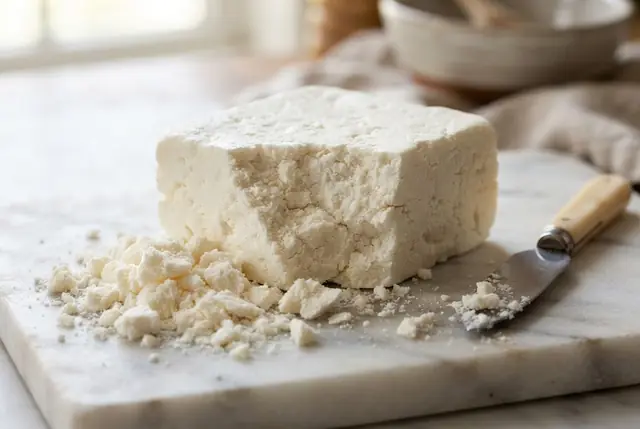
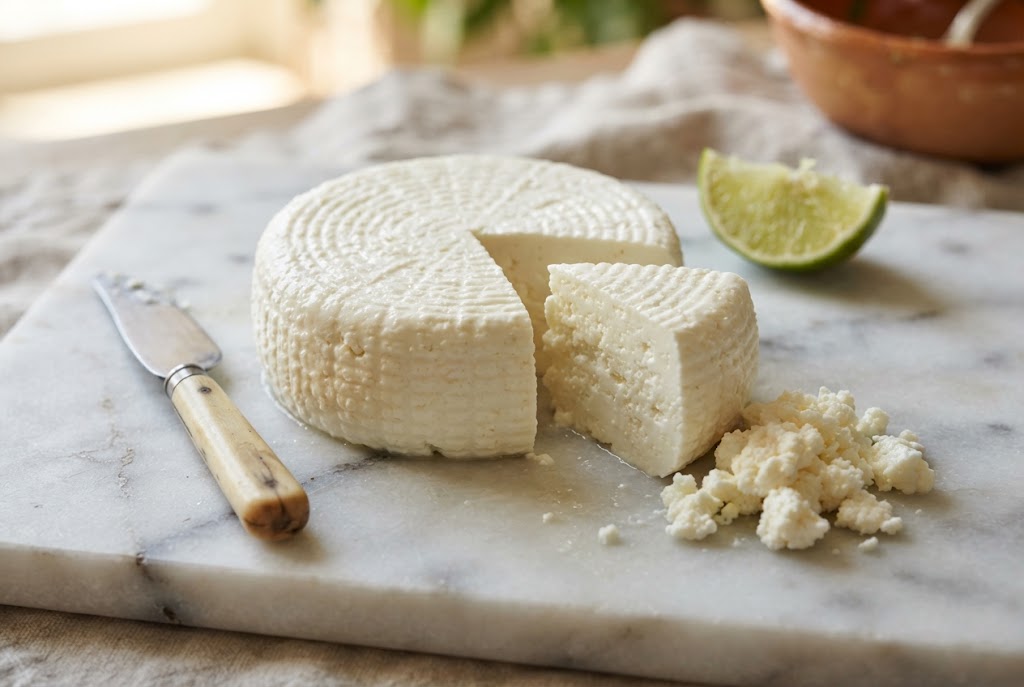
Queso fresco is made by curdling milk with an acid or rennet, draining, lightly salting and pressing. No aging, no rind, no culture development. It's the everyday fresh cheese of Mexican cooking, used the way Italians use ricotta salata — crumbled over things to add salt and body.
- Taste
- milky, mildly salty, clean, faintly tangy
- Texture
- firm but crumbly, moist, slightly springy
- Look
- white rounds or blocks, no rind, often wrapped
Restraint is the mechanism. Queso fresco is salted enough to register and mild enough to disappear behind anything else, which is exactly what you want crumbled over a spicy or acidic bite. On a board it plays the role a mild fresh cheese plays anywhere: it cools things down.
What it pairs with — and why
| Pair it with | Why it works |
|---|---|
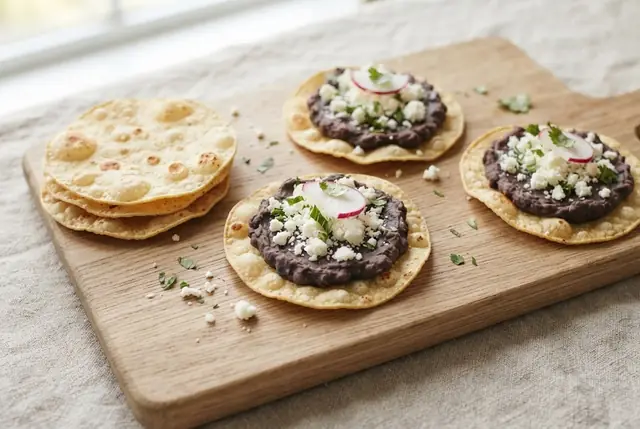
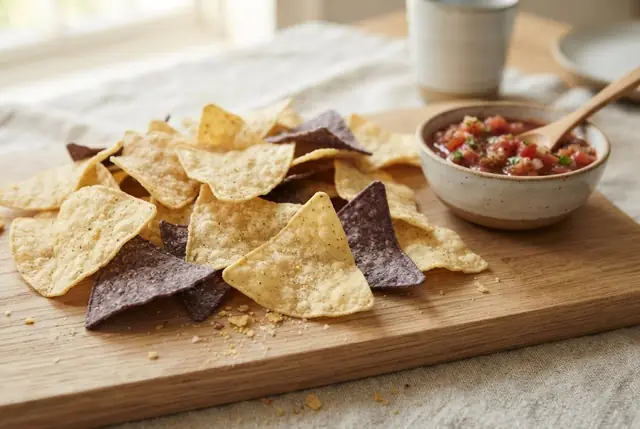
| Tostada rounds and tortilla chips | Toasted sweet corn under mild salted milk. The base it belongs on. |
| Pickled red onion | Sharp acid and color against soft white. The most photogenic bite in this category. |
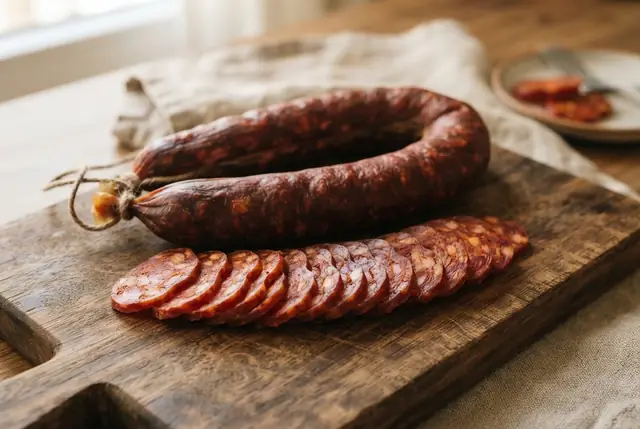
| Chorizo | Fat, paprika and heat cooled by a mild crumbling cheese. |
| Mango or pineapple with chili and lime | Sweet, hot, sour, salty — the cheese is the salt and the calm. |
| Black bean dip and refried beans | Earthy and dense with something clean crumbled over it. |
| Avocado and lime | Rich and green under salt and crumble. |
| Mexican lager, margaritas, dry rosé | Cold and acidic against a mild, milky cheese. |
Skip it with: blue cheese and strong aged cheeses, which erase it entirely. Queso fresco is a supporting cheese and it doesn't compete.
How to prep it for the board
- Crumble it by hand into a loose pile, don't cube it. Crumbling is what this cheese is for and it looks better.
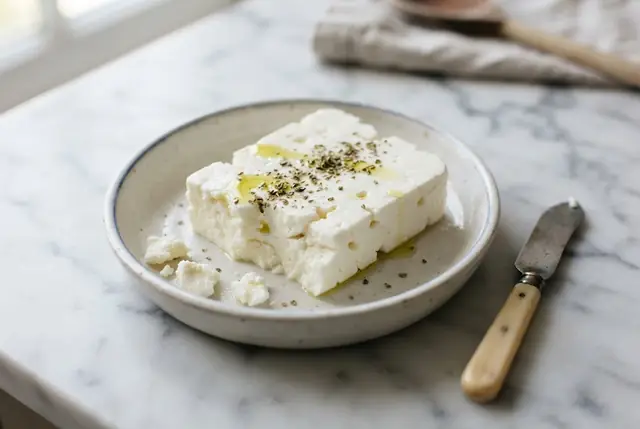
- Or slice it into thick planks and squeeze lime over them with chili powder — a complete two-minute dish.
- Serve 1–2 oz per person. A 10 oz round serves six to eight.
- Season it. Lime, chili, cilantro, a little salt. On its own it's deliberately plain.
- Put it beside the acidic and spicy things — pickled onion, salsa, chorizo — where its mildness is doing work.
- Keep it cold until serving. It's a fresh cheese with high moisture and it doesn't improve at room temperature the way aged cheeses do.
- Fix: watery on the board? Drain and pat dry, and serve it in a shallow dish rather than directly on wood.
What to buy
| Product | Where | Notes |
|---|---|---|
| Cacique Queso Fresco | Most grocery stores, Latin dairy case | The most widely available US brand. Consistent and cheap. |
| V&V Supremo Queso Fresco | Grocery, Latin markets | Widely stocked, slightly firmer. |
| Local Latin market queso fresco | Latin markets | Often made in-house. Fresher and better. |
| Queso panela | Latin dairy case | The firmer, moister relative. Slices cleanly and also doesn't melt. |
| Cotija | Latin dairy case | The aged, salty version. A different job — see its own page. |
| Ricotta salata | Cheese counters | The closest Italian equivalent if you can't find queso fresco. |
Label check: buy it as close to its date as possible. It's a fresh cheese and it goes sour rather than developing.
Skip: queso fresco for anything that needs melting. It won't. That's queso Oaxaca or Chihuahua.
Quick FAQ
Does queso fresco melt?
No. It softens and warms but holds its shape, which is why it's crumbled on top of hot food rather than into it.
Queso fresco or cotija?
Queso fresco is fresh, mild and moist. Cotija is aged, hard and very salty. Fresco cools a bite; cotija seasons it.
Is it like feta?
Milder and less tangy. Feta is brine-aged and sharp; queso fresco is fresh and gentle.
How much per person?
1–2 oz. A 10 oz round serves six to eight.
Does it need seasoning?
Yes. Lime, chili and cilantro at minimum. Plain, it's deliberately neutral.