The short version
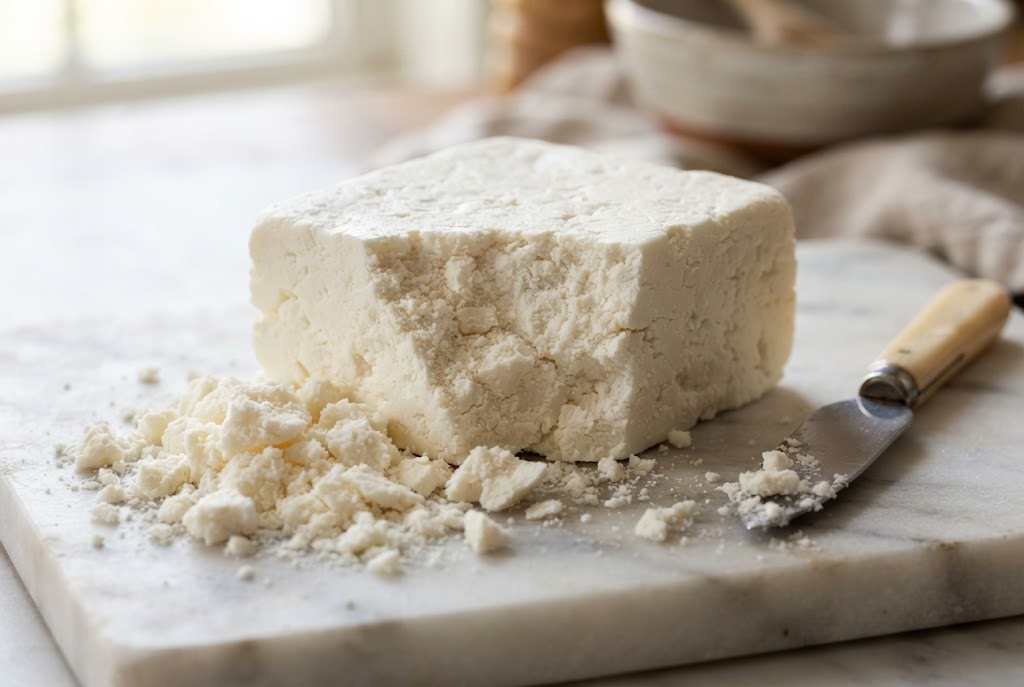
A hard, dry, very salty Mexican cheese that crumbles into shards. It's what goes on elote and esquites, and on a board it does the job pecorino does — seasoning whatever it touches rather than being eaten alone.
What it is
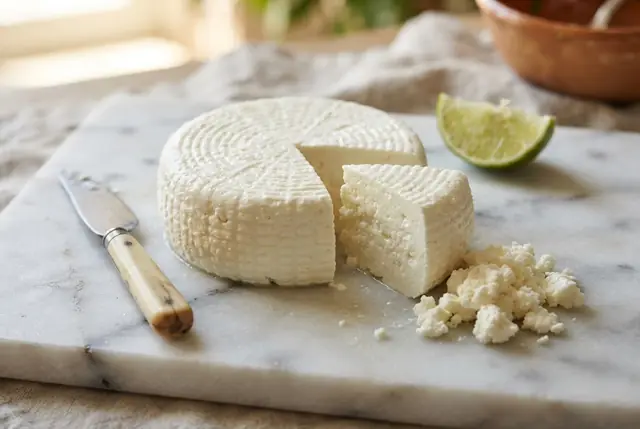
Cotija is named for a town in Michoacán. Made from cow's milk, pressed, dry-salted and aged from a few months to a year. Young cotija (fresco) is moist and crumbly; aged cotija (añejo) is hard, dry and grateable.
- Taste
- very salty, sharp, milky, faintly tangy
- Texture
- dry and firm, crumbles into irregular shards
- Look
- stark white, matte, no rind
Salt concentration is the mechanism. Cotija is dry-salted rather than brined, and aging drives out moisture while the salt stays put — so the salt-to-cheese ratio climbs. That's why a small amount seasons a whole bite, and why it needs something sweet, fatty or acidic beside it rather than another salty thing.
What it pairs with — and why
| Pair it with | Why it works |
|---|---|
| Grilled corn, lime and chili | Elote taken apart. Sweet, sour, hot and salty — the cheese is the salt. |
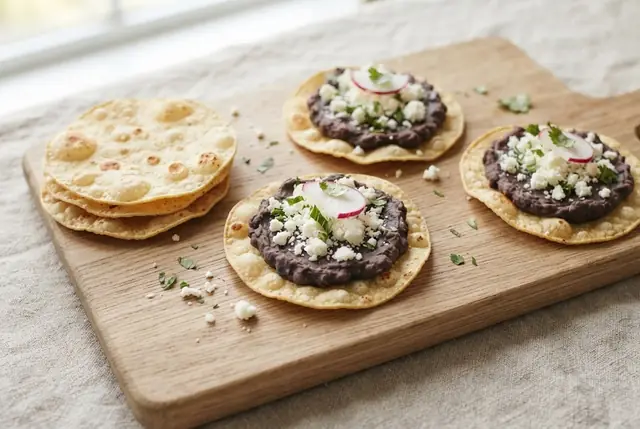
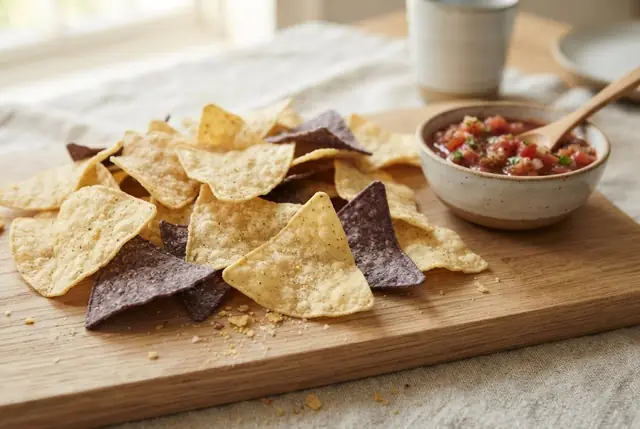
| Tostada rounds | Sweet toasted corn under sharp salt. |
| Avocado and lime | Rich, green and mild against dry salt shards. |
| Mango or pineapple with chili | Fruit sugar and heat cutting a very salty cheese. |
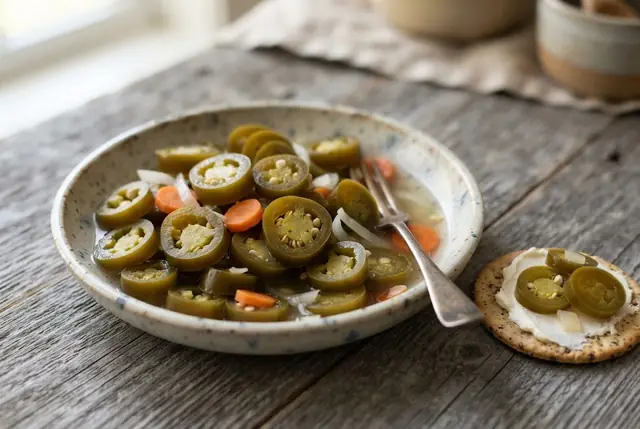
| Pickled red onion | Acid and color. Also the prettiest bite on this page. |
| Black bean dip | Earthy and mild with salt crumbled over it. |
| Mexican lager, margaritas, dry rosé | Cold and acidic, which is what this much salt needs. |
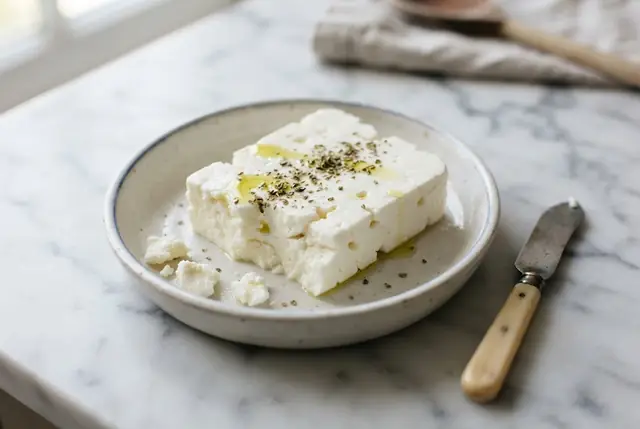
Skip it with: pecorino, feta or any other salty cheese on the same board. And skip delicate fresh cheeses next to it — cotija is loud.
How to prep it for the board
- Crumble it into a small bowl, don't cube it. It's a seasoning cheese and it should look like one.
- Serve under an ounce per person. It's saltier than almost anything else on the board.
- Put it beside the acidic and sweet things — lime, pickled onion, mango. That's where it earns its place.
- Temper briefly, 15 minutes. It doesn't change much with temperature.
- Give it a small spoon rather than a knife.
- Use it as a finishing element too — crumbled over avocado, beans or roasted vegetables elsewhere on the board.
- Fix: too salty on its own? That's expected. Serve it on something rather than beside it.
What to buy
| Product | Where | Notes |
|---|---|---|
| Cacique Cotija | Most grocery stores, Latin dairy case | The most widely available US brand. Reliable. |
| V&V Supremo Cotija | Grocery, Latin markets | Widely stocked, slightly drier. |
| Cotija añejo, wedge | Latin markets, cheese counters | The aged version in a block rather than pre-crumbled. Much better. |
| Local Latin market cotija | Latin markets | Often better and cheaper. Ask for añejo. |
| Queso fresco | Latin dairy case | The mild fresh counterpart — see its own page. |
| Ricotta salata | Cheese counters | The Italian equivalent. Milder, similar role. |
Label check: buy the block or wedge rather than pre-crumbled where you can. Pre-crumbled cotija is usually drier and often anti-caked.
Skip: using it where you want a mild cheese. That's queso fresco, and the two aren't interchangeable despite sitting next to each other in the case.
Quick FAQ
Is cotija like parmesan?
Similar role — hard, salty, crumbled over things — but cotija is saltier and less complex. It's a seasoning cheese rather than a savory-depth one.
Cotija or queso fresco?
Cotija is aged, hard and very salty. Queso fresco is fresh, soft and mild. Cotija seasons a bite; queso fresco cools one.
Does it melt?
No. It softens slightly and holds its shape.
How much per person?
Under an ounce. It's very salty.
Block or crumbles?
Block. Pre-crumbled is drier and often coated to stop clumping.