The short version
Two entirely different cheeses under one DOP. Asiago Pressato is young, soft and mild. Asiago d'Allevo is aged, hard and sharp. Buying the wrong one is the most common mistake with this cheese, and the label rarely helps.
What it is
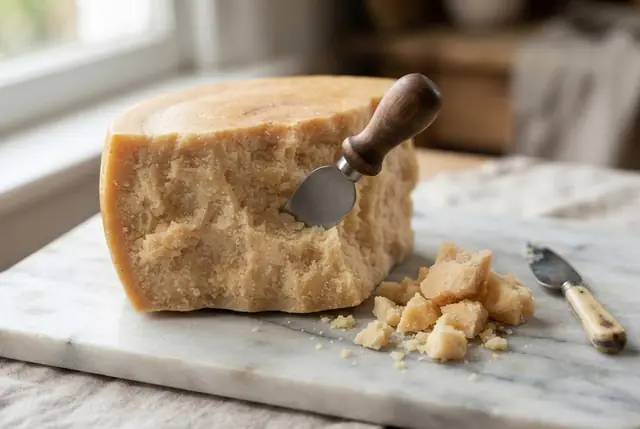
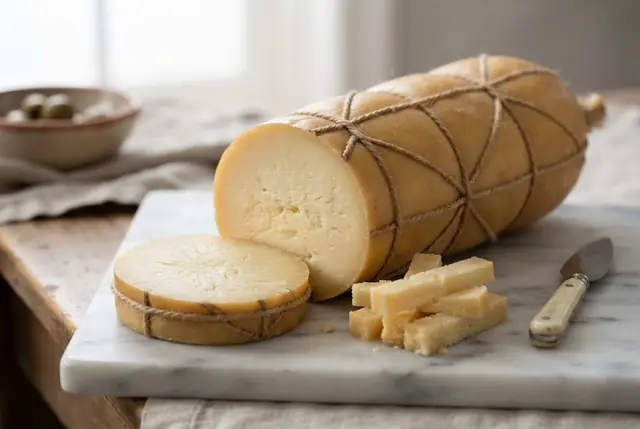
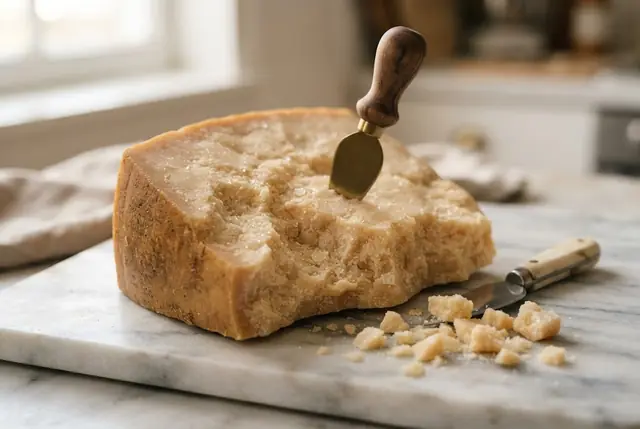
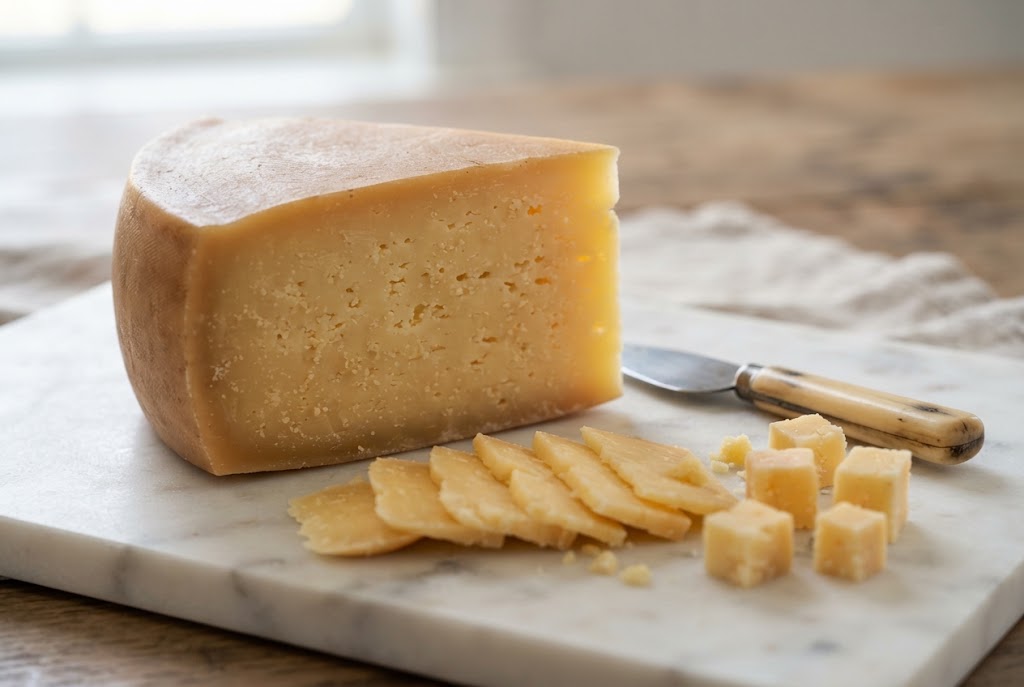
Asiago comes from the Veneto, and the DOP covers both styles. Pressato is made from whole milk and aged 20–40 days — pale, elastic and gentle. D'Allevo is made from partly skimmed milk and aged four months to two years, ending up dry, granular and assertive.
- Taste (fresh)
- mild, milky, buttery, faintly sweet
- Taste (aged)
- sharp, nutty, salty, savory
- Texture
- supple and springy fresh; hard and crumbly aged
- Look
- pale ivory with small holes fresh; deep straw and dry aged
Two products under one name is the real mechanism here, and it matters more than any flavor note. If you want a mild slicing cheese, buy Pressato. If you want a hard cheese to break into shards on a board, buy d'Allevo or a wheel labeled vecchio or stravecchio. The word "Asiago" alone tells you almost nothing.
What it pairs with — and why
| Pair it with | Why it works |
|---|---|
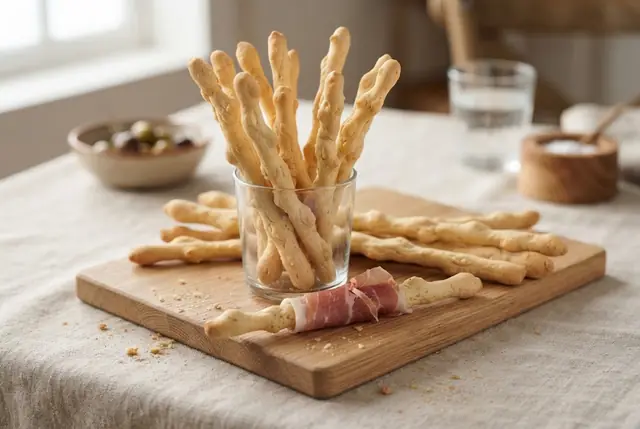
| Grissini and taralli | Plain Italian bread against either version. |
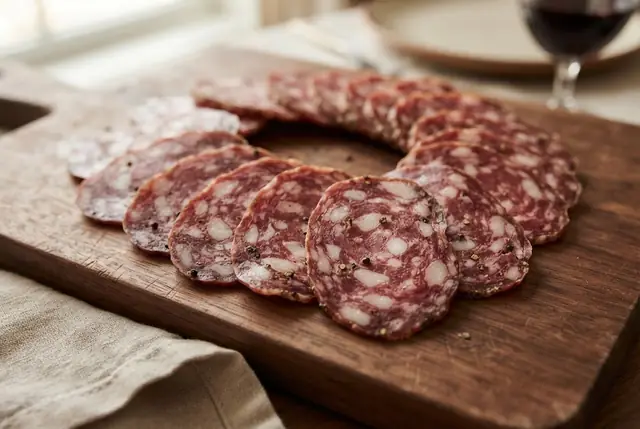
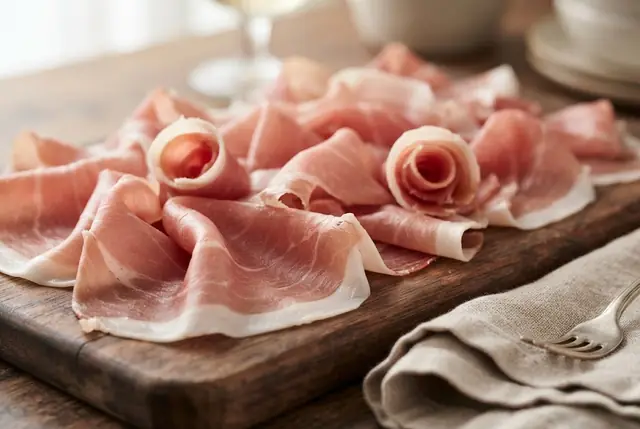
| Prosciutto and soppressata | Salt and cure with a nutty cheese — better with the aged style. |
| Honey and fig jam | Sweet against sharp. Aged Asiago needs this; fresh doesn't. |
| Apple and pear | Fruit acid, especially good with the fresh version. |
| Marinated olives and artichokes | Briny and oily neighbors on an Italian board. |
| Walnuts | Tannin and oil against a salty granular cheese. |
| Prosecco, Soave, Valpolicella | Northern Italian wines, light to medium. |
Skip it with: delicate fresh cheeses if you've got the aged style. And don't put Asiago and Parmigiano side by side — aged Asiago reads as a cheaper version of the same idea.
How to prep it for the board
- Know which one you bought. Fresh slices, aged breaks. Treating aged Asiago like a slicing cheese produces crumbs.
- Fresh: cut into cubes or thin slices. It's supple and holds a clean cut.
- Aged: break into shards with a short parmesan knife.
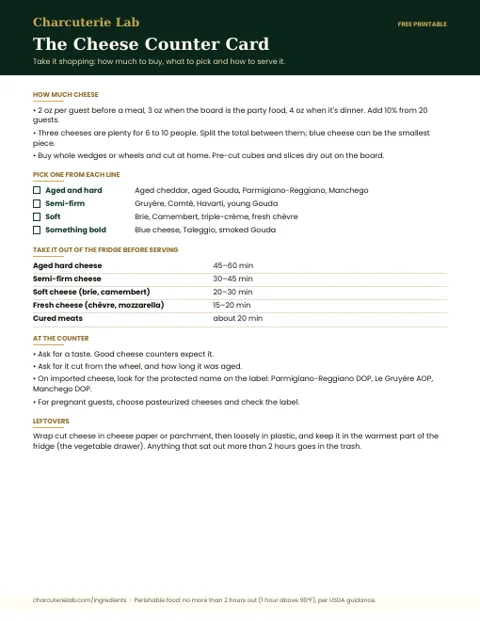
- Temper 30 minutes either way.
- Serve 1–2 oz per person.
- Use it as the value hard cheese on a big Italian board — it costs well under Parmigiano and does a similar job.
- Fix: rubbery and bland? That's Pressato, and it needs salt and oil, or a sharper partner beside it.
What to buy
| Product | Where | Notes |
|---|---|---|
| Asiago d'Allevo (aged/vecchio) | Cheese counters, Italian delis, Whole Foods | The board version. Sharp, granular, good value. |
| Asiago Pressato (fresh) | Grocery deli case | The mild slicing version. Fine, unremarkable. |
| BelGioioso Asiago | Most grocery stores | American-made, aged style, widely available and decent. |
| Asiago Stravecchio | Specialty shops, Italian delis | Two years plus. Genuinely excellent and much rarer. |
| Grana Padano | Grocery cheese case | The alternative if you want hard-and-Italian for the same money. |
| Aged provolone | Italian delis | Another sharp Italian option — see its own page. |
Label check: d'Allevo, vecchio or stravecchio for the aged style; pressato for the fresh. If the label says nothing, ask — or assume it's the mild one.
Skip: pre-shredded Asiago for a board, and "Asiago" bagels or seasoning as a guide to what the cheese tastes like. They're modeled on the aged style.
Quick FAQ
What's the difference between fresh and aged Asiago?
Fresh (Pressato) is soft, mild and springy. Aged (d'Allevo) is hard, sharp and granular. Same DOP, completely different cheeses.
Which one goes on a charcuterie board?
The aged one, broken into shards.
Is it like parmesan?
Aged Asiago is in the same family — hard, granular, savory — but less complex and cheaper.
Can you eat the rind?
No. Trim it.
How much per person?
1–2 oz.