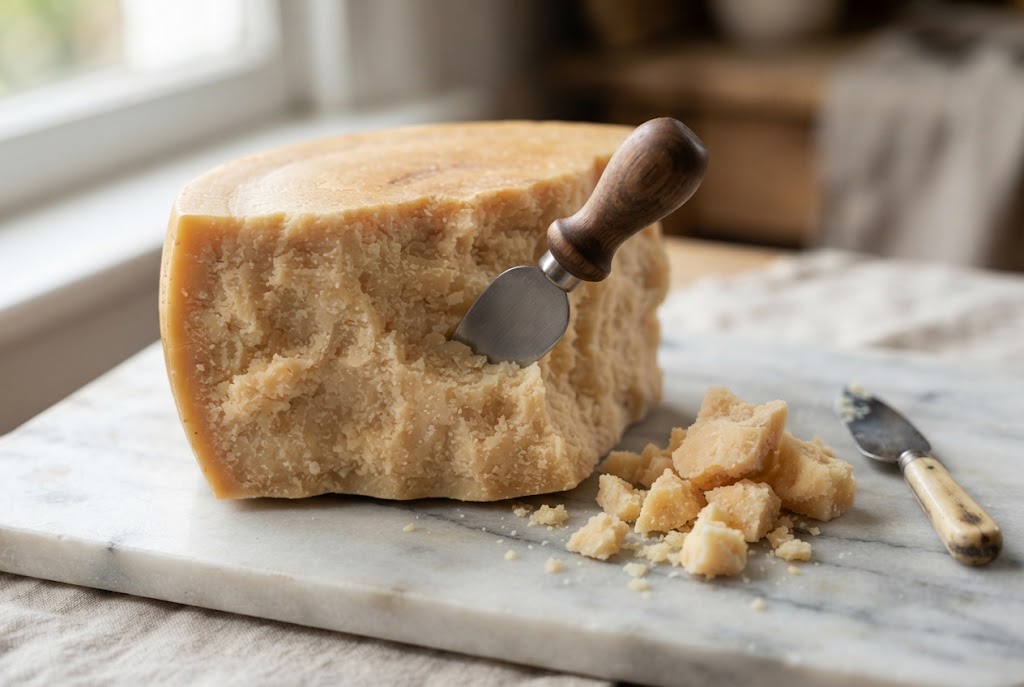
The short version
A hard Italian grating cheese from the Po Valley, made under looser rules than Parmigiano-Reggiano and aged for less time. Milder, softer, sweeter, and roughly half the price. For a large board it's often the better call.
What it is
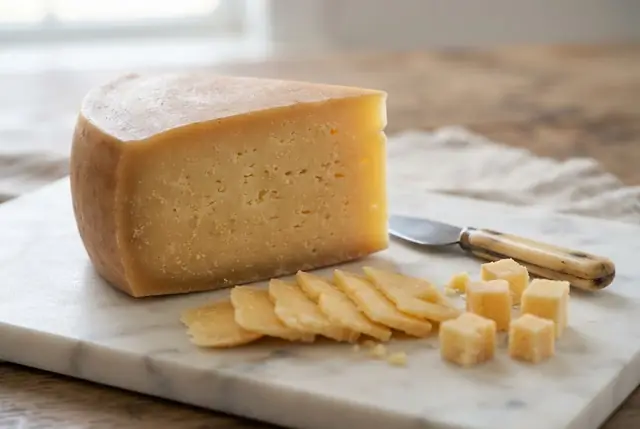
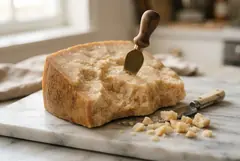
Grana Padano is DOP-protected but from a much larger production zone, with partially skimmed milk, permitted lysozyme as a preservative, and a minimum age of nine months rather than twelve. Grana means grainy — the family name for this style of hard, granular Italian cheese.
- Taste
- savory, nutty, mildly sweet, gently salty
- Texture
- hard and granular, but softer and less crystalline than Parmigiano
- Look
- pale straw, dry, thick natural rind
Shorter aging is the mechanism, and it cuts both ways. Less time means fewer free amino acids, so less of the deep savory punch and fewer crunchy crystals. It also means less bitterness and less salt intensity, which makes Grana Padano easier to eat in quantity — better as a board filler, worse as a showpiece.
What it pairs with — and why
| Pair it with | Why it works |
|---|---|
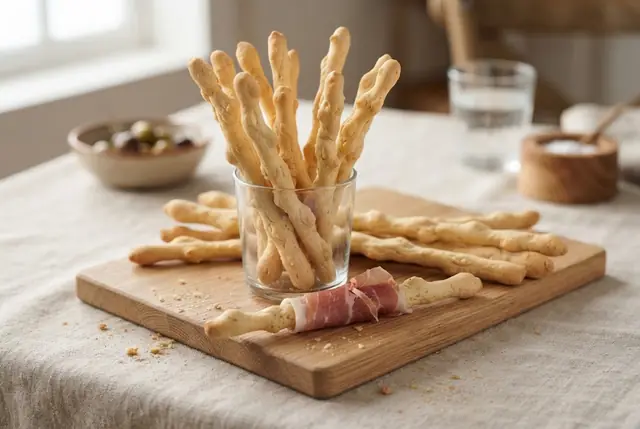
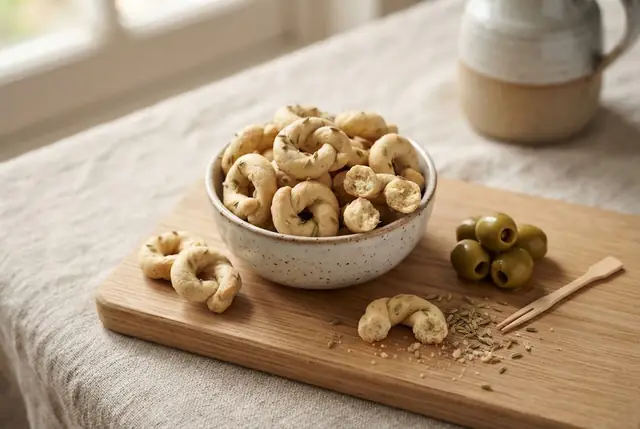
| Grissini and taralli | Plain Italian bread against a plain Italian cheese. Aperitivo, unchanged. |
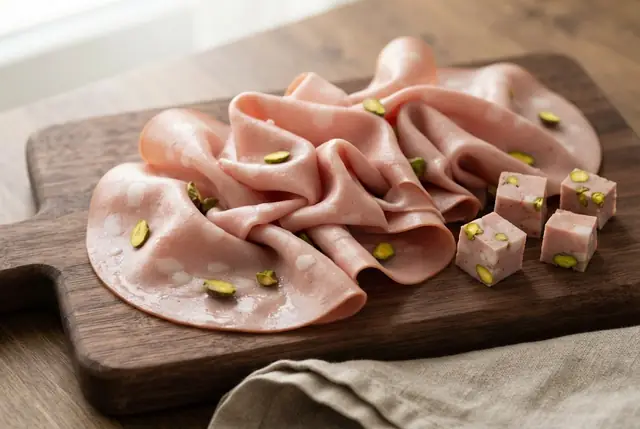
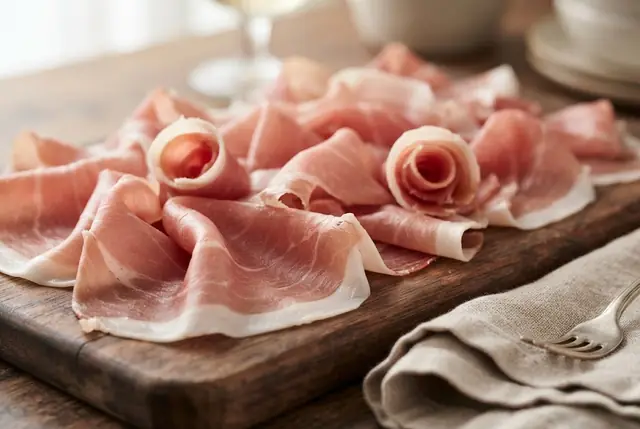
| Prosciutto and mortadella | Salt and fat with a savory, less aggressive cheese. |
| Fresh pear and green apple | Cool, sweet and acidic against dry and salty. |
| Honey | Sweetness suits Grana's gentler profile better than it does Parmigiano's. |
| Aged balsamic | The same pairing as Parmigiano, and it flatters the milder cheese. |
| Walnuts | Tannin and butterfat against granular salt. |
| Prosecco, Lambrusco, Soave | Light Italian wines. |
Skip it with: parmesan crisps, and don't serve it on the same board as Parmigiano-Reggiano unless the comparison is the point — side by side, Grana reads as the lesser cheese even though it's a good one.
How to prep it for the board
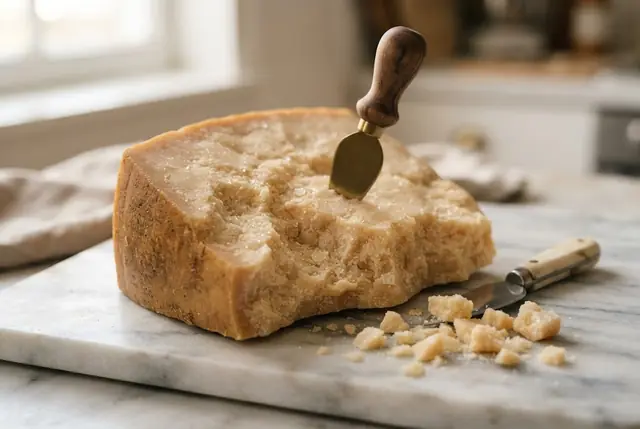
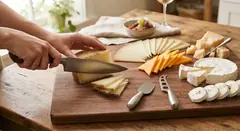
- Break it into shards with a short parmesan knife, the same as Parmigiano. It fractures the same way.
- Temper 30 minutes.
- Serve about 1 oz per person. It's mild enough that people take more than they do of Parmigiano.
- Use it as the volume hard cheese on a large board and spend the saved money on a smaller piece of something rare.
- Pile the shards loosely rather than fanning slices.
- Trim the rind and keep it for soup — it works exactly like a Parmigiano rind.
- Fix: wrap in parchment, never plastic. Hard cheeses sweat and sour in plastic within days.
What to buy
| Product | Where | Notes |
|---|---|---|
| Grana Padano DOP, 12–16 months | Grocery cheese case, Whole Foods, Costco | The standard. Widely available and consistently decent. |
| Grana Padano Riserva (20+ months) | Cheese counters, specialty | Closer to Parmigiano in depth. The one to buy for a board rather than a grater. |
| Costco Grana Padano | Costco | Best price per pound. Fine quality. |
| Trader Joe's Grana Padano | Trader Joe's | Cheap, small format. |
| Parmigiano-Reggiano | Cheese counters | The step up when the cheese is the showpiece — see its own page. |
| Piave | Cheese counters, Italian delis | Another northern Italian hard cheese. Sweeter, worth trying. |
Label check: the DOP mark and an age. Riserva means 20 months or more and is a real upgrade for board use.
Skip: pre-grated Grana Padano for a board, and any hard Italian-style cheese sold without a DOP mark or an age.
Quick FAQ
Grana Padano or Parmigiano-Reggiano?
Parmigiano for a showpiece, Grana Padano for volume. Grana is milder, softer and about half the price.
Why is it cheaper?
A larger production zone, partially skimmed milk, permitted preservative, and a shorter minimum age.
Is it a lesser cheese?
Different rather than lesser — but side by side with Parmigiano it will read as the milder one. Don't serve both unless comparison is the point.
How do I cut it?
Break it into shards with a short parmesan knife, same as Parmigiano.
How much per person?
About 1 oz.