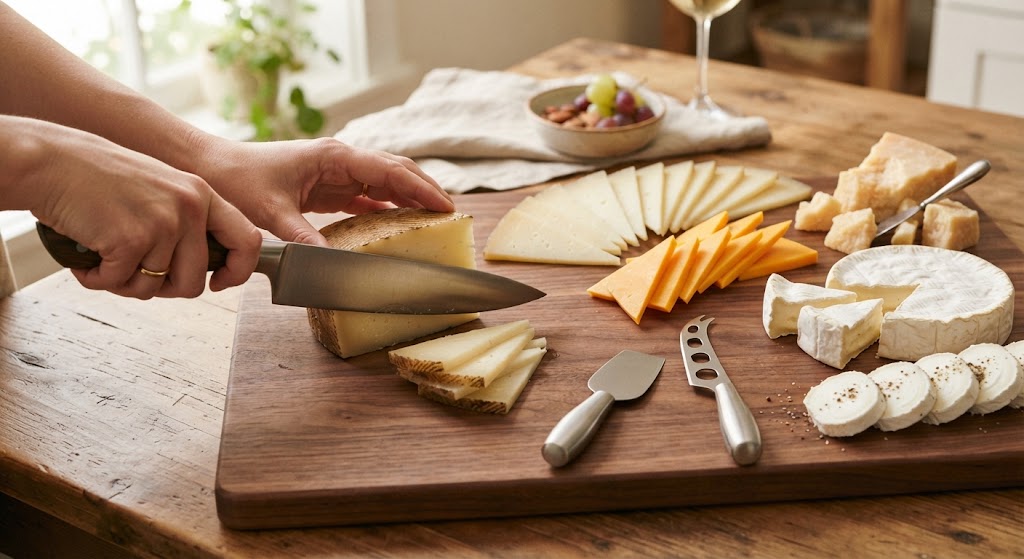
Quick Answer: Cut cheese by its shape and texture. Soft wheels (brie, camembert): leave whole or cut a few pie wedges. Soft wedges: long slivers from the point to the rind. Semi-firm wedges (Manchego, Comté): thin triangles, fanned. Blocks (cheddar, gouda): ¼-inch planks cut into triangles. Hard aged cheese (Parmigiano-Reggiano): rough chunks broken off with a short knife. Logs and blue cheese: a cheese wire or plain dental floss. Cut it cold, then let it warm up before serving, and pre-cut about two-thirds of each cheese.
The way you cut a cheese changes how it tastes, how the board looks and how fast it disappears. A cheddar cut into thin triangles feels like a different food from the same cheddar cut into cubes. This guide goes shape by shape, with the right knife for each and the mistakes to avoid.

The knives you need
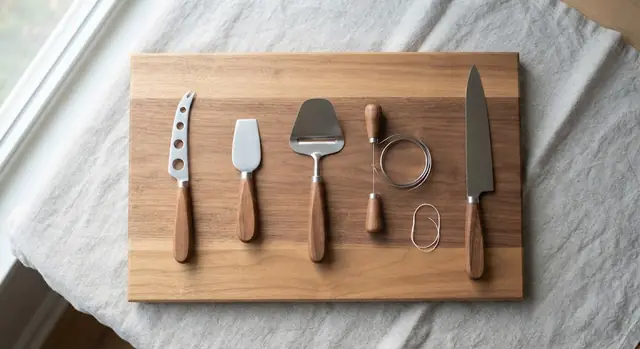
| Tool | Best for | Why it works |
|---|---|---|
| Soft cheese knife (with holes) | Brie, camembert, triple-crème | The holes stop soft cheese from sticking to the blade |
| Spade or parmesan knife | Parmigiano-Reggiano, aged gouda | Short and stiff; you pry chunks off instead of slicing |
| Cheese plane | Gouda, Jarlsberg, havarti | Shaves even, thin slices |
| Cheese wire or plain dental floss | Goat cheese logs, blue cheese, fudgy cheeses | Cuts without squashing or crumbling |
| Chef's knife | Blocks and semi-firm wedges | Long, straight cuts in one stroke |
You don't need all of them. A sharp chef's knife and a roll of unflavored dental floss handle almost every cheese on this page.
Cut cold, serve warm
Cheese cuts cleanly when it's cold, straight from the fridge. Warm cheese smears, crumbles and sticks to the knife. Once it's cut, let it warm up so the flavor comes through: soft cheese 20 to 30 minutes, semi-firm 30 to 45, aged hard cheese 45 to 60. The temperature guide has the full chart.
For soft cheese, dip the knife in hot water and wipe it dry between cuts. A warm, clean blade slides through without dragging.
How to cut each shape
Soft wheels: brie and camembert

Leave a small wheel of brie or camembert mostly whole. Cut three or four wedges from the center out, like a pie, and pull them slightly apart so guests can see the creamy inside. The white rind is edible, so leave it on. For a larger wheel, cut it in half first, then cut wedges from one half.
Soft wedges: triple-crème and brie wedges
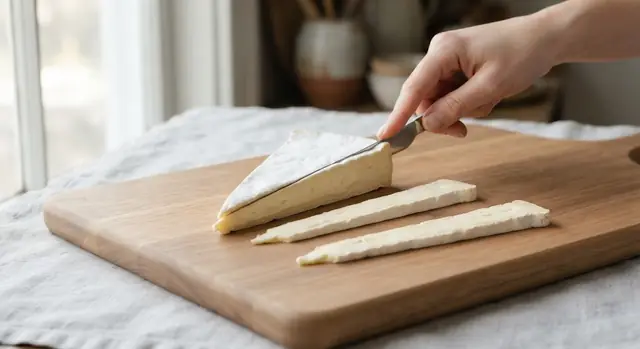
Cut long, thin slivers from the point to the rind, along the length of the wedge, so every piece has some center and some rind. Never cut the point (the "nose") off a wedge. The center is the ripest, best part, and taking it leaves everyone else with rind.
Semi-firm wedges: Manchego, Comté and Gruyère
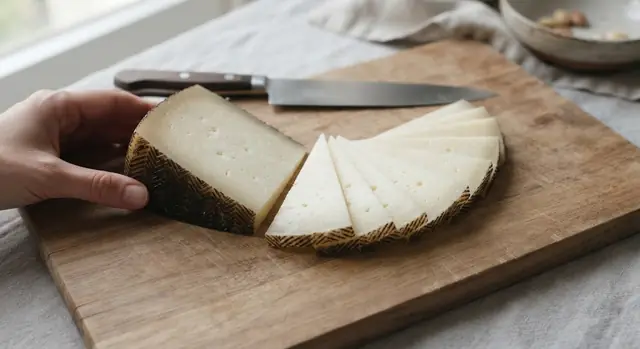
Lay the wedge on its side. If the rind isn't edible, as with waxed or coated Manchego, cut it off first. Then slice straight across into thin triangles, about ¼ inch thick, and fan them in an arc. This is the classic tapas cut and works for Comté, Gruyère and most semi-firm cheese.
Blocks: cheddar, gouda and pepper jack

Slice the block into ¼-inch planks, then cut each plank diagonally into two triangles. Stack them in a slightly staggered row so they look like a fallen deck of cards. For kids, cut batons (sticks) instead. Avoid cubes: they look like a party platter, dry out faster and are hard to stack. A crumbly aged cheddar that won't slice cleanly is better broken into rough chunks.
Hard aged cheese: Parmigiano-Reggiano and aged gouda
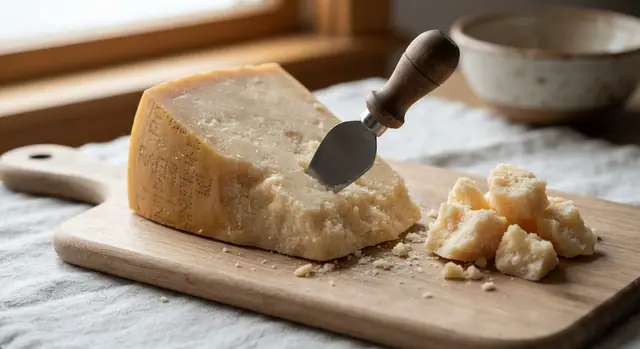
Don't slice it. Push a short spade knife into the cheese about an inch from the edge and twist to break off rough, bite-size chunks. The craggy surface shows off the crunchy crystals and looks better than any clean cut. This works for Parmigiano-Reggiano, Grana Padano and aged gouda. The hard outer rind isn't eaten, so leave it on the piece and break chunks away from it.
Logs: goat cheese
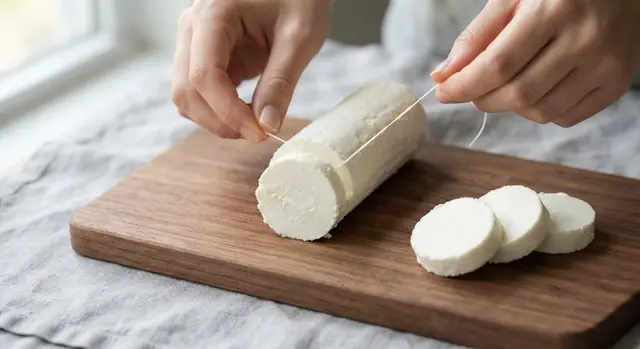
Cut a fresh goat cheese log with plain dental floss or a cheese wire. Slide the floss under the log, cross the ends over the top and pull down for a clean coin about ½ inch thick. A knife squashes it. For a showier piece, roll the whole log in chopped herbs, crushed pistachios or dried cranberries and serve it whole.
Blue cheese: Stilton and gorgonzola

Firm blues like Stilton cut best with a wire or a warm knife into small wedges; some crumbling is fine and looks natural. Soft, spoonable blues like gorgonzola dolce are easier to serve whole with a small spoon or spreader. Keep blue cheese at the edge of the board, because it flavors anything it touches. See how to build a blue cheese board.
Squares and washed rinds: Taleggio
Cut a square of Taleggio into small rectangles or triangles, rind and all. The rind is edible but strong, so guests can leave it if they like.
Fresh cheese: burrata and mozzarella
Don't cut burrata until it's on the board: set it whole in a shallow dish and tear it open right before serving so the cream spills out. Fresh mozzarella pearls go on as they are; a large ball can be torn into rough pieces.
Which rinds to eat
| Rind | Eat it? | Cheeses |
|---|---|---|
| White, bloomy rind | Yes | Brie, camembert, triple-crème, Humboldt Fog |
| Washed, orange or sticky rind | Yes, though it's strong | Taleggio, Epoisses |
| Natural rind on aged cheese | Usually not; it's hard and dry | Parmigiano-Reggiano, Comté, Gruyère |
| Wax, cloth or plastic coating | No | Waxed gouda, cloth-bound cheddar, coated Manchego |
How much to cut, and when
- Pre-cut about two-thirds of each cheese and leave the rest as a piece with its own knife. Guests know where to start, and the uncut piece doesn't dry out.
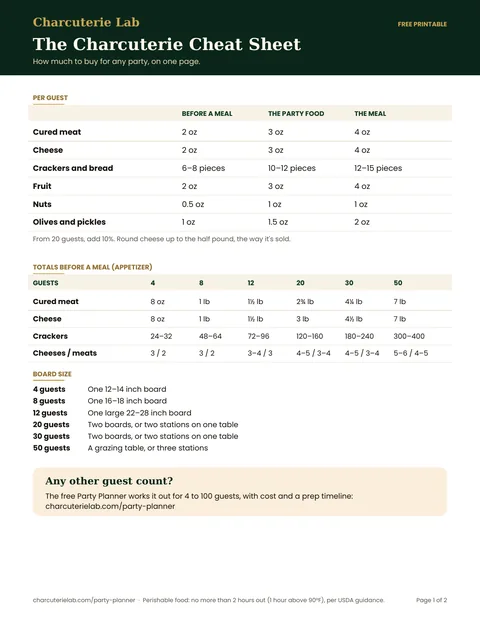
- Plan about 2 oz of cheese per guest before a meal and 3 oz when the board is the party food. See how much cheese for a charcuterie board.
- Cut up to 24 hours ahead. Wrap the cut pieces tightly in plastic wrap or wax paper, or pack them in an airtight container, and refrigerate. Leave soft cheese whole until the day of the party.
- Give each cheese its own knife, especially blue cheese, so flavors don't travel.
FAQ
How do you cut cheese for a charcuterie board? Cut it by shape and texture: leave soft wheels whole or cut a few pie wedges, slice semi-firm wedges like manchego into thin triangles, cut blocks into planks and then triangles, break hard aged cheese into rough chunks, and slice logs and blue cheese with a wire or dental floss. Cut it cold, then let it warm up before serving.
Should you cut cheese before putting it on a charcuterie board? Cut about two-thirds of each cheese and leave the rest as a piece with its own knife. Pre-cut pieces get people started, the uncut piece shows what the cheese is and keeps it from drying out, and you can cut more as the board empties.
Should you cut cheese cold or at room temperature? Cut it cold, straight from the fridge, because cold cheese cuts cleanly and holds its shape. Then let it sit out before serving: about 20 to 30 minutes for soft cheese, 30 to 45 for semi-firm and 45 to 60 for aged hard cheese.
Do you cut the rind off cheese for a charcuterie board? Leave edible rinds on, such as the white rind on brie and camembert. Remove wax, cloth and hard inedible rinds, such as the coated rind on Manchego and the rind on Parmigiano-Reggiano, or cut the pieces so the rind end is easy to leave behind.
How far ahead can you cut cheese for a charcuterie board? Up to 24 hours ahead. Wrap the cut pieces tightly in plastic wrap or wax paper, or pack them in an airtight container, and refrigerate. Leave soft cheeses whole until the day of the party, because cut faces dry out and lose their shape.
Get one board idea a week, plus the free charcuterie cheat sheet, when you join the Charcuterie Lab newsletter.