The short version
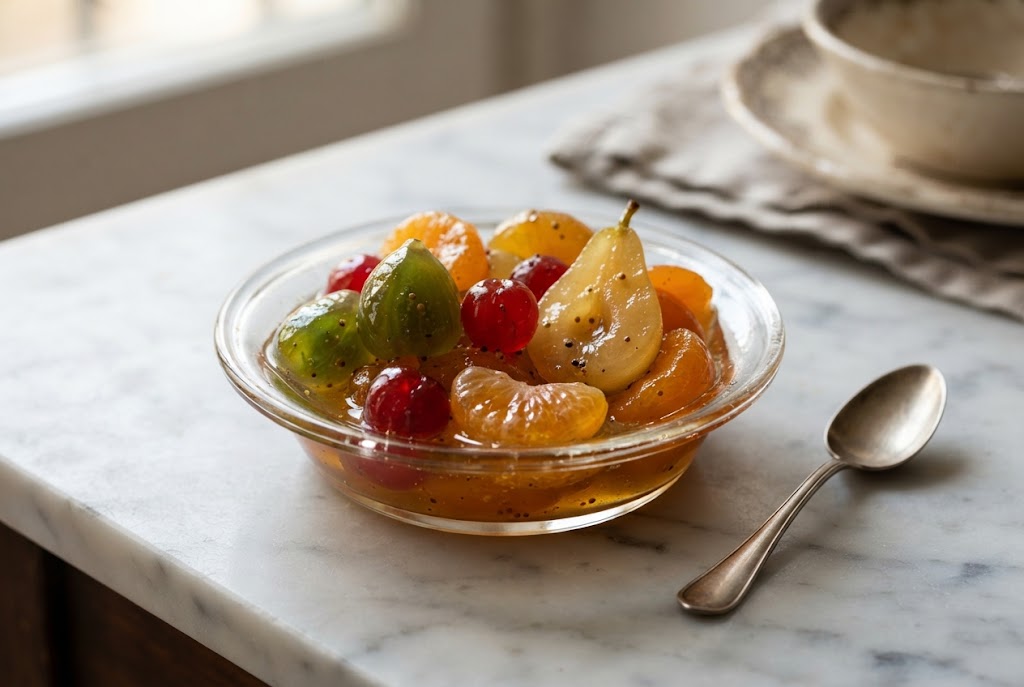
Whole candied fruit suspended in a syrup spiked with mustard essence. You bite something sweet and glossy and then get a clean mustard burn in the back of the nose. It is the most surprising thing you can put on a cheese board, and Italians have been doing it since the Renaissance.
What it is
Fruit — quince, pear, fig, cherry, apricot, sometimes whole tiny fruits — candied in syrup with mustard essence or mustard seed oil. Mostarda di Cremona is the famous mixed-fruit version, glossy and jewel-like; mostarda di Mantova is usually apple or quince and smoother.
- Taste
- very sweet, then sharp mustard heat in the sinuses
- Texture
- firm candied fruit in thick syrup
- Look
- translucent jewel-coloured fruit, glossy
The mechanism is delayed pungency. Mustard essence carries allyl isothiocyanate, which is volatile and hits the nose rather than the tongue — so the sugar registers first and the heat arrives after, in a completely different place. That split-second gap is why mostarda tastes like a trick.
What it pairs with — and why
| Pair it with | Why it works |
|---|---|
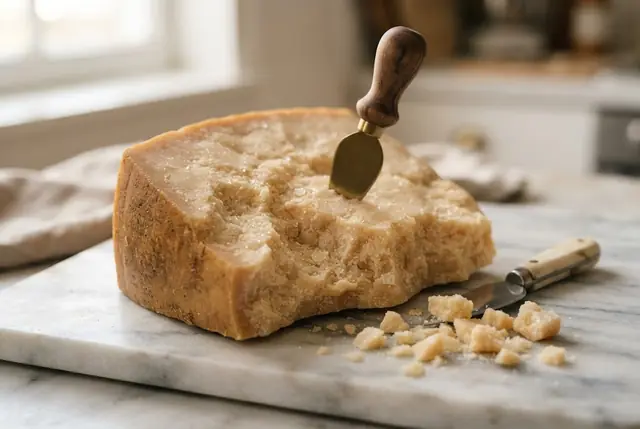
| Parmigiano-Reggiano | The classic. Crystalline salt and umami against sweet fruit and a mustard burn — three unrelated sensations in one bite. |
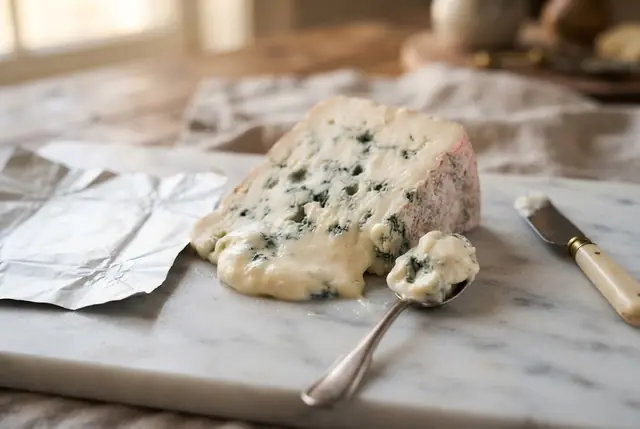
| Gorgonzola | Sugar for the salt, mustard heat cutting the fat. Better than honey for a strong blue. |
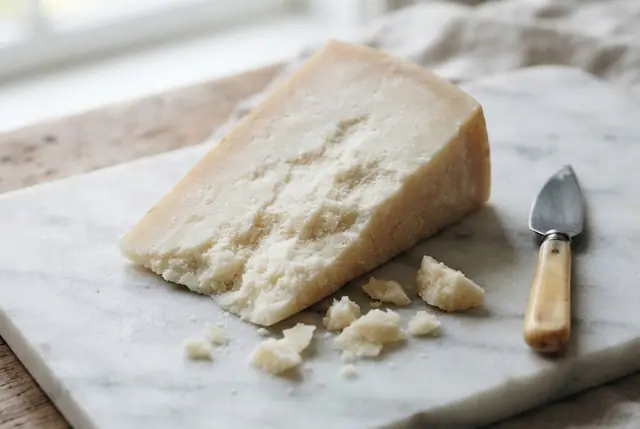
| Pecorino romano | Very salty, very mineral cheese needs something this assertive. |
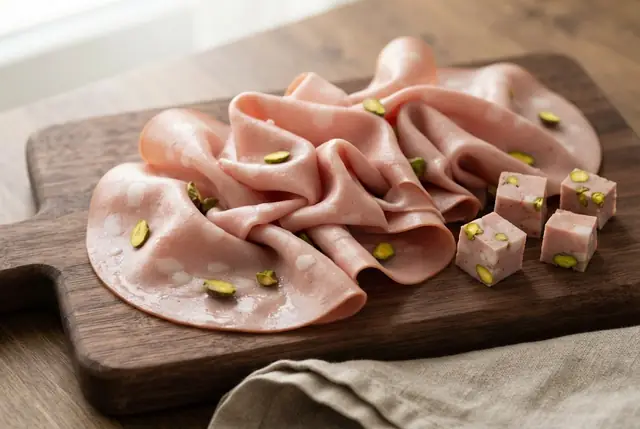
| Mortadella and boiled meats | Bollito misto is served with mostarda in northern Italy. It's the traditional use. |
| Aged gouda | Caramel and butterscotch under sweet fruit and sharp heat. |
| Grana Padano and hard cheeses | Same logic as Parmigiano, at a lower price. |
Skip it with: soft fresh cheeses and anything delicate. Mostarda is loud in three directions at once.
How to prep it for the board
- Spoon fruit and syrup into a small bowl. Both matter.
- Cut large pieces — a whole candied pear is too much for one bite.
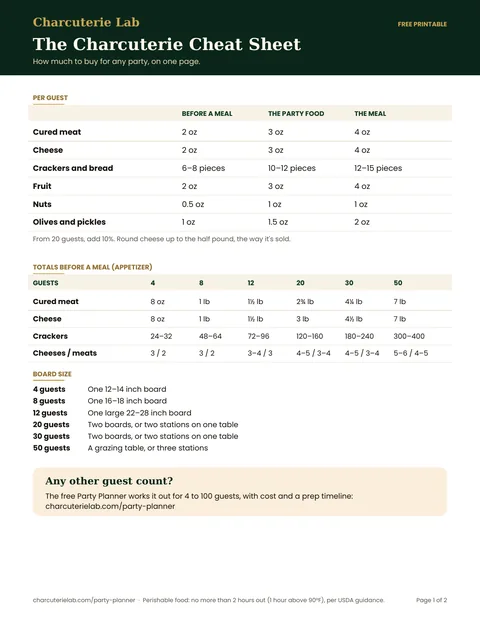
- Serve 0.5 oz per person.
- Put it beside the Parmigiano, and tell people what to expect.
- Warn them about the heat. It genuinely surprises people, and not everyone enjoys it.
- Serve at room temperature so the syrup is loose.
- Fix: too aggressive? Mostarda di Mantova and pear versions are much milder than Cremona.
What to buy
| Product | Where | Notes |
|---|---|---|
| Mostarda di Cremona | Italian delis, Eataly | Mixed candied fruit, brightly coloured, sharply mustardy. The showpiece. |
| Mostarda di frutta (pear or quince) | Italian delis | Milder and smoother. A better first mostarda. |
| Fig mostarda | Cheese shops, specialty | Mild and jammy. The easiest one to like. |
| Mostarda di Mantova | Italian specialty | Apple-based, gentler. Traditional with boiled meats. |
| Cherry mostarda | Italian delis | Excellent with hard sheep cheese. |
Label check: mustard essence or mustard oil should be in the ingredients — a "mostarda" without it is just candied fruit.
Skip: anything sold as mostarda that reads like a plain jam on the label.
Quick FAQ
What is mostarda?
An Italian preserve of candied fruit in a mustard-spiked syrup. Sweet first, then a sharp mustard heat in the nose.
What cheese goes with mostarda?
Parmigiano-Reggiano above all, plus gorgonzola, pecorino romano, and aged gouda.
Is mostarda spicy?
It has a sharp mustard pungency that hits the sinuses rather than the tongue. Cremona-style is the strongest; pear and fig versions are much milder.
Is it the same as mustard fruit?
Yes — "mustard fruits" is the English name for the same product.
How much per person?
About half an ounce, with some of the syrup.