Quick Answer: Store most cheese in cheese paper, or parchment or wax paper if that's what you have, not plastic wrap, which traps moisture against the surface. Wrap blue cheese in foil, keep fresh mozzarella and burrata in their liquid, and rewrap with fresh paper after each use. Keep cheese in the warmer part of the fridge, such as a cheese drawer.
There's a predictable moment at the end of a cheese board: you wrap the leftover Gruyère in plastic wrap, slide it into the refrigerator drawer, and figure you'll use it in a few days. When you pull it out, the surface is sweating, there's an off note in the smell, and the flavor has flattened in a way you can't quite explain.
Plastic wrap is responsible for that. Not because plastic is inherently damaging to cheese — but because cheese is a living product that needs to breathe, and plastic seals off that process entirely.
Understanding why cheese needs to breathe, and what each wrapping material actually does, means you can keep expensive cheese in proper condition from the board to the last slice.
Why Cheese Needs to Breathe
Cheese is not inert once it's cut. It continues to exchange gases with its environment — releasing carbon dioxide, managing moisture levels, and in some cases continuing microbial and enzymatic activity that affects flavor.
The rind is part of the system. Natural rinds — the orange, grey, or white exterior on aged cheeses — are semi-permeable surfaces that evolved precisely to regulate moisture while allowing gas exchange. A natural rind lets the interior breathe without drying out too quickly. When you wrap that rind in plastic, you interrupt this regulation.
Moisture trapped = wrong environment. Plastic wrap creates an anaerobic, high-humidity microclimate against the surface of the cheese. This promotes:
- Growth of unwanted molds (the grey-green-black varieties that produce off-flavors, as opposed to the white Penicillium molds used intentionally in rinds like Brie or Camembert)
- Ammonia accumulation — the byproduct of protein breakdown that gives poorly stored soft cheese its harsh, chemical edge
- Condensation against the cut face, which leads to a slippery, softened texture and washed-out flavor on the exposed surface
The cut face is the vulnerability. The rind generally takes care of itself with minimal intervention. What needs protecting is the exposed interior — the cut surface where no rind exists and where the cheese is directly exposed to air, competing organisms, and moisture fluctuation.
The goal of any cheese storage method: protect the cut face from drying out or absorbing off-odors, while still allowing the rest of the cheese to breathe.
What Cheese Paper Actually Does
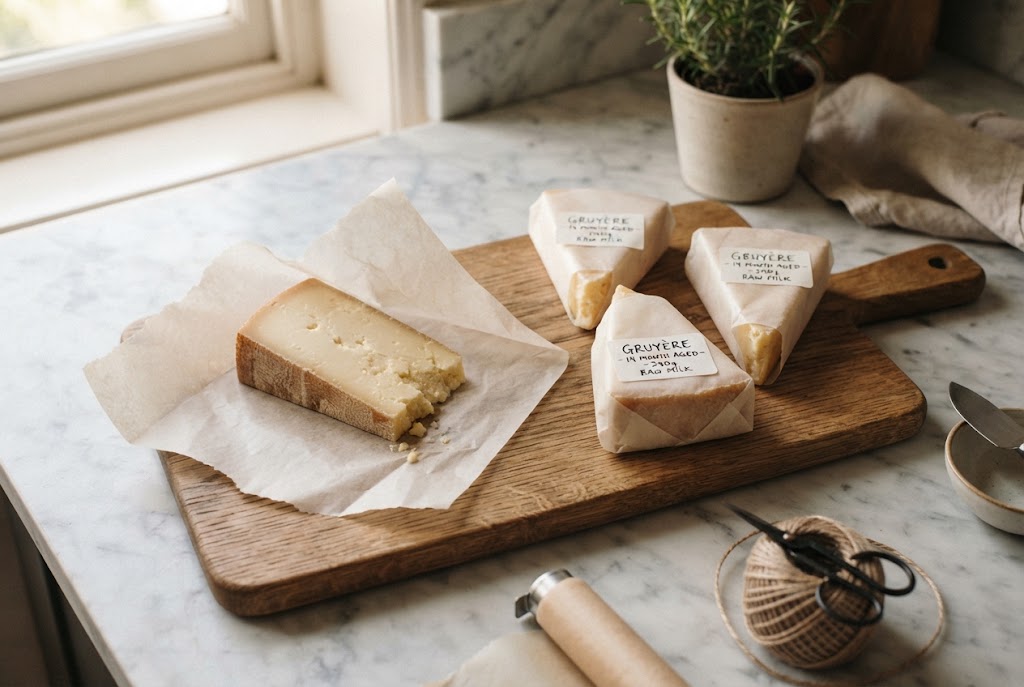
Cheese paper — the waxy, layered wrapping paper sold by brands like Formaticum and used by cheesemongers — is a two-layer system. The outer layer is a wax-coated paper that blocks excess moisture from penetrating. The inner layer is a loose, tissue-like material that sits slightly off the surface of the cheese, creating a micro-gap between the cheese and the outer barrier.
This construction is semi-permeable: it allows gas exchange and some moisture evaporation, while blocking the external humidity that would otherwise condense against the surface. In practical terms, the cheese can still breathe — it just can't get soaked, and it can't contaminate or be contaminated by everything else in the refrigerator.
Cheese paper is the correct storage for most cheese types. If you store cheese regularly, buying a box of proper cheese paper is one of the highest-return investments in your board setup.
The Alternatives: What Each Wrapping Material Does
Wax paper or parchment paper: A meaningful step up from plastic. Wax paper and parchment are breathable in a way plastic is not — they allow gas exchange and don't create the sealed anaerobic environment. They lack cheese paper's structured inner layer, so they don't manage moisture as precisely. For short-term storage (1–3 days), wax paper or parchment work reasonably well. For longer storage, cheese paper performs better.
Plastic wrap: The most common default and the worst option for most cheeses. Creates a sealed moisture trap against the surface. Acceptable as a short-term cut-face cover before rewrapping properly — but not as a multi-day storage solution. The exception where plastic performs acceptably: protecting a cut face for transport or a few hours at room temperature on a board (where you actually don't want too much evaporation during service).
Aluminum foil: Breathable enough for short periods and useful for one specific category — blue cheeses (Stilton, Gorgonzola, Roquefort). Blues benefit from slightly reduced oxygen exposure, which slows the ongoing development of blue-green mold veining and prevents the cheese from over-ripening too quickly. Wrapping blues in foil is standard cheesemonger practice. For other cheese types, foil is not preferable to paper but is better than plastic.
Resealable plastic bags (with air removed): The same problem as plastic wrap but compounded. Avoid.
Original packaging: If the cheese came in professional packaging from the producer or specialty retailer, use it until it's gone or until you need to repackage. Producer packaging is often designed specifically for that cheese's needs. Vacuum-sealed commercial packaging is the exception — after you break the seal, transfer to cheese paper.
Storage Rules by Cheese Type
Different cheese categories have different moisture content, rind types, and activity levels — which means slightly different storage requirements.
Soft-Ripened Cheeses (Brie, Camembert, Robiola, Époisses)
These are the most active cheeses in storage. The white Penicillium candidum rind on Brie and Camembert is still biologically active after cutting — it will continue to ripen the paste if it has the right gas exchange and temperature.
Storage: Loose cheese paper, loosely folded (not crimped tight). The rind needs more air than harder cheeses. Place in the coldest part of the fridge.
Life after cutting: 1–2 weeks, but quality degrades after the first few days once the cut face is exposed. Brie in particular becomes sharply ammoniated when it's past its window — the rind starts to smell like a cleaning product. This is a sign the cheese has over-ripened, not that it's spoiled in a dangerous sense, but it's not pleasant eating.
Common mistake: Sealing a cut Brie wheel in a container. The rind suffocates and the ammonia has nowhere to go.
Fresh Cheeses (Burrata, Fresh Mozzarella, Ricotta, Chèvre)
Fresh cheeses have no rind and are not aged. They need different treatment than anything with a rind.
Storage: In their original liquid (brine or water), tightly covered, in the coldest part of the refrigerator. Fresh mozzarella kept in water retains its moisture and fresh flavor significantly longer than mozzarella stored in plastic wrap.
Life after opening: 2–5 days. Fresh cheese quality drops faster than any other category. Burrata should ideally be used the day you buy it — at most within 24 hours of purchase for peak stracciatella texture.
Note on chèvre: Fresh goat cheese logs store well in parchment or cheese paper, not plastic. The tang sharpens quickly if sealed.
Semi-Firm Cheeses (Gruyère, Gouda, Manchego, Fontina, Havarti, young Cheddar)
These are the most forgiving category. The rind is intact around the exterior, and the moisture content is moderate — not so high that they suffocate easily, not so low that they crack and dry immediately.
Storage: Cheese paper, properly wrapped around the cut face. Rewrap after every use — don't reuse the same paper multiple times, as the paper absorbs moisture and cheese proteins that can then harbor bacteria.
Life after cutting: Weeks, if stored correctly. A well-wrapped Gruyère will maintain its quality for 3–4 weeks in the refrigerator.
Common mistake: Storing in the vegetable drawer where humidity is high. A dedicated cheese drawer or a plate loosely covered in the main refrigerator body works better.
Aged Hard Cheeses (Parmigiano-Reggiano, Pecorino Romano, aged Manchego, aged Cheddar, Comté)
Hard cheeses are the most tolerant of imperfect storage because their low moisture content and hard rind provide natural protection. But they will still dry out and crumble at the cut face if exposed to the dry refrigerator air.
Storage: Cheese paper or parchment paper covering the cut face specifically. The rind can be left exposed — it doesn't need the same protection as the cut surface.
Life after cutting: Several weeks, under proper conditions. A wedge of Parmigiano-Reggiano will hold for 6–8 weeks in the refrigerator if the cut face is protected.
What to do with the rind: Parmigiano and Pecorino rinds that accumulate from use are worth saving — they're used in Italian cooking to flavor soups, braises, and risotto. Store them in a zip-lock bag in the freezer (one of the few legitimate cheese-freezing applications).
Blue Cheeses (Stilton, Gorgonzola, Roquefort, Maytag Blue)
Blues are the most aromatic and most cross-contaminating cheeses in the refrigerator. They will spread their mold culture to other cheeses nearby if left unwrapped, and they will absorb off-odors from everything else exactly as readily.
Storage: Aluminum foil is the professional standard. Wrapping blues in foil reduces oxygen exposure, slowing the mold development and preventing the cheese from continuing to develop past your preferred ripeness stage. It also contains the aroma so it doesn't permeate everything else.
Life after cutting: 3–4 weeks. Blues hold well because their salt helps preserve them.
Important: Store blues on a separate shelf from other cheeses, or in a sealed container. Left open next to a Brie, the Penicillium spores will transfer.
Temperature and Location in the Refrigerator
Store cheese in the warmer part of the refrigerator, not the coldest. The coldest areas (back of the bottom shelf, directly against the rear wall) can partially freeze the exterior of soft cheeses, which damages texture.
The warmest consistent area — a middle shelf toward the front, or a dedicated cheese drawer — is where cheese does best.
Never freeze soft or semi-firm cheese. Freezing ruptures the moisture structure of the paste. When it thaws, the texture turns crumbly, mealy, or separated. Hard cheeses (Parmigiano, Pecorino) can survive freezing with minimal texture change, but the flavor suffers.
Before Serving: Let Cheese Come to Temperature
Cold cheese is less flavorful than room-temperature cheese — not because the flavor compounds change, but because aroma volatilizes less efficiently at lower temperatures. The fat in cold cheese is also firmer, which affects both mouthfeel and how aroma compounds are released.
Pull cheese from the refrigerator at least 30 minutes before serving (45–60 minutes for hard aged cheeses). This one step makes a bigger difference to flavor than most people expect.
Practical Summary
| Cheese Type | Best Wrap | Life in Fridge |
|---|---|---|
| Soft-ripened (Brie, Camembert) | Loose cheese paper | 1–2 weeks |
| Fresh (mozzarella, burrata) | In brine/water, covered | 2–5 days |
| Semi-firm (Gruyère, Gouda) | Cheese paper | 3–4 weeks |
| Aged hard (Parmigiano, Pecorino) | Cheese paper on cut face | 6–8 weeks |
| Blue (Stilton, Gorgonzola) | Aluminum foil | 3–4 weeks |
FAQ
What is the best way to store cheese? Wrap cheese in parchment paper first (to allow the cheese to breathe), then loosely in plastic wrap or place in a zip-lock bag not fully sealed. Store in the warmest part of the refrigerator — the vegetable drawer or a dedicated cheese drawer — where humidity is higher and temperature is slightly warmer than the main compartment. How long does cheese last in the refrigerator? Hard cheeses (Parmigiano-Reggiano, aged Manchego, aged Gouda): 3–4 weeks, sometimes longer with proper wrapping. Semi-firm cheeses (cheddar, Gruyère, Fontina): 2–3 weeks. Soft ripened cheeses (brie, camembert): 1–2 weeks from purchase. Fresh cheeses (chèvre, ricotta, burrata): 5–7 days. Wrapping properly and minimizing air exposure at the cut surface extends all of these timelines. Should you store different cheeses separately? Yes. Store strong-smelling cheeses (washed-rind, blue) in sealed containers to prevent their aromas from transferring to other cheeses or food in the refrigerator. Even well-wrapped pungent cheese can "perfume" neighboring items over days. Mild and fresh cheeses are most susceptible to absorbing foreign flavors. What is cheese paper and is it worth using? Cheese paper is a wax-coated paper designed specifically for cheese storage — it allows moisture to escape (preventing sogginess) while preventing excessive drying. It's more effective than plastic wrap for semi-firm and hard cheeses and significantly better than foil. Dedicated cheese paper is worth buying if you purchase cheese frequently. Parchment paper is a good substitute; plastic wrap is the least ideal option. How do you know when cheese has gone bad? Signs to look for: pink, black, or green mold on a cheese where that color isn't part of the natural rind (some molds on rinds are expected and fine — cut them away with a generous margin on hard cheeses), an off or ammoniated smell beyond the cheese's characteristic aroma, a slimy texture on soft cheeses' paste (not rind), or unusual bitterness that wasn't present when first opened.