The short version
A semi-firm alpine cheese from Switzerland and Savoie, made to be melted and scraped. Racler means to scrape. Cold it's a decent savory board cheese; hot, poured over potatoes and cornichons, it stops being a board and becomes dinner.
What it is
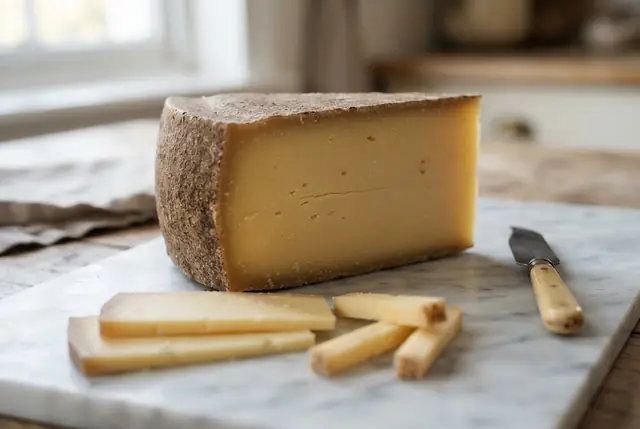
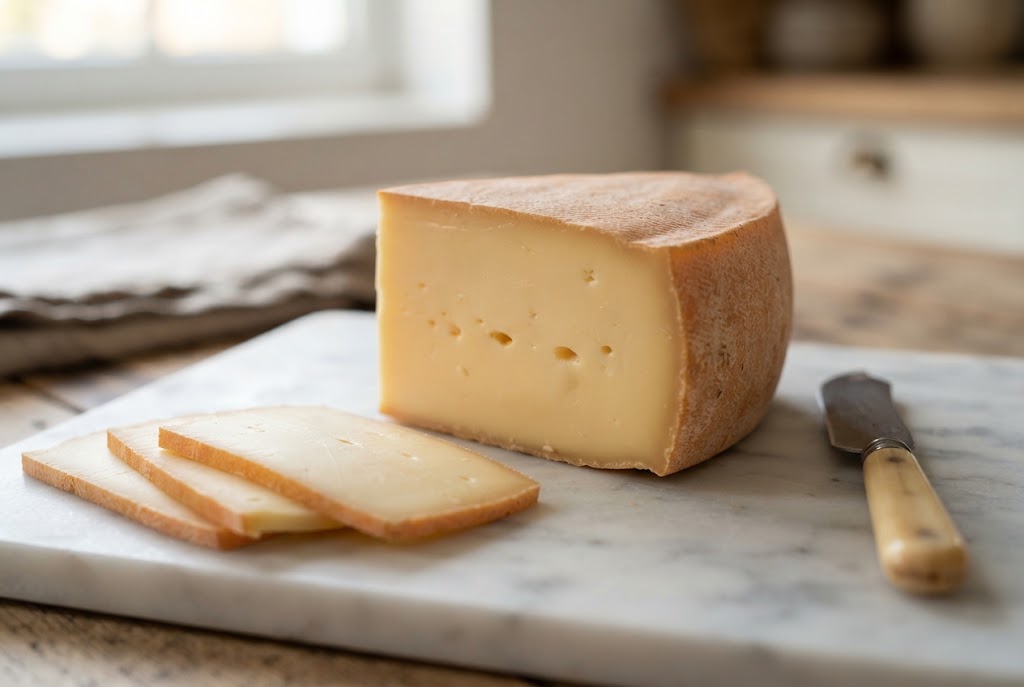
Raclette is a washed-rind cooked cheese from the Valais in Switzerland, with French versions from Savoie. Traditionally a half-wheel was set beside a fire and the melted face scraped onto plates as it softened. It's made specifically to melt smoothly without splitting.
- Taste
- savory, nutty, faintly funky, milky
- Texture
- semi-firm and supple cold; smooth and stretchy melted
- Look
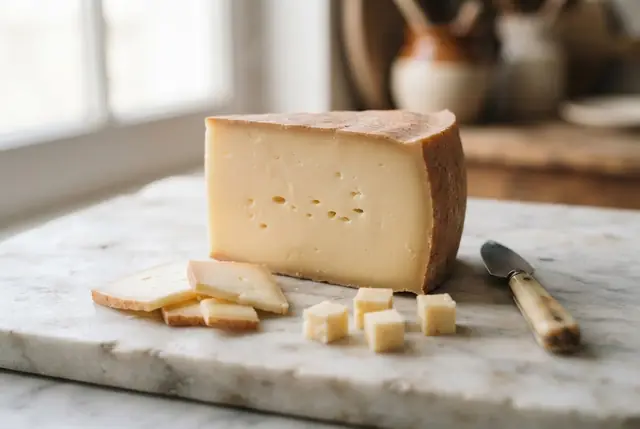
- pale gold paste, tan-orange washed rind
Melting behavior is the mechanism, and it's engineered. Raclette has enough moisture and the right fat-to-protein ratio to flow smoothly at moderate heat instead of separating into oil and rubber. Very few cheeses do this well — which is why raclette, Gruyère and fontina turn up in every melted dish and cheddar mostly doesn't.
What it pairs with — and why
| Pair it with | Why it works |
|---|---|
| Boiled baby potatoes | The traditional dish. Starch and salt under molten cheese. |
| Cornichons and pickled onions | Sharp vinegar is essential against this much melted fat. Not optional. |
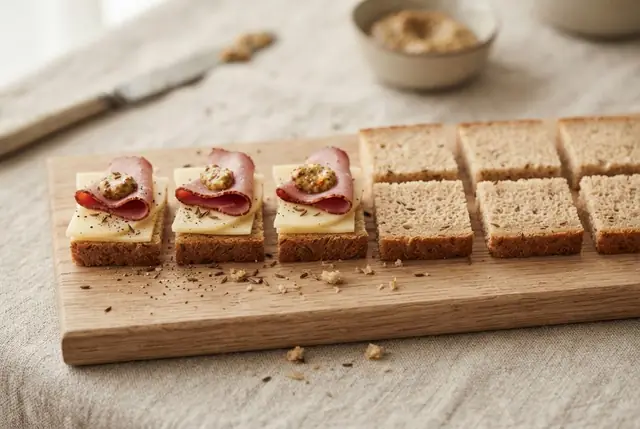
| Air-dried beef or cured ham | Salt and cure with a rich alpine cheese. |
| Cocktail rye and dark bread | Something dense to hold melted cheese. |
| Cracked black pepper and paprika | The Swiss table seasoning for raclette. |
| Dry Riesling, Chasselas, Fendant | High-acid alpine whites, which is what the fat needs. |
| Kirsch or dry cider | The traditional digestif, for the same reason. |
Skip it with: delicate fresh cheeses on the same board, and heavy reds — tannin and molten cheese is an unpleasant combination.
How to prep it for the board
- Decide cold or hot. Cold, it's a savory semi-firm cheese and you serve 1–2 oz per person. Hot, it's the main event and you need 4–6 oz per person.
- For a board, slice it thin. It's supple and slices cleanly.
- For melting without a raclette grill: lay slices in a small cast-iron pan or on a sheet, broil 2–3 minutes until bubbling, and scrape it over potatoes.
- Have the acid ready before the cheese comes out. Cornichons and pickled onions on the table first — melted raclette without them is heavy.
- Temper 30 minutes if serving cold.
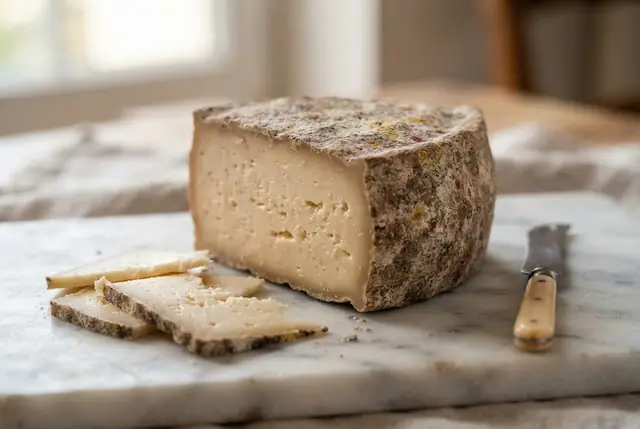
- Trim the rind for cold service; leave it on for melting, where it holds the slice together.
- Fix: split and oily when melted? Too hot. Lower heat, shorter time.
What to buy
| Product | Where | Notes |
|---|---|---|
| Raclette de Savoie IGP | Cheese counters, Whole Foods | The French version. Widely available and reliable. |
| Swiss Raclette du Valais AOP | Cheese counters, specialty | The original. Nuttier and more savory. |
| Emmi Raclette | Grocery cheese case | Widely distributed Swiss brand, often pre-sliced for melting. |
| Pre-sliced raclette | Grocery cheese case, Trader Joe's | Convenient for melting. Fine for that, less good on a board. |
| Smoked raclette | Cheese counters | A real variant. Good, though it narrows the pairings. |
| Gruyère or fontina | Grocery, cheese counters | Both melt well if raclette isn't stocked — see their own pages. |
Label check: for melting, pre-sliced is genuinely convenient. For a board, buy a piece and slice it yourself — the pre-sliced dries at the edges.
Skip: buying it as a cold board cheese if you were hoping for something dramatic. Cold raclette is good but unremarkable; the drama is in the melting.
Quick FAQ
What does raclette mean?
It's from racler, to scrape — the traditional service, where the melted face of a half-wheel is scraped onto plates.
Do I need a raclette grill?
No. A cast-iron pan under the broiler works, or slices melted on a sheet and scraped off.
How much per person?
1–2 oz on a board. 4–6 oz if you're melting it as a meal.
Why are pickles always served with it?
Acid cuts a large quantity of melted fat. Without them the dish is heavy.
Can you eat the rind?
Trim it for cold service. For melting, leave it on — it holds the slice together.