The short version
A semi-soft alpine cheese from Italy's Val d'Aosta — nutty, earthy and faintly funky, with a supple texture that melts beautifully. There's also a Danish cheese sold under the same name that tastes of very little. Buy the Italian one.
What it is
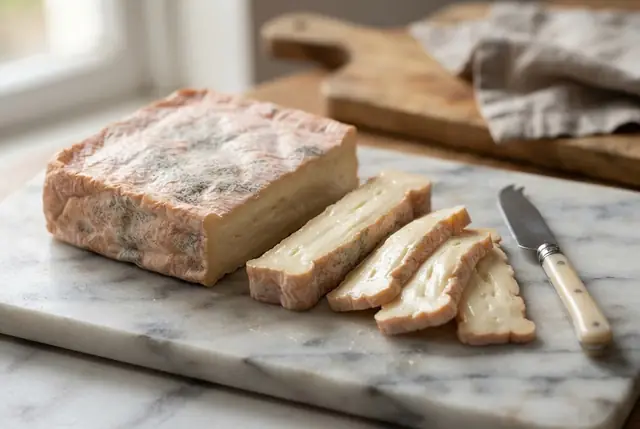
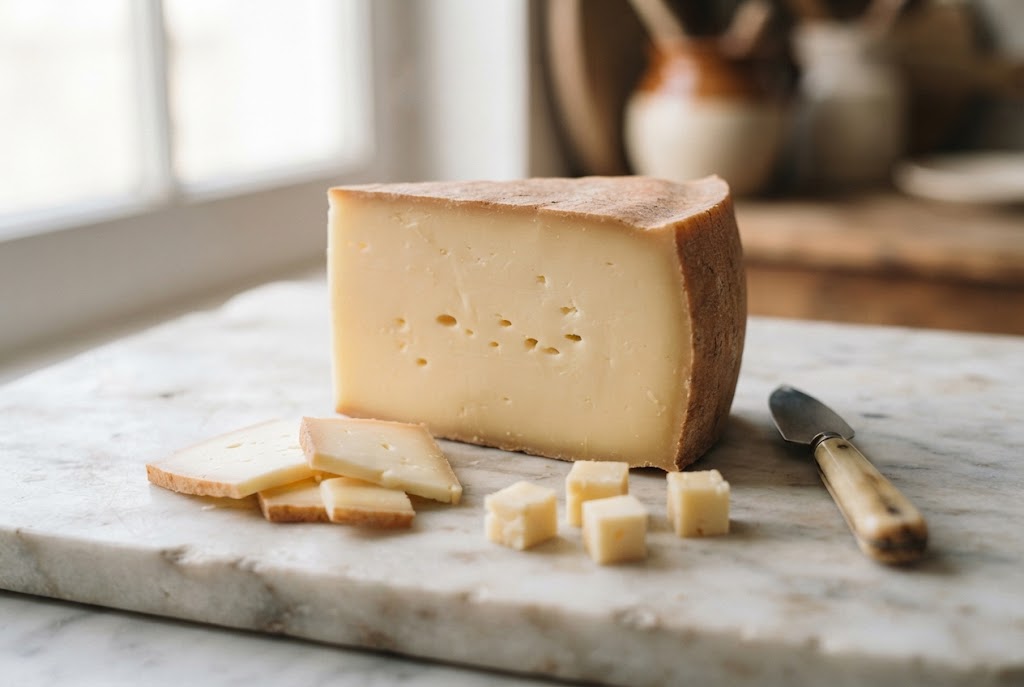
Fontina Val d'Aosta DOP is made from raw milk of a single breed, in the alpine valleys near Mont Blanc, and aged about three months in mountain caves. The rind is washed during aging, which is where the light funk comes from. It's the cheese in fonduta, Piedmont's fondue.
- Taste
- nutty, earthy, buttery, mildly funky, savory
- Texture
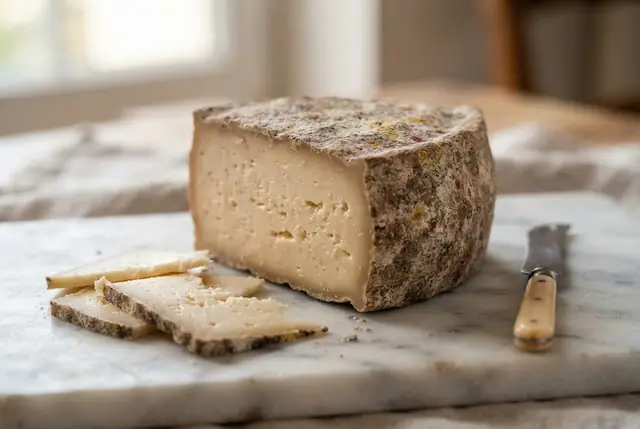
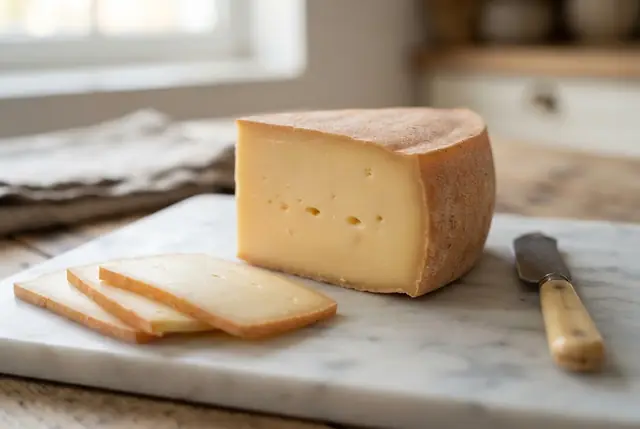
- semi-soft and supple, dense, small holes
- Look
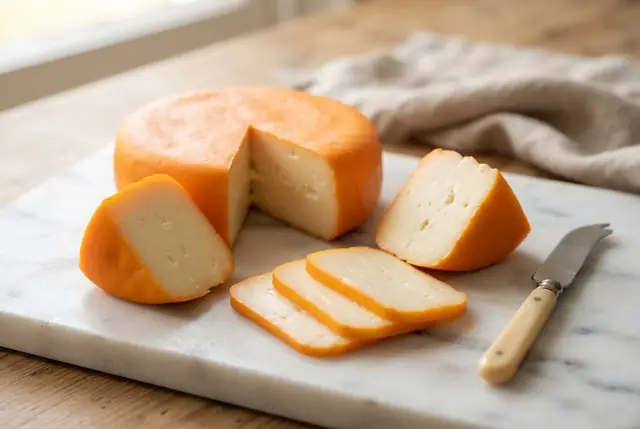
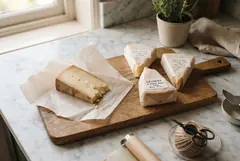
- pale straw paste, thin brownish-orange washed rind
Rind washing is the mechanism, and it puts Fontina halfway between a mild alpine cheese and a stinky washed-rind one. The bacteria on the surface produce the earthy, mushroomy notes that plain pressed cheeses lack — enough to make it interesting on a board, not enough to make anyone uncomfortable.
What it pairs with — and why
| Pair it with | Why it works |
|---|---|
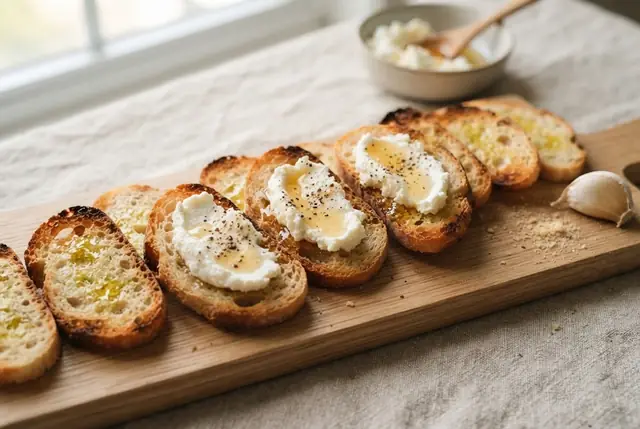
| Crostini and baguette | Plain bread under an earthy cheese. It also melts onto warm toast beautifully. |
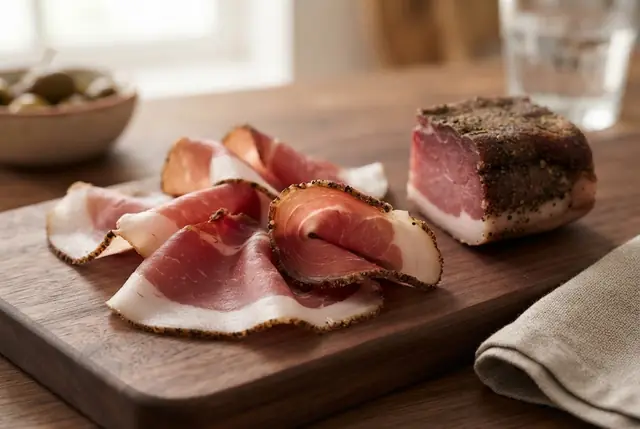
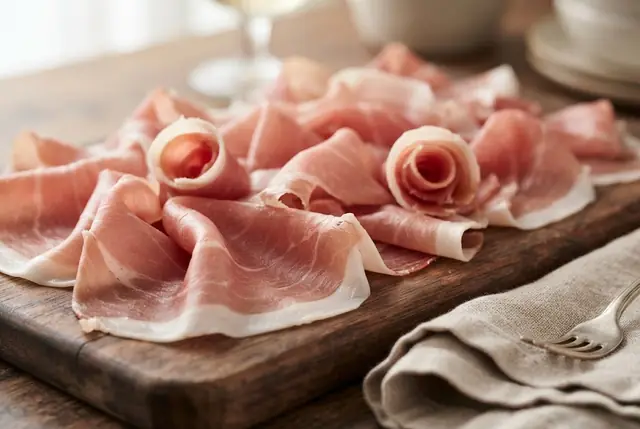
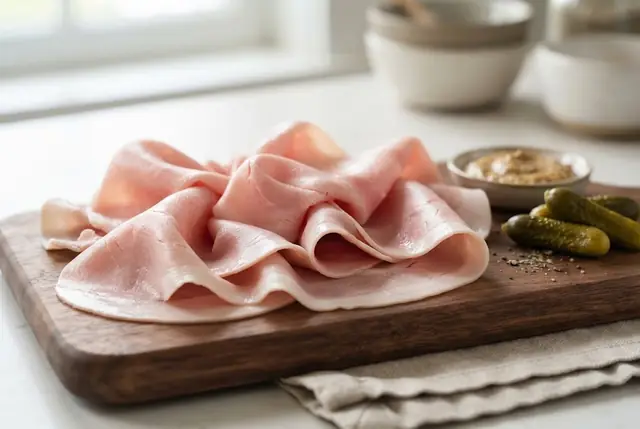
| Prosciutto and speck | Salt, cure and smoke against nutty, funky richness. |
| Truffle honey or plain honey | Sweetness rounds off the earthy edge. Truffle doubles down on it. |
| Roasted mushrooms | Earth on earth. The most natural pairing here. |
| Apple and pear | Acid cutting a dense, fatty cheese. |
| Walnuts | Tannin and oil against a supple alpine paste. |
| Barbera, Nebbiolo, Dolcetto | Piedmontese reds from the same corner of Italy. |
Skip it with: delicate fresh cheeses in the same corner. Fontina's washed rind gives it more presence than its mild reputation suggests.
How to prep it for the board
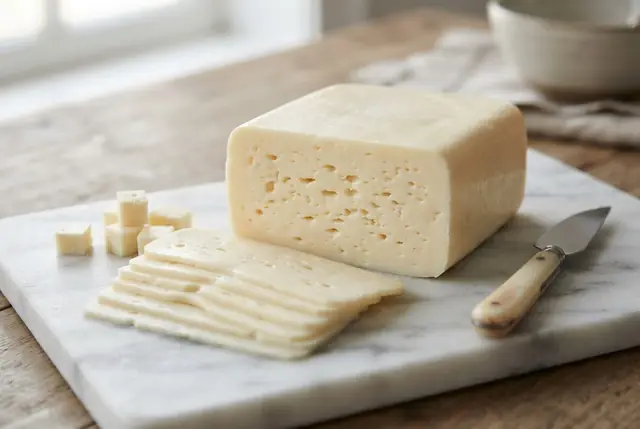
- Buy the DOP. This is the whole decision. Danish "fontina" in red wax is a mild, rubbery, unrelated cheese.
- Cut into thick slices or batons. It's supple and slices cleanly.
- Temper 30 minutes — the earthy notes are muted cold.
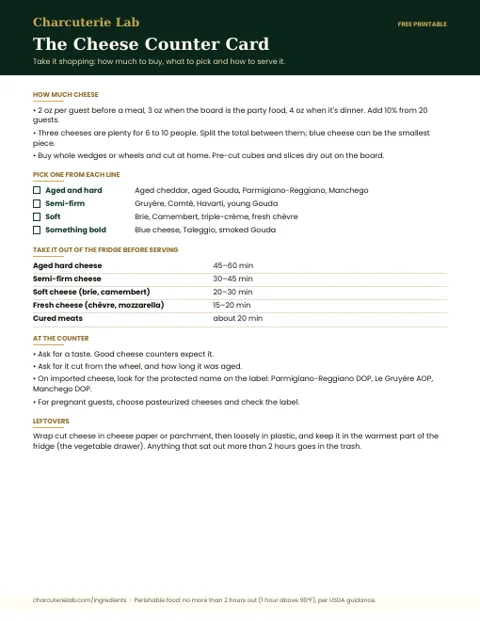
- Serve 1–2 oz per person.
- Consider melting some of it. Warm fonduta in a small pot beside the board, with bread for dipping, is a genuinely good move.
- Trim the rind. It's washed and edible in principle but tough.
- Fix: if it tastes of nothing, you have the Danish version. Nothing to be done except buy the Italian one next time.
What to buy
| Product | Where | Notes |
|---|---|---|
| Fontina Val d'Aosta DOP | Cheese counters, Whole Foods, Italian delis | The real thing. Look for the Matterhorn stamp on the rind. |
| Fontal | Grocery cheese case | The mass-produced Italian cousin. Milder but honest about it. |
| Danish Fontina (red wax) | Most grocery stores | Widely available and widely disappointing. Fine for melting, dull on a board. |
| Taleggio | Cheese counters | The other great Italian washed-rind semi-soft — see its own page. |
| Tomme de Savoie | Cheese counters | The French alpine equivalent. |
| Raclette | Cheese counters | If melting is the plan, this may be the better buy. |
Label check: "Fontina Val d'Aosta DOP" and the Matterhorn stamp. Anything else — Fontal, Danish Fontina, Swedish Fontina — is a different cheese wearing the name.
Skip: the red-wax supermarket version if the cheese is meant to be tasted rather than melted.
Quick FAQ
Why does supermarket fontina taste bland?
It's probably Danish or Swedish "fontina," which is a mild industrial cheese unrelated to the Italian DOP.
What should I look for?
"Fontina Val d'Aosta DOP" and a Matterhorn stamp on the rind.
Does it smell?
Faintly earthy and mushroomy from the washed rind — nowhere near as strong as Taleggio or Époisses.
Can you eat the rind?
Trim it. It's edible but tough.
How much per person?
1–2 oz.