The short version
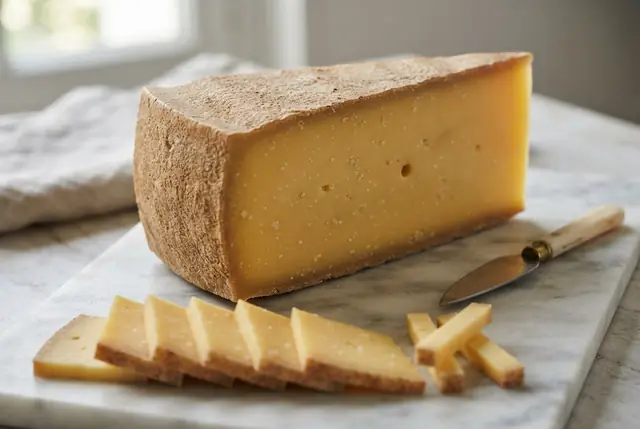
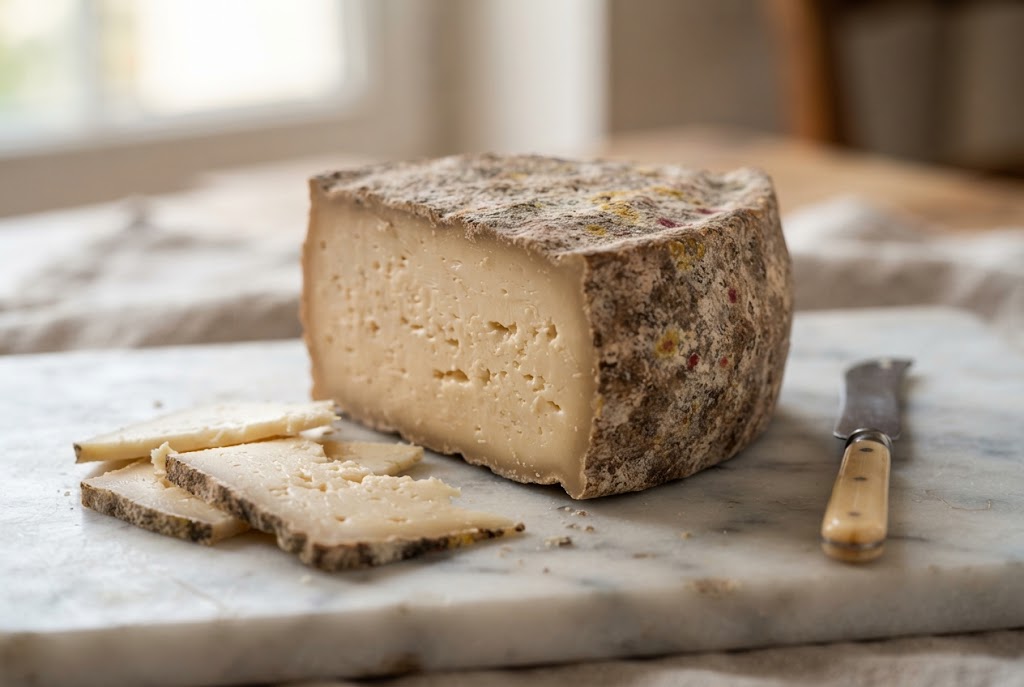
A semi-firm French mountain cheese under a thick, grey, mottled rind that looks like stone. The paste is mild, earthy and grassy. It's made from skimmed milk — historically what was left after butter — so it's leaner than it looks.
What it is
Tomme is a general term for a mountain cheese in the French Alps, and Tomme de Savoie is the best-known. Farmers made it from milk left after cream was skimmed for butter, so it's naturally low in fat. It's aged two to three months in cellars, where the rind develops its thick grey-brown mold crust.
- Taste
- mild, earthy, grassy, faintly nutty and mushroomy
- Texture
- semi-firm, supple, slightly elastic
- Look
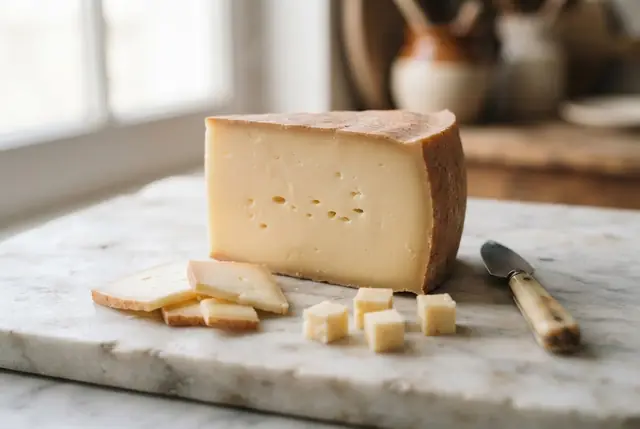
- pale ivory paste, thick grey-brown mottled rind with visible mold
The rind is the mechanism here, in both flavor and appearance. Molds growing on the surface break down the paste beneath and contribute the earthy, cellar-like notes that a waxed or plastic-coated cheese never develops. It also makes Tomme the most rustic-looking cheese available — a wedge with an inch of grey crust reads as farmhouse in a way nothing else does.
What it pairs with — and why
| Pair it with | Why it works |
|---|---|
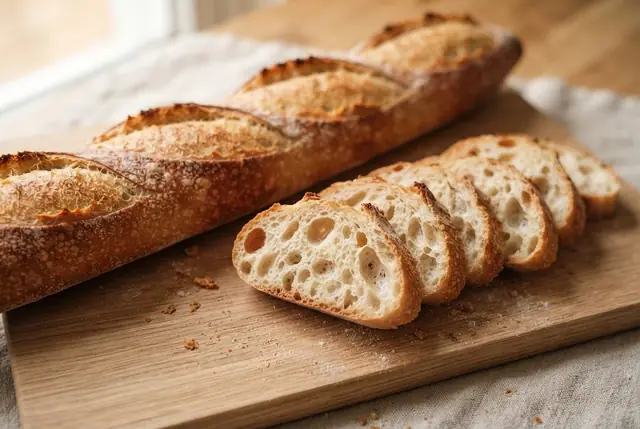
| Baguette and cornichons | The French mountain plate. Plain bread and sharp acid. |
| Cured ham and saucisson | Salt and cure against a lean, earthy paste. |
| Apple and pear | Fresh acid against grassy mildness. |
| Walnuts | Tannin and earth, both of which the cheese already gestures at. |
| Grainy mustard | The sharpness a mild cheese needs. |
| Boiled potatoes | Alpine and rustic — Tomme is a good melting cheese too. |
| Savoie whites, Beaujolais, dry cider | Light and acidic mountain drinking. |
Skip it with: delicate fresh cheeses, and very sweet jams — Tomme's appeal is savoury and earthy, and sugar flattens it.
How to prep it for the board
- Cut wedges with a generous piece of the grey rind attached. The rind is the visual identity; a trimmed piece looks like any pale cheese.
- Temper 30 minutes.
- Serve 1–2 oz per person.
- Use it as the rustic anchor on a board that's otherwise polished — one cheese with a mottled stone-colored crust changes the whole register.
- Tell people the rind is edible but tough. Most trim it; some like it, and it does taste of cellar and mushroom.
- Put it beside the cured meat and the mustard.
- Fix: a paste that's chalky at the center is underripe. Give it a few more days in the fridge, wrapped in parchment.
What to buy
| Product | Where | Notes |
|---|---|---|
| Tomme de Savoie IGP | Cheese counters, Whole Foods, Murray's | The protected version. Look for a thick natural rind. |
| Tomme de Savoie, raw milk | Cheese counters, specialty | More character. Worth asking for. |
| Tomme Crayeuse | Cheese counters, specialty | A softer, chalkier-centered cousin. Excellent and distinctive. |
| Tomme de Brebis | Cheese counters | The sheep's-milk version. Nuttier and richer. |
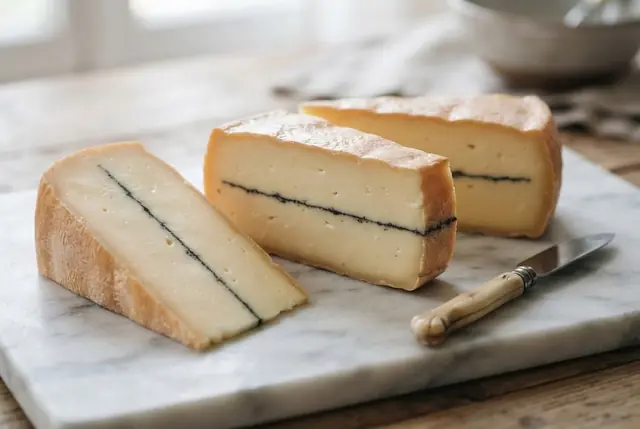
| Morbier | Cheese counters, Whole Foods | The other French mountain semi-soft — see its own page. |
| Ossau-Iraty | Cheese counters | Basque sheep's milk, firmer and nuttier — see its own page. |
Label check: the IGP mark and a thick natural rind. A thin waxy rind means an industrial version with much less character.
Skip: cutting the rind off before it goes on the board. Even if guests trim it themselves, the wedge should arrive with it.
Quick FAQ
Can you eat the rind?
Yes, technically — it's a natural mold rind and it tastes of cellar and mushroom. It's tough, and most people trim it.
Is Tomme a specific cheese?
Tomme is a general term for French mountain cheeses. Tomme de Savoie is a specific IGP-protected one.
Why is it low in fat?
It was traditionally made from milk left after cream was skimmed for butter.
Is it strong?
No — mild and earthy. The rind smells more assertive than the paste tastes.
How much per person?
1–2 oz.