The short version
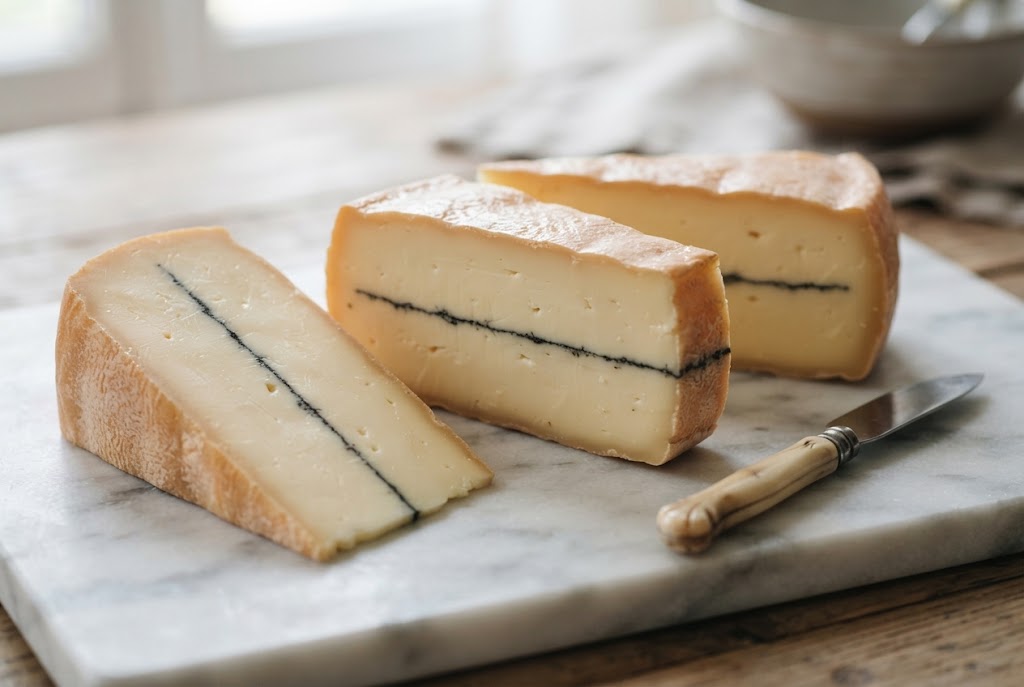
A semi-soft cheese from the Jura with a black horizontal line of ash running through the center. Mild, creamy and faintly funky from a washed rind. It's the best-looking sliced cheese you can put on a board, and the line comes with a story worth telling.
What it is
Morbier was made by Comté producers from leftover curd. Evening milk went into the mold and was covered with a layer of soot from the bottom of the cauldron to protect it overnight; morning milk went on top. The ash line is now vegetable ash added deliberately, but the two-layer structure is real and visible.
- Taste
- mild, creamy, nutty, faintly barnyard from the rind
- Texture
- semi-soft, supple, slightly elastic
- Look
- pale ivory paste split by a thin black horizontal ash line, orange-beige washed rind
The visible seam is the mechanism on a board, and it's the rare case where a cheese's history is legible in the slice. Every other cheese here looks like a solid color. Morbier looks like a cross-section of something, which makes it the piece guests ask about.
What it pairs with — and why
| Pair it with | Why it works |
|---|---|
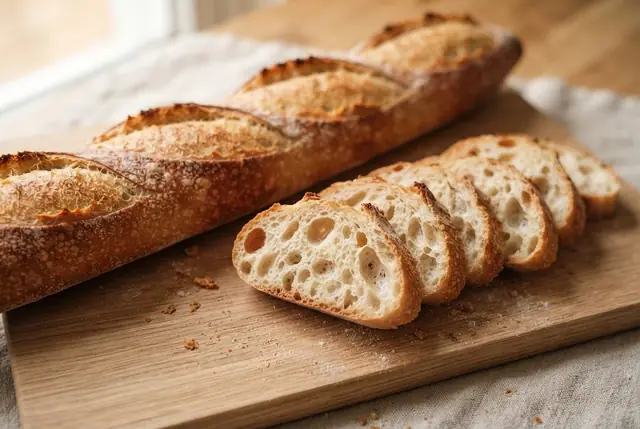
| Baguette | Plain bread under a mild, faintly funky cheese. |
| Cornichons and pickled onions | Sharp vinegar against a creamy washed-rind paste. |
| Cured ham and saucisson | Salt and cure with a gentle Jura cheese. |
| Walnuts | Tannin and texture. The Jura pairing. |
| Apple and pear | Fresh acid cutting a supple, fatty cheese. |
| Comté, side by side | Same region, same producers, completely different textures. A good comparison. |
| Vin Jaune, Chardonnay, dry cider | Jura wines, or something with acid. |
Skip it with: delicate fresh cheeses — the washed rind gives Morbier more presence than its mildness suggests. And don't bury the line under a garnish; it's the reason you bought it.
How to prep it for the board
- Cut wedges that show the ash line clearly, and lay them so the line reads across the board. This is the whole visual argument.
- Temper 30 minutes. It's noticeably creamier warm.
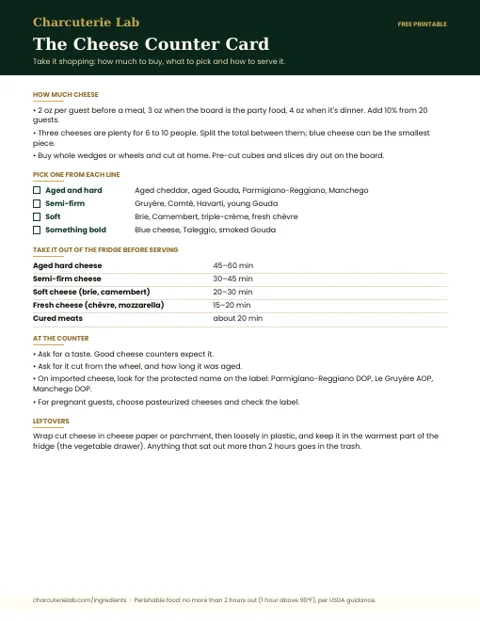
- Serve 1–1.5 oz per person.
- Tell the story. Evening milk, soot from the cauldron, morning milk on top. It takes ten seconds and it's the most interesting thing on most boards.
- Put it next to Comté if you have both — same region, same producers, entirely different cheeses.
- Trim the rind. It's washed and edible but not pleasant.
- Fix: an ammonia smell means it's over-ripe. A mild barnyard smell is correct.
What to buy
| Product | Where | Notes |
|---|---|---|
| Morbier AOP | Cheese counters, Whole Foods, Murray's | The protected version. Raw milk, from the Jura. |
| Morbier, cut to order | Cheese counter | Better than pre-packaged — you can see whether the ash line is clean and the paste is even. |
| Comté | Whole Foods, Costco | Same region, same producers, firmer — see its own page. |
| Tomme de Savoie | Cheese counters | The other French mountain semi-soft — see its own page. |
| Reblochon-style cheeses | Cheese counters | Softer and funkier French alternatives. |
| Trader Joe's Morbier | Trader Joe's | Available intermittently. Cheap and decent. |
Label check: the AOP mark, a clean straight ash line, and a paste with no chalky core. Raw-milk versions have more character.
Skip: buying it far ahead. Morbier ripens on and tips into ammonia within a week or two of being cut.
Quick FAQ
What's the black line in Morbier?
Vegetable ash. Historically it was soot from the cheese cauldron, used to protect the evening curd overnight before the morning milk was added on top.
Does it taste of anything?
The ash itself, no. The cheese is mild, creamy and faintly barnyard from its washed rind.
Can you eat the rind?
It's edible but tough. Most people trim it.
Is it a strong cheese?
No — mild with a light funk. Far gentler than Époisses or Munster.
How much per person?
1–1.5 oz.