The short version
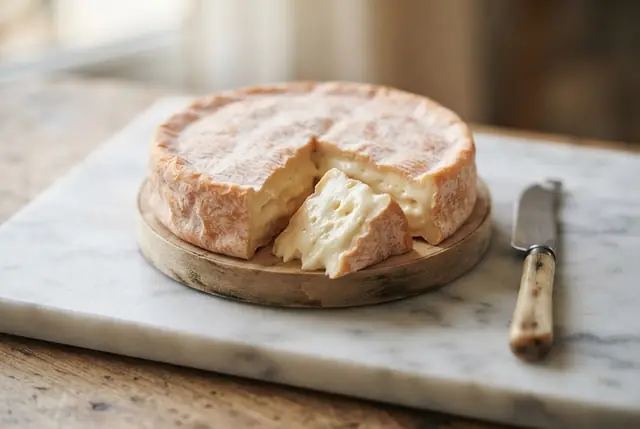
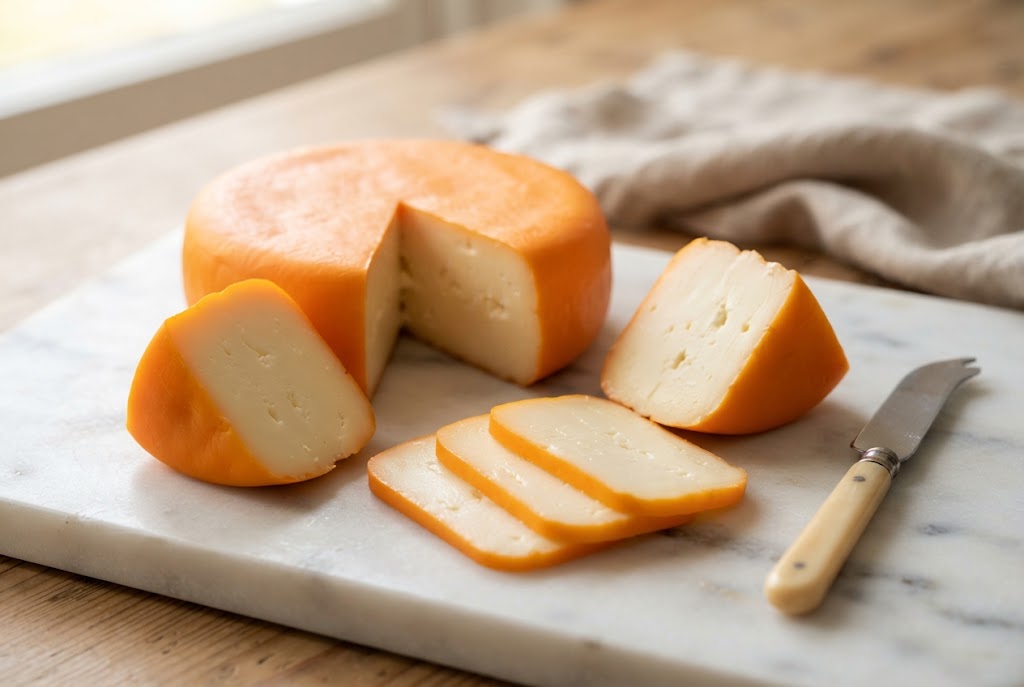
A soft French cheese in a bright orange rind, made originally by Trappist monks. It looks like a washed-rind cheese and behaves like a mild one — creamy, savory, faintly tangy, and nowhere near as strong as its color suggests.
What it is
Port Salut was created at the Abbey of Notre-Dame de Port-du-Salut in Brittany in the 1800s, and the recipe was later sold commercially. It's a washed-rind cheese, but the wash is gentle and the aging short, so the rind bacteria never develop the pungency of a Munster or an Époisses. The modern orange rind is colored rather than naturally developed.
- Taste
- mild, creamy, savory, gently tangy
- Texture
- semi-soft, smooth, springy, easy to slice
- Look
- pale ivory paste, smooth bright orange rind
Interrupted development is the mechanism. A washed rind starts the same way every time — brine, bacteria, orange color — but pungency needs weeks. Port Salut is sold young, so it stops at savory. That makes it the useful cheese for a board where you want a washed-rind's look and savory character without asking anything of your guests.
What it pairs with — and why
| Pair it with | Why it works |
|---|---|
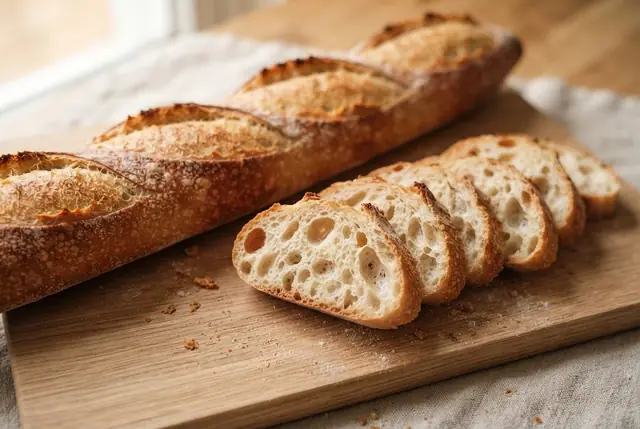
| Baguette | Plain bread under a gentle savory cheese. The French default. |
| Apple and grapes | Fresh acid and water against a creamy paste. |
| Cured ham | Salt and cure with something mild and rich. |
| Cornichons | Sharp vinegar giving a mild cheese an edge. |
| Walnuts | Tannin and texture against smooth softness. |
| Fig jam and honey | Sweetness works, though it isn't necessary here. |
| Light reds, dry cider, Chenin Blanc | Nothing heavy required. |
Skip it with: blue cheese and pecorino — Port Salut is mild and loses. It also disappears next to a real washed-rind like Époisses, which makes serving both on one board a mistake.
How to prep it for the board
- Cut into thin wedges or slices with the orange rind edge showing. The color is most of the visual appeal.
- Temper 30 minutes.
- Serve 1–2 oz per person.
- Use it where you want a washed-rind look without the smell — a board for a mixed or cautious crowd.
- Trim the rind. It's edible but rubbery and colored rather than flavorful.
- Place it in the middle range of the board, between the mild and the strong.
- Fix: if it seems flat, it's cold or it's next to something too strong. Move it beside the fruit.
What to buy
| Product | Where | Notes |
|---|---|---|
| Port Salut | Most grocery stores, cheese case | The widely distributed commercial version. Consistent and cheap. |
| Saint-Paulin | Cheese counters, grocery | Essentially the same cheese under the generic name. Often better value. |
| Trappist-made abbey cheeses | Cheese counters, specialty | Chimay, Maredsous and similar. More character, same family. |
| Reblochon | Cheese counters | A real French washed-rind with genuine flavor — see its own page. |
| Havarti | Grocery cheese case | If mildness is what you're after, this does it without the rind. |
| Fontina Val d'Aosta | Cheese counters | The step up in earthiness — see its own page. |
Label check: there isn't much to check. This is a consistent industrial cheese, and the main decision is whether you want a mild washed-rind at all.
Skip: expecting it to taste like the abbey cheeses it descends from. The modern commercial version is deliberately mild.
Quick FAQ
Does Port Salut smell?
Barely. It's a washed-rind cheese sold young, so it never develops the pungency of Munster or Époisses.
Can you eat the orange rind?
It's edible but rubbery and artificially colored. Most people trim it.
Is it a monastery cheese?
It began as one, at a Trappist abbey in Brittany in the 1800s. The modern version is made commercially.
Port Salut or Havarti?
Similar mildness. Port Salut is more savory and has a more interesting look; Havarti is butterier.
How much per person?
1–2 oz.