The short version
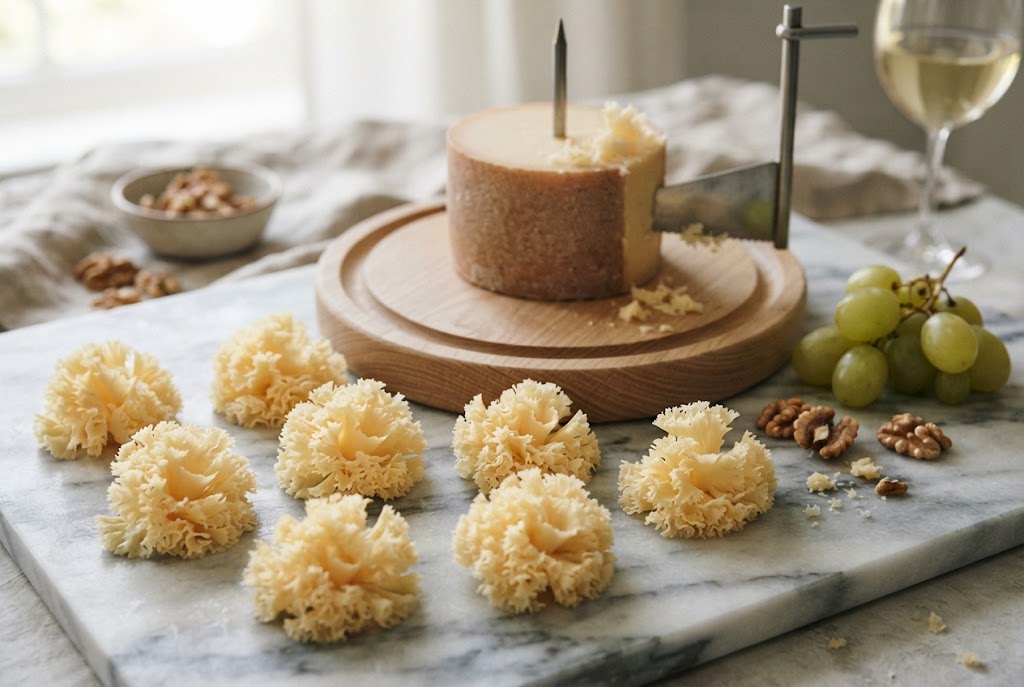
A semi-hard Swiss cheese from the Jura mountains that's never sliced. It's scraped with a girolle, a spinning blade on a spike, into thin ruffled rosettes that look like flowers. It's the easiest way to put something that looks hand-crafted on a board, and you can buy the rosettes ready-made.
What it is
Tête de Moine AOP ("monk's head") has been made in the Bernese Jura since monks at Bellelay Abbey started it over 800 years ago. It's a raw cow's milk cheese, washed with brine during aging and aged at least 75 days. It comes as a small drum that sits on the girolle's spike.
- Taste
- nutty, savory and fruity, with a strong, earthy aroma
- Texture
- firm, but the thin rosettes melt on the tongue
- Look
- pale gold ruffled rosettes, shaped like carnations
Shaving is the mechanism. A thin rosette exposes far more surface to the air than a slice, so aroma compounds escape at once and reach the nose as you eat. The result is a cheese that smells strong but tastes light. Physicists have even studied the ruffles: the cheese is firmer near the rind than at the center, so the blade drags unevenly and the shaving wrinkles as it curls.
What it pairs with — and why
| Pair it with | Why it works |
|---|---|
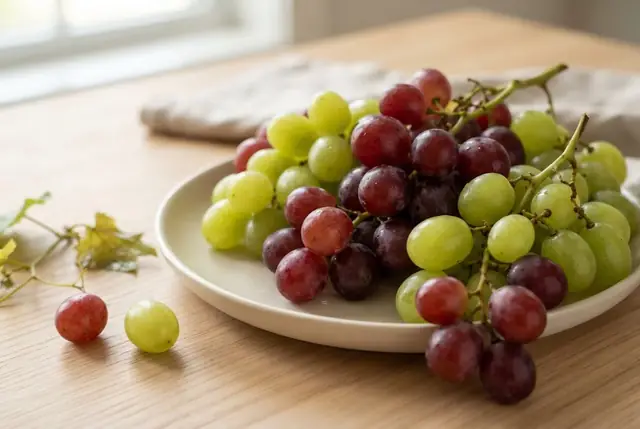
| Grapes | Cold juicy sweetness against a salty, nutty cheese. |
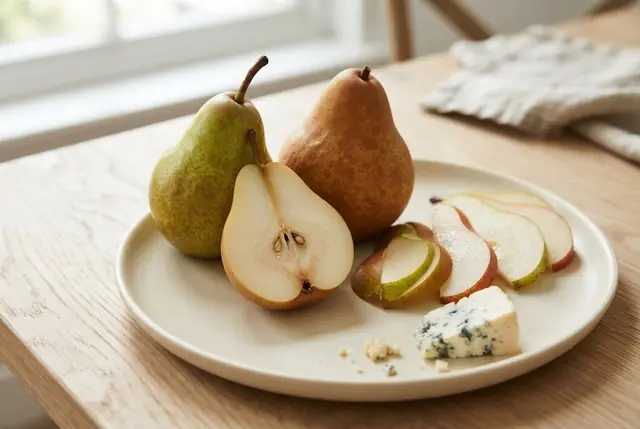
| Pears | Soft and floral, a mild match for a strong aroma. |
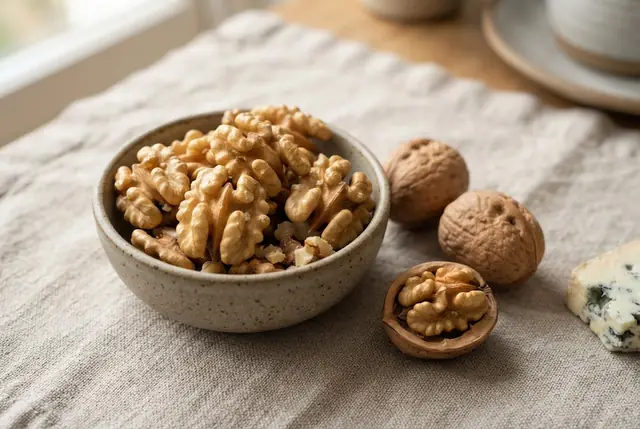
| Walnuts | Tannin and crunch echo the nutty notes. |
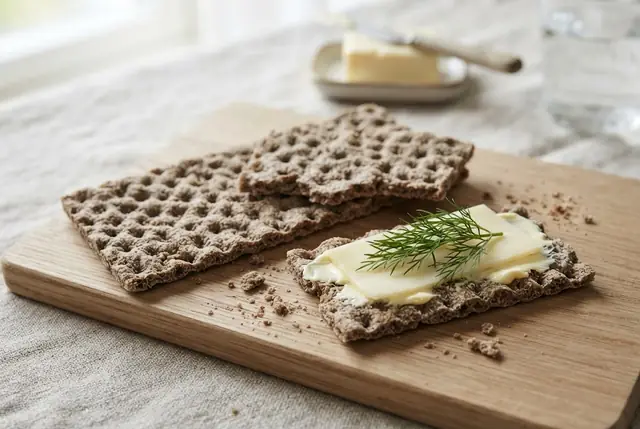
| Rye crispbread | Earthy and crisp, an Alpine-style base. |
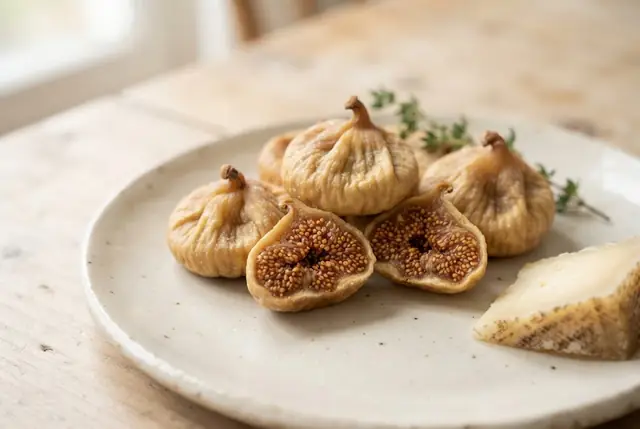
| Dried figs | Dense fruit sugar to balance the salt. |
| Dry white wine like Chasselas or a Pinot Gris | Crisp acid cleans up after butterfat. |
Skip it with: blue cheese next to it. Both are aromatic and they fight. Let the rosettes be the one showpiece cheese.
How to prep it for the board
- Shave it cold. Straight from the fridge, it curls into clean rosettes. Warm cheese tears.
- Trim the top rind, push the drum onto the girolle spike, and turn the blade with light pressure.
- Serve 3 to 4 rosettes per person. They're light but strongly flavored.
- Place them in a cluster or a line like a row of flowers. They're the prettiest thing on the board.
- Shave just before guests arrive. Rosettes dry out and flatten within a couple of hours.
- Fix: store the cut drum with plastic wrap pressed on the top and the girolle dome on. The exposed face dries fast.
What to buy
| Product | Where | Notes |
|---|---|---|
| Mifroma Tête de Moine Rosettes, 10.5 oz | Costco | Pre-shaved rosettes. The easiest route. |
| Emmi Roth Tête de Moine Rosettes | Grocery cheese case, Whole Foods | Ready-made rosettes in a tray. |
| Tête de Moine Fleurolle Box | Costco, cheese shops | A half wheel with a girolle included. |
| Whole Tête de Moine AOP drum | Cheese shops, Murray's | The real experience if you own a girolle. |
| Boska cheese curler (girolle) | Kitchen stores, Amazon | Also works on chocolate and other firm cheeses. |
Label check: "AOP" on the label means it's the protected Swiss cheese made to the traditional rules.
Skip: shaving rosettes the night before. They lose their ruffle and dry out.
Quick FAQ
What is a girolle?
A round board with a center spike and a rotating blade. The cheese sits on the spike and the blade scrapes thin rosettes off the top as you turn it.
Can I buy Tête de Moine already shaved?
Yes. Costco and many cheese counters sell packs of ready-made rosettes. They're less fresh-looking but save buying a girolle.
Why is it shaved instead of sliced?
Shaving exposes much more surface to the air, which releases more aroma and makes a strong cheese taste lighter and nuttier.
What does the name mean?
Monk's head. It was first made by monks at Bellelay Abbey in the Swiss Jura.
Do you eat the rind?
No. Trim the rind off the top before shaving and leave the sides on to hold the cheese together.