The short version
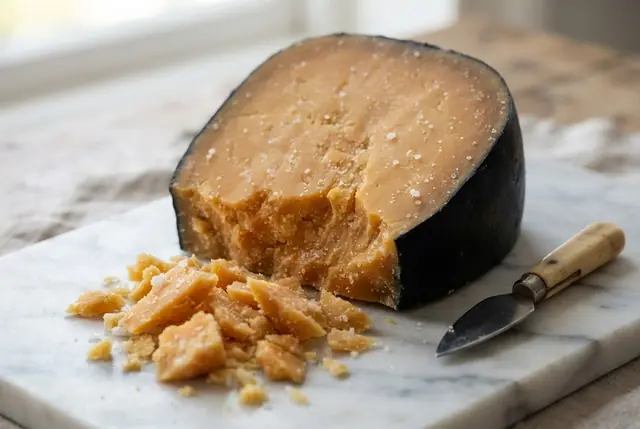
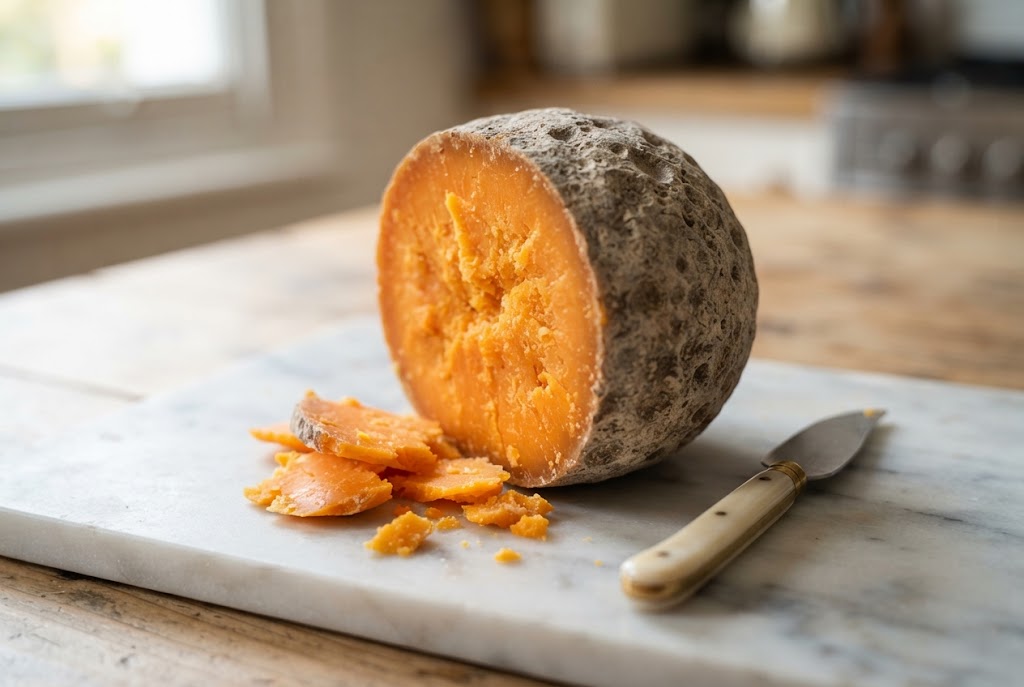
A hard French cheese the color of a basketball, with a grey, pitted, moon-like rind. It tastes of butterscotch and toasted hazelnut and it's the single most striking thing you can put on a board. The rind's texture is made by living mites, which is either a selling point or something to mention afterwards.
What it is
Mimolette was made in Lille in the 1600s, reportedly so France would have its own version of Dutch Edam. The orange comes from annatto. As it ages, cheese mites are deliberately introduced to the rind — they burrow, aerate the surface and help the cheese breathe, leaving the cratered grey exterior.
- Taste
- butterscotch, hazelnut, salty, faintly fruity
- Texture
- very hard, dry, crumbles into shards, crystalline when old
- Look
- vivid orange paste, grey pitted rind like a small moon
Colour contrast is the mechanism on a board, and it's worth being honest that this is mostly a visual choice. Almost nothing on a charcuterie board is orange, and almost nothing has a grey rind. A wedge of Mimolette does more for how a board photographs than any garnish, and it happens to taste very good.
What it pairs with — and why
| Pair it with | Why it works |
|---|---|
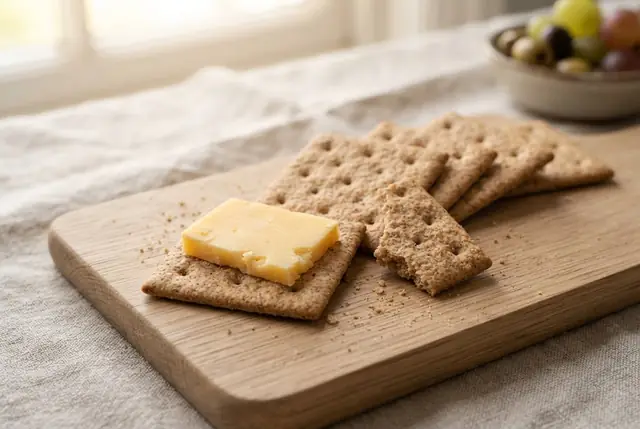
| Whole wheat crackers | Toasted grain against butterscotch. Same logic as aged gouda. |
| Dark chocolate | Bitter against caramel-sweet. Excellent, and unexpected. |
| Dried apricots and dates | Concentrated fruit sugar with concentrated milk sugar. |
| Walnuts and hazelnuts | The cheese's own nut note, doubled. |
| Grainy mustard | Sharp and vinegary against sweetness. The French service. |
| Dark beer, Belgian ale | Malt and caramel matching the cheese. |
| Tawny port, Madeira | Nutty fortified wine with a nutty cheese. |
Skip it with: delicate fresh cheeses in the same corner, and sweet jams — Mimolette is already sweet and doesn't need more.
How to prep it for the board
- Break it into shards, don't slice. It's very hard and it fractures.
- Leave the rind visible on some pieces. The grey crater texture against orange paste is the whole visual point.
- Temper 30 minutes — cold, it's hard enough to be difficult.
- Serve about 1 oz per person. It's dense and intense.
- Put it where the board is dullest. It's the strongest color you'll have.
- Trim the rind before eating — it's edible but gritty and not pleasant.
- Fix: if the wedge is dusty at the surface, that's normal rind residue. Brush or trim it.
What to buy
| Product | Where | Notes |
|---|---|---|
| Mimolette Vieille (18–24 months) | Cheese counters, Whole Foods, Murray's | The aged version — hard, crystalline, deeply flavored. The one to buy. |
| Mimolette Jeune (6 months) | Cheese counters | Softer, milder, less dramatic. |
| Boule de Lille | Specialty shops | The traditional name for extra-aged Mimolette. Rare and expensive. |
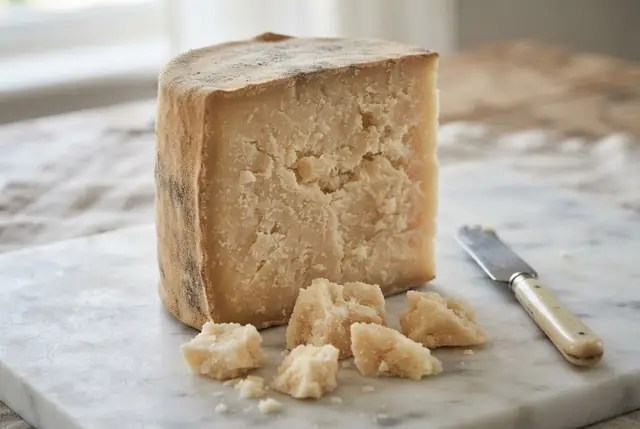
| Aged gouda | Grocery, Whole Foods | The closest flavor relative and much cheaper — see its own page. |
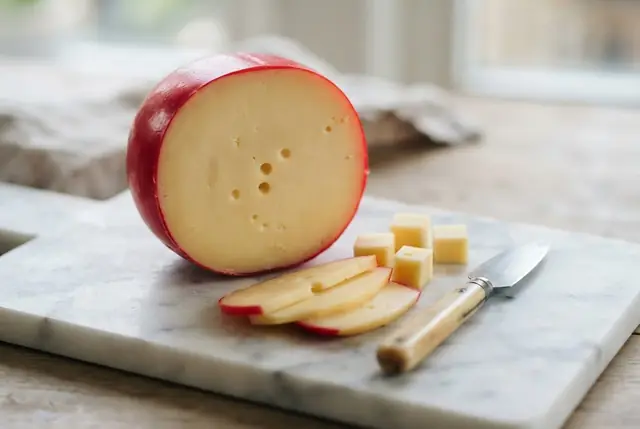
| Aged Edam | Cheese counters | The Dutch ancestor. Similar but paler and milder. |
| Any cheese counter | Local | Availability in the US has been intermittent for import reasons — ask rather than assume. |
Label check: the age. Young Mimolette is a mild orange cheese; aged Mimolette is the interesting one, with visible crystals.
Skip: planning a board around it without checking availability first. US import of Mimolette has been disrupted more than once over the mite question.
Quick FAQ
Are there really mites in the rind?
Yes — cheese mites are deliberately introduced to aerate the surface during aging. They're brushed off before sale, and you trim the rind anyway.
Is it safe to eat?
Yes. It's been made this way for centuries. Trim the rind and eat the paste.
Why is it orange?
Annatto, a natural colouring from achiote seeds — the same thing used in orange cheddar.
What does it taste like?
Butterscotch and toasted hazelnut, salty, with crystals in the aged version. Close to a very good aged gouda.
How much per person?
About 1 oz. It's dense and rich.