The short version
The most-used garnish on every charcuterie board photograph, and for good reason. Rosemary is stiff enough to hold its shape, dark enough to read against pale cheese, and it fills the awkward gaps that make a board look sparse. It also smells like the board is being cooked, which is more than a decorative herb usually manages.
What it is
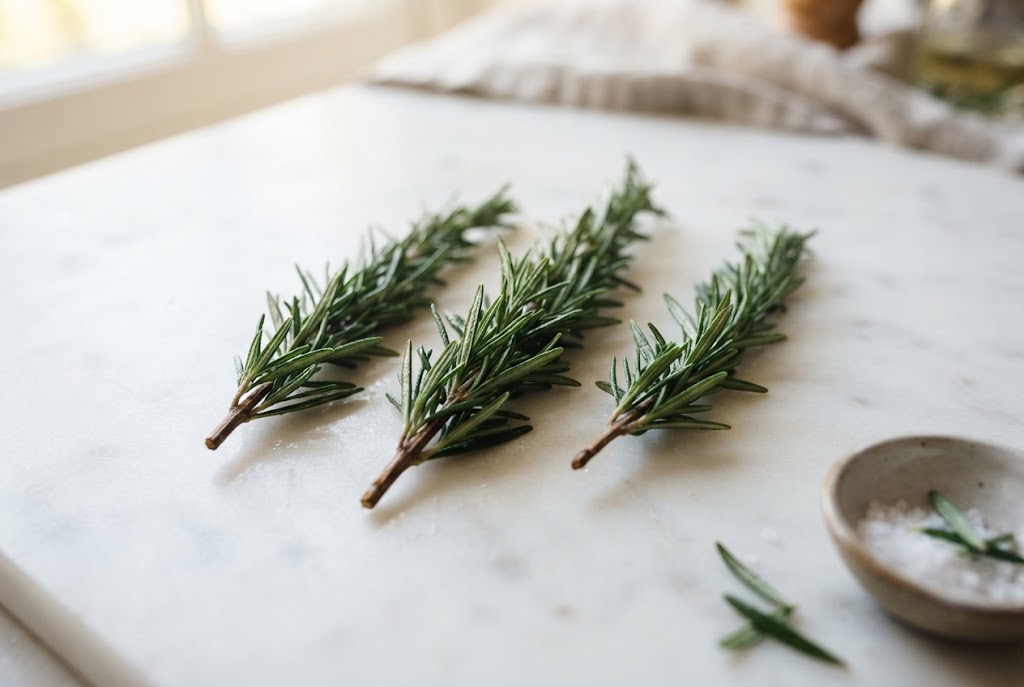
Woody sprigs of Salvia rosmarinus — needle leaves on a stiff stem. Sold in plastic clamshells in every supermarket, or cut from a plant that survives almost any neglect. On a board it's used whole and mostly uneaten.
- Taste
- piney, resinous, camphorous, assertive
- Texture
- stiff needles on a woody stem
- Look
- dark blue-green needles, four to six inch sprigs
The mechanism is aroma without contact. Rosemary's oils are volatile enough that guests smell the board before they taste anything, which primes them for savoury food. Structurally, it's the only cheap ingredient stiff enough to bridge a gap between two piles without collapsing — so it does presentation work no soft herb can.
What it pairs with — and why
| Pair it with | Why it works |
|---|---|
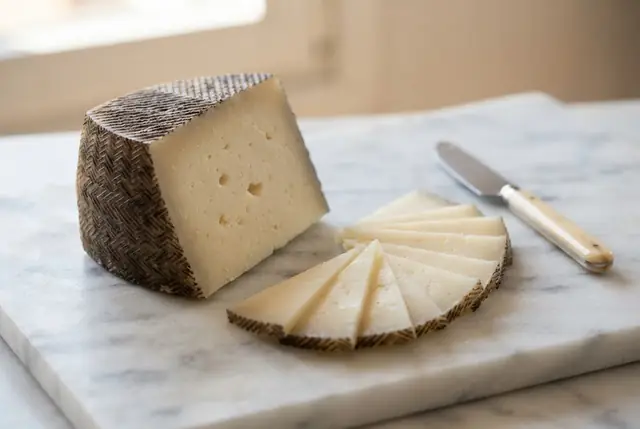
| Manchego | Rosemary and sheep milk is a Spanish combination, and some manchegos are aged in rosemary. |
| Marcona almonds | Rosemary-dusted marconas are sold as a product. Tucking a sprig beside the bowl reinforces it. |
| Spiced nut mix | Warm rosemary nuts are the reference recipe; the sprig signals what's in the bowl. |
| Aged gouda | Caramel and pine are further apart than they sound and work well. |
| Baguette and focaccia | Rosemary focaccia. The sprig belongs beside the bread. |
| Everything, visually | Gaps between cheeses, the edge of the board, under a wedge — this is the actual use. |
Skip it with: nothing, but don't let guests think it's food. It's tough and resinous eaten raw.
How to prep it for the board
- Rinse and dry the sprigs thoroughly. Wet herbs bead water onto cheese.
- Tuck them into gaps between piles — that's the job. Two or three sprigs is plenty on a standard board.
- Run your fingers along a sprig before laying it down. Bruising the needles releases the oils and the board smells of it.
- Lay them under the edge of a wedge so they look placed rather than dropped.
- Keep them off the crackers. Needles fall.
- Don't over-garnish. Four sprigs looks intentional; twelve looks like a hedge.
- Fix: droopy? Stand the sprigs in cold water for ten minutes and they stiffen back up.
What to buy
| Product | Where | Notes |
|---|---|---|
| Fresh rosemary clamshell | Any grocery | A dollar or two, lasts two weeks in the fridge. |
| A rosemary plant | Garden centre, grocery | Almost unkillable. Cheaper than three clamshells and always on hand. |
| Fresh thyme | Grocery | Softer and finer. Better scattered than laid. Has its own page. |
| Bay leaves (fresh) | Specialty, farmers markets | Glossy and dramatic. An underused alternative. |
Label check: the needles should be flexible, not dry and shedding. Brown tips mean it's been in the case too long.
Skip: dried rosemary for garnish — it just looks like debris.
Quick FAQ
Can you eat rosemary sprigs on a charcuterie board?
You can, but they're tough and resinous raw. On a board they're a garnish and an aromatic, not something to eat.
How many sprigs do I need?
Two or three on a standard board. Enough to fill gaps, not enough to look like landscaping.
How do I make the board smell of rosemary?
Run your fingers firmly along the needles before laying the sprig down. Bruising releases the oils.
Where do I put them?
In the gaps between piles, and tucked under the edge of a cheese wedge so they look placed.
How long does fresh rosemary keep?
About two weeks in the fridge in its clamshell, or indefinitely on a plant.