Quick Answer: Safest pick: sparkling wine. Also great: crisp whites (Sauvignon Blanc), light reds (Pinot Noir) and beer (saison or pilsner). Non-alcoholic: sparkling water with lemon.
Drinks, bread and extra dishes, and when to serve each.
Drinks
Wine
The classic pairing. Wine's acid cuts fat, tannins balance richness, and aromatic complexity complements or echoes cured meat and cheese flavors.
Whites that work with almost anything:
- Sauvignon Blanc: high acid, cuts fat cleanly
- Pinot Grigio: neutral and refreshing
- White Burgundy or Chardonnay: richer, for aged and fatty cheeses
- Albariño: salty-mineral, great with cured meats
- Dry Riesling: fruit and minerality
Reds that work:
- Pinot Noir: low tannin, fruity, versatile
- Chianti (Sangiovese): great with Italian salami
- Grenache blends: fruit and spice without much tannin
- Barbera: high acid, low tannin
Skip big young reds (young Cabernet, Barolo) unless the board is heavy on fatty meat and aged cheese.
Sparkling: Champagne and Prosecco are underrated charcuterie companions. The bubbles scrub fat and salt from the palate; the acid is high; the fruit is present without being dominant. Cava is excellent and lower cost.
Rosé: Dry Provençal-style rosé is one of the most versatile single options for a mixed board — enough body for cured meats, enough delicacy for soft cheeses, refreshing acid throughout.
Beer
Beer: carbonation cleans your palate in a way wine can't.
- IPA with aged cheddar
- Stout or porter with blue cheese
- Amber ale with aged Gouda
- Wheat beer with fresh chèvre
- Belgian saison with prosciutto
Hard Cider
Dry hard cider is an underrated board companion — apple acid cuts fat, the Maillard-adjacent oxidative aromatics echo aged cheese, and the moderate carbonation refreshes the palate. Pairs particularly well with aged Gouda, Cheddar, and fall-themed boards.
Non-Alcoholic
Sparkling water with citrus is the reliable default — refreshes the palate between bites without flavor interference. Dry kombucha provides lactic acidity. Shrubs (drinking vinegars) in sparkling water function similarly to acidic wine or cider. High-quality sparkling grape juice for guests who don't drink alcohol.
Bread and Crackers
The bread/cracker selection alongside a board isn't only a vehicle for cheese and meat — different bread types have flavor profiles that complement or contrast different board elements.
Neutral thin crackers (water crackers, Carr's, plain rice crackers): Pure vehicle function. Lets the cheese and meat be the flavor. Works for any board element. Best for tasting pure cheese flavor without interference.
Seeded crispbread (sesame, poppy seed, everything): Adds a roasted, nutty dimension. Works with semi-firm and hard cheeses. The seeds echo the nutty notes in aged Gruyère and Comté.
Sourdough or rustic baguette: The tang of sourdough complements aged cheeses and pairs beautifully with prosciutto and fig jam. For boards serving soft cheeses, thinly sliced baguette with a slice of Brie is a classic combination.
Rye crispbread: Roasted, slightly bitter, earthy. Works with smoked elements (speck, smoked Gouda) and blue cheese. Doesn't work as well with mild or delicate cheeses.
Grissini (breadsticks): Textural element more than flavor vehicle. Useful for dipping into spreads and for adding visual height to the board. The crunch is valuable even if the flavor contribution is minimal.
Focaccia or schiacciata: For Italian-themed boards and antipasto. The olive oil flavor complements Italian salumi and cheeses. Cut into small pieces rather than large slabs.
Timing: All bread and crackers should be set out 30-60 minutes before serving — not during initial board assembly, not more than an hour early. Crackers absorb moisture and go soft; bread stales.
Additional Food Elements
Fruit
Fruit provides acidity and sweetness that creates contrast with the salt and fat of cured meat and cheese.
Fresh grapes: The most board-friendly fruit. Easy to eat in any quantity, natural portion control, flavor neutral enough to pair with anything. Red or green, seedless. Grapes can go on the board hours before service without degrading.
Apple slices: High acidity, crisp texture, pairs well with Cheddar, Gruyère, aged Gouda. Toss in a small amount of lemon juice to prevent browning; add within 60 minutes of serving.
Pear slices: Softer than apple, more floral note, excellent with Comté and Brie. Same handling as apple — lemon juice, add late.
Fresh figs: Seasonal (late summer / fall). Cut in half to show the interior. High natural sugar pairs powerfully with prosciutto and aged salty cheeses (Parmigiano, Pecorino). Available for a narrow season; worth using when fresh.
Dried fruits: Dried apricots, dried figs, dried cranberries, Medjool dates — portable, year-round availability, concentrated sweetness. Portion modestly; dried fruit is calorie-dense and can fill guests quickly.
Nuts
Marcona almonds are the standard — blanched, roasted in olive oil, salted. Their mild nuttiness pairs with most cheeses without competing. Candied pecans add sweetness. Walnuts are appropriate with blue cheese (the slight bitterness echoes well). Hazelnuts with Comté or Gruyère (shared roasted hazelnut flavor compounds).
Portion nuts in a small bowl rather than scattering — they tend to migrate across the board and can crowd adjacent elements.
Spreads and Dips
Beyond the standard condiment bowls, some occasions call for additional spreads:
Whipped ricotta or whipped chèvre: A plain bowl of whipped ricotta with a drizzle of good olive oil provides a creamy, mild element that serves as a flavor reset between more assertive bites. Provide a small spreader knife and grissini alongside it.
Hummus: Polarizing for a charcuterie board — it belongs on a Mediterranean mezze, less naturally on a classic Italian/French board. For casual boards with a Mediterranean direction, appropriate.
Tapenade (olive paste): Works on Italian and Mediterranean boards. Pairs with crostini and aged cheeses. Can be too dominant for mild cheese pairings.
Olives (Outside the Board)
If you're serving a larger gathering, a dedicated olive bowl separate from the board — larger than a board condiment bowl — gives guests an additional grazing element that doesn't crowd the board itself.
What to Avoid
Anything that needs utensils not provided on the board: If guests need a fork, spoon, or specific cutting tool that isn't adjacent to the item requiring it, they'll skip the item. Every element should be either finger-food-accessible or accompanied by the right tool.
Foods with strong competing aromas: Very pungent foods (intensely garlicked dishes, heavily spiced warm foods) placed adjacent to or served simultaneously with a charcuterie board can interfere with how guests perceive the more subtle flavors on the board.
Duplicate elements: If you're serving soup with a crostini component before the board, don't also serve crostini on the board — duplicate bread formats feel redundant and compete for attention.
FAQ
What drinks do you serve with a charcuterie board?
Wine is traditional: a crisp white (Sauvignon Blanc, Pinot Grigio) for lighter boards with fresh cheeses, a medium red (Pinot Noir, Grenache) for boards with bold aged cheeses, or sparkling wine (Champagne, Cava, Prosecco) as a universal pairing. Beer works equally well — Belgian saison, Pilsner, or a craft IPA alongside bold cheddar. For non-drinkers: sparkling water with lemon or herbal teas.
What bread goes with a charcuterie board?
Sliced baguette is the classic French accompaniment — neutral flavor, ideal texture, and easy to bite. Grissini (thin breadsticks) are Italian-style and add height to the board. Crostini (toasted baguette rounds) are sturdier and hold toppings without breaking. Focaccia adds pillowy texture. Choose based on the board's theme: French board gets baguette, Italian board gets grissini.
What sides complement a charcuterie board at a dinner party?
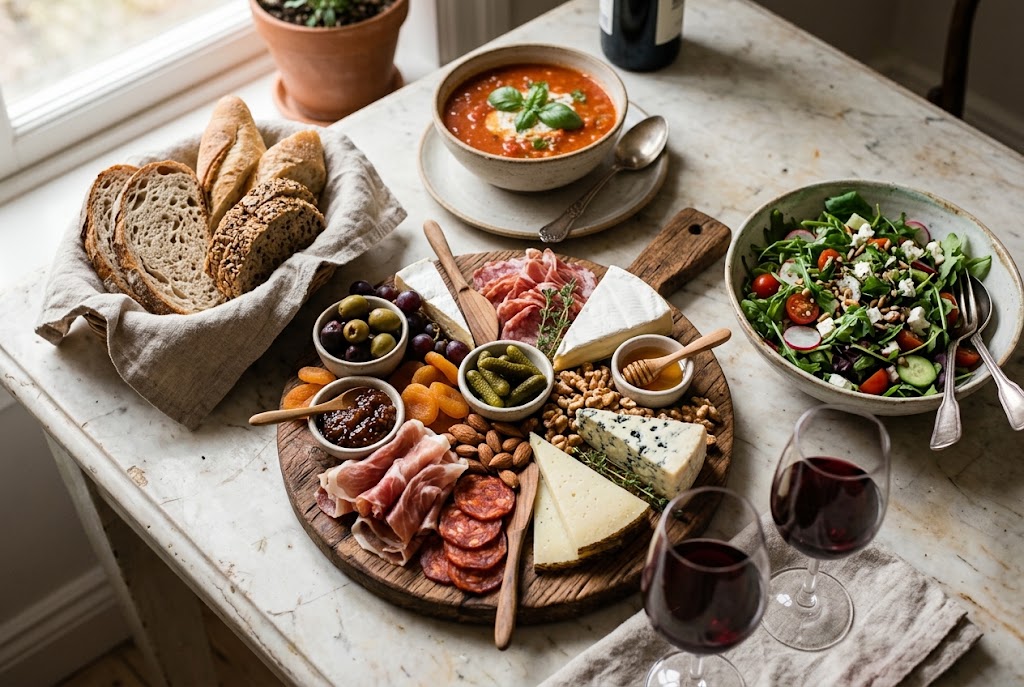
As an appetizer, the board stands alone. If it's the centerpiece of a bigger gathering, add one or two of these:
- A simple green salad
- A warm soup
- Stuffed mushrooms
- A fruit salad
- A crudités platter
What sweet elements should accompany a charcuterie board?
Honey (drizzled directly on cheese or served in a small bowl with a dipper), fig jam or quince paste (placed in small bowls), seasonal fruit (grapes, strawberries, sliced pears or apples), dried fruit (dates, apricots, dried figs), and dark chocolate. These sweet elements create the salt-sweet contrast that makes charcuterie so satisfying.
What are the best non-alcoholic drinks to serve with charcuterie?
Sparkling water (plain or lightly flavored) is the most effective non-alcoholic pairing — carbonation cuts fat just as wine acidity does. Kombucha with a vinegar-forward flavor works similarly. Shrubs (drinking vinegar concentrates) diluted with sparkling water are a sophisticated non-alcoholic option. Herbal or fruit teas served cold also complement charcuterie without competing with the food's flavors.
Quick Reference: What Works When
| Context | Best addition |
|---|---|
| Cocktail hour | Dry sparkling wine or cider, sparkling water |
| Pre-dinner | Limit bread, lean acidic/briny, 1-2 drinks |
| Main event | Full bread variety, full condiment lineup, wine + beer options |
| Fall/winter | Apple cider, seasonal fruits, dark crispbread |
| Italian-themed | Grissini, crostini, Chianti or Sangiovese, sparkling water |
| French-themed | Baguette, Champagne or white Burgundy, cornichons |