The short version
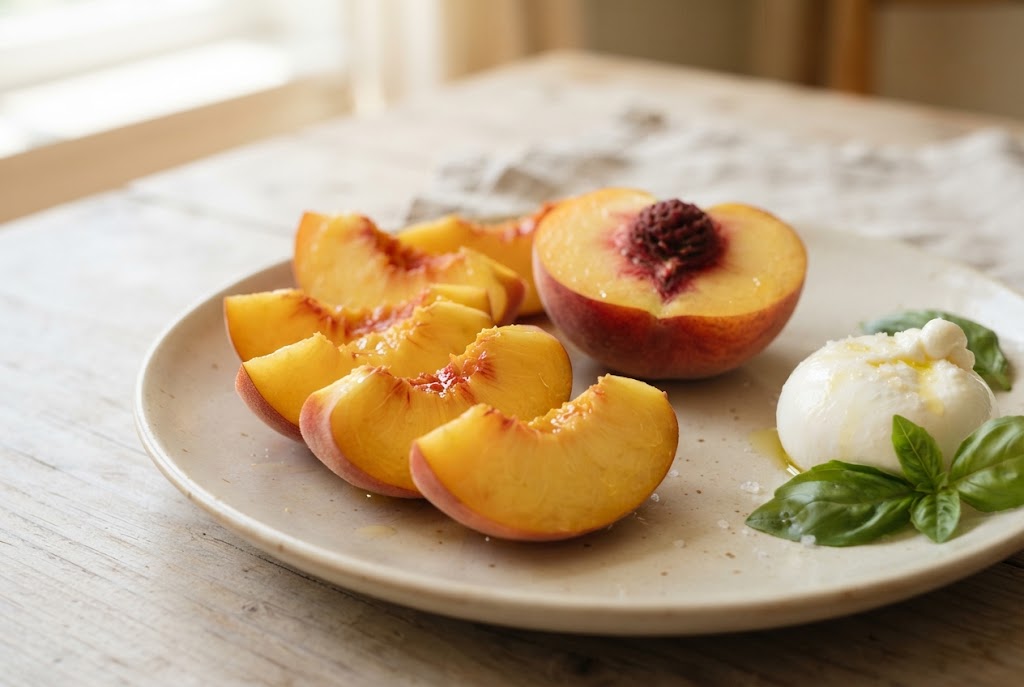
Peaches are a six-week ingredient. In July and August a ripe freestone peach beside prosciutto and burrata is as good as a board gets. In February a supermarket peach is cotton-textured and sour — grill it, or use dried apricots instead.
What it is
A stone fruit, yellow or white flesh, freestone or clingstone. Freestone means the pit lifts out cleanly — the only kind worth buying for a board. White peaches are lower-acid and floral; yellow are tarter and more classically peachy.
- Taste
- sweet, perfumed, mildly acidic
- Texture
- soft and juicy, slightly fibrous near the pit
- Look
- blushed gold-and-red, cut into thick crescents
The mechanism is aroma. Peach carries volatile compounds close to those in almonds and in aged sheep cheese, which is why the pairings that work feel inevitable rather than clever. The juice also does real work — it's acidic enough to cut prosciutto's fat without the harshness of citrus.
What it pairs with — and why
| Pair it with | Why it works |
|---|---|
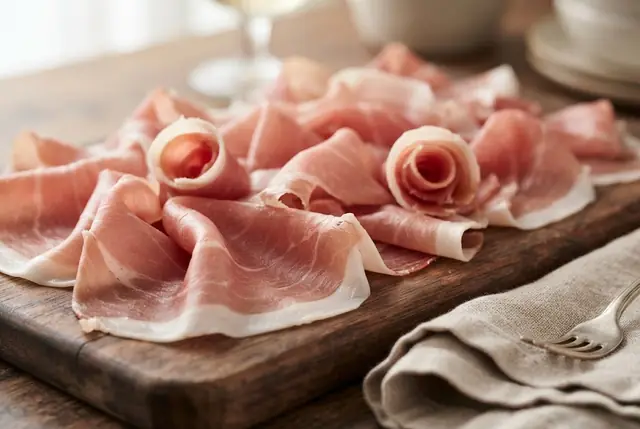
| Prosciutto | Salt and sweet, and peach juice thins the fat the way melon does. The summer version of the classic. |
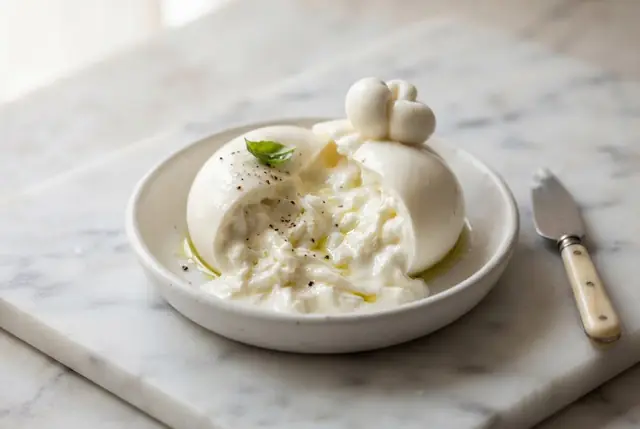
| Burrata | Cream with nothing to cut it meets fruit with too much juice. They solve each other. |
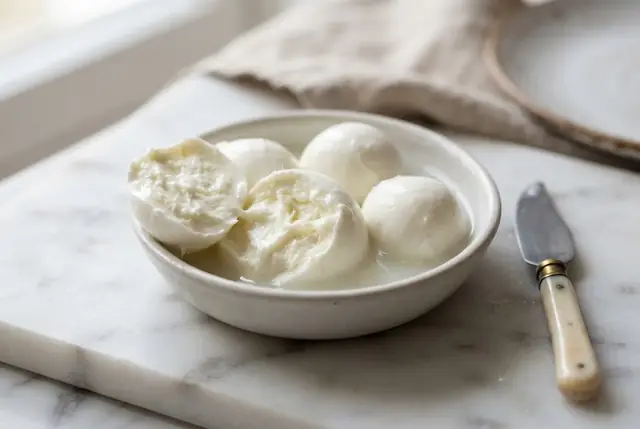
| Fresh mozzarella | Milky blandness lets the peach's perfume do all the talking. |
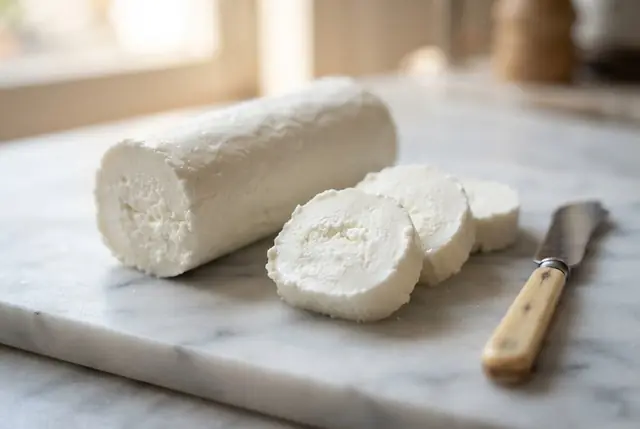
| Fresh goat cheese | Tang against sugar; the chalky texture against the slip of the fruit. |
| Almonds and marcona almonds | Peach and almond share aroma compounds — they're botanically close relatives. |
| Blue cheese, grilled peach | Caramelised sugar stands up to strong funk in a way raw peach can't. |
Skip it with: hard aged cheeses and heavily smoked meats. A peach is too delicate to survive either.
How to prep it for the board
- Buy freestone. Ask, or check the sticker. A clingstone peach will not cut into clean crescents.
- Ripen on the counter, stem-down, until it smells like a peach at the stem end. Fridge only after that, and only for a day or two.
- Don't peel. The skin is where the colour is.
- Cut into eighths around the pit — thick crescents, not thin slices, which go limp.
- Brush with lemon. Peaches brown faster than apples.
- Cut last, right before the board goes out.
- Fix: hard, sour, out-of-season peach? Halve it and grill or broil it cut-side down for four minutes. Heat concentrates the sugar and it becomes usable.
What to buy
| Product | Where | Notes |
|---|---|---|
| Yellow freestone peaches | Grocery, farmers markets, Jul–Sep | The default. Tart enough to cut fat. |
| White peaches | Grocery, summer | Lower acid, more floral. Better with mozzarella than with prosciutto. |
| Donut / Saturn peaches | Grocery, summer | Flat, very sweet, low acid. Slice into rings — they look great. |
| Nectarines | Grocery, summer | The same fruit without fuzz. Firmer, so they hold their shape longer on a board. |
| Grilled peach halves | Make them | The out-of-season fix and a good ingredient in its own right. |
Label check: smell the stem end. No smell means no flavour, and no amount of counter time fixes a peach picked green.
Skip: rock-hard peaches with a green ground colour and canned peaches in syrup.
Quick FAQ
Freestone or clingstone?
Freestone. The pit comes out cleanly and you get proper crescents.
Do I peel peaches for a board?
No — the skin holds the slice together and provides all the colour.
How do I stop them browning?
Brush with lemon juice and cut them right before serving. They brown faster than apples.
What if peaches aren't in season?
Grill or broil them cut-side down for a few minutes, or use dried apricots instead.
Peaches or nectarines?
Nectarines are firmer and hold up better on a board that sits out. Peaches are juicier. Both work.