The short version
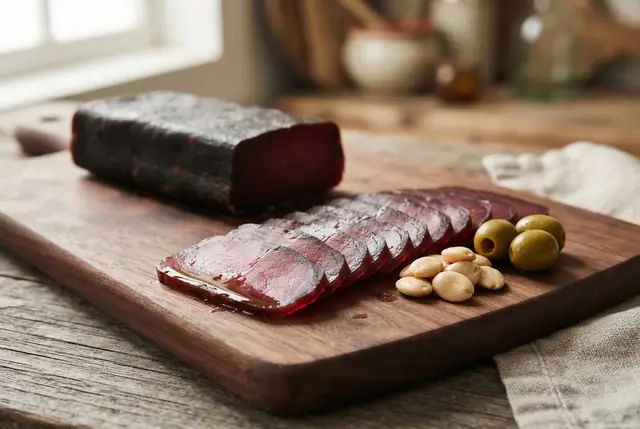
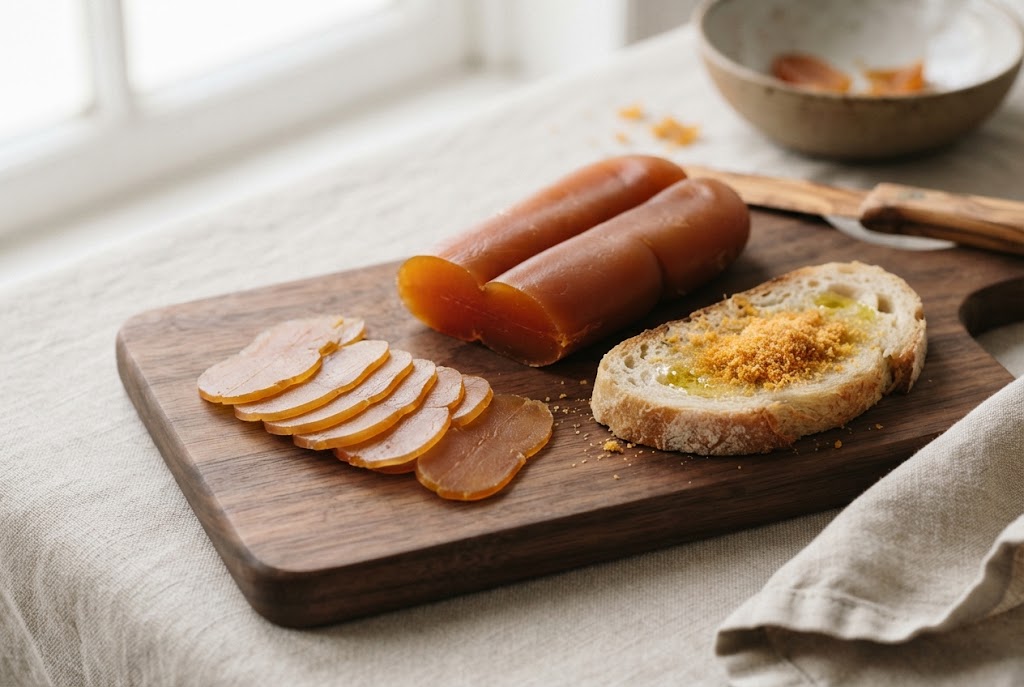
The whole roe sac of grey mullet or tuna, salted, pressed and air-dried into a firm amber block. Shaved paper-thin it delivers more savoury intensity per gram than anything else in this section. A little goes a very long way.
What it is
Bottarga di muggine (grey mullet) is the Sardinian and Sicilian standard, and the finer of the two; bottarga di tonno (tuna) is darker, coarser and stronger. The intact roe sac is salted, pressed under weights for weeks, then air-dried for months. Some blocks are sealed in wax for keeping.
- Taste
- intensely savoury, briny, nutty, faintly bitter at the finish
- Texture
- firm and waxy, shaving into translucent flakes
- Look
- amber to deep orange-brown block, sometimes wax-coated
Concentration is the mechanism, taken further than anywhere else here. Pressing and drying remove most of the water from an already protein-dense food, leaving free amino acids and salt at extraordinary density. That's why it's used in shavings measured in grams rather than ounces.
What it pairs with — and why
| Pair it with | Why it works |
|---|---|
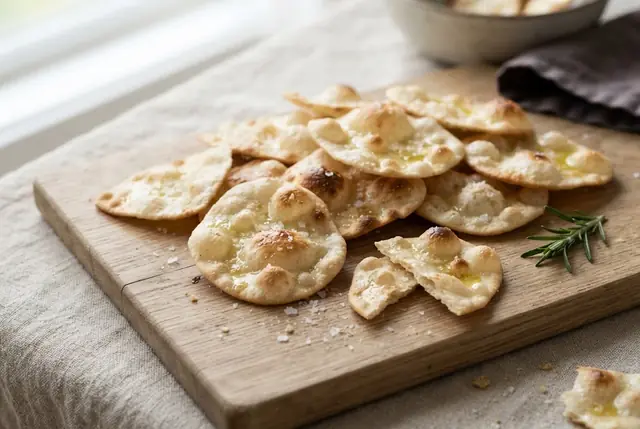
| Olive oil and lemon on plain crackers | Fat and acid are the only things that carry it. The Sardinian service. |
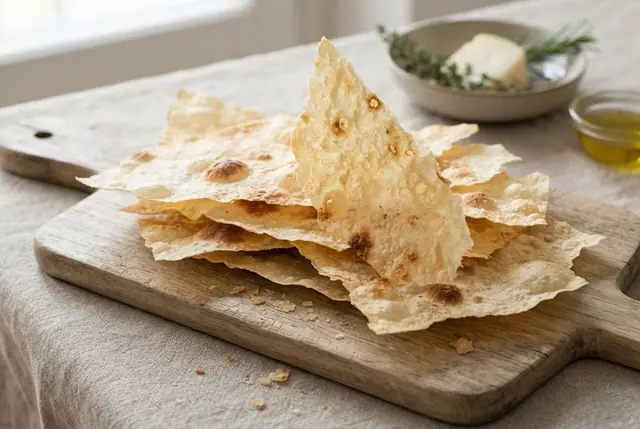
| Pane carasau | Sardinian roe on Sardinian bread. Paper-thin against paper-thin. |
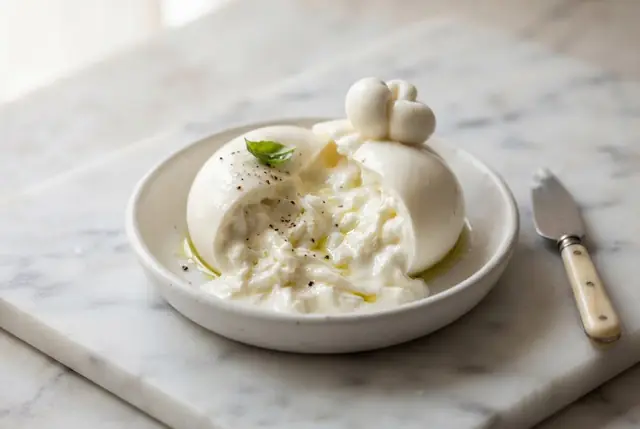
| Burrata or fresh ricotta | Cool bland milk fat against extreme savouriness. Excellent. |
| Raw fennel or celery | Crisp, cold and slightly sweet. |
| Cherry tomatoes | Acid and sweetness against salt. |
| Butter on bread | Same logic as anchovies — fat blunts salt and carries umami. |
| Vermentino, Champagne, Fino sherry | Saline, high-acid, cold. |
Skip it with: every cheese except very mild fresh ones, and any other strong savoury item. Bottarga is the single most concentrated thing you can put on a board.
How to prep it for the board
- Shave it, don't slice it. Use a microplane or a vegetable peeler for translucent flakes. Thick pieces are unpleasantly salty and waxy.
- Serve about a quarter ounce per person — genuinely a few grams each.
- Shave it over something rather than serving it alone: crackers with olive oil, burrata, sliced fennel.
- Put olive oil and lemon beside it. They're not optional; bottarga without fat and acid is just salt.
- Remove the wax coating if there is one, and peel the thin membrane.
- Shave it at the table. It's a nice moment and it stops the flakes drying out.
- Fix: too salty in a bite? More olive oil, not less bottarga. Fat carries it.
What to buy
| Product | Where | Notes |
|---|---|---|
| Bottarga di muggine (grey mullet) | Italian delis, specialty grocers, online | The finer type. Amber, delicate, expensive. Start here. |
| Bottarga di tonno (tuna) | Italian delis, specialty | Darker, coarser, stronger and cheaper. |
| Grated bottarga in a jar | Italian markets, online | Convenient for pasta. Loses aroma fast — a whole block is better. |
| Karasumi | Japanese markets | The Japanese equivalent, made from mullet roe. |
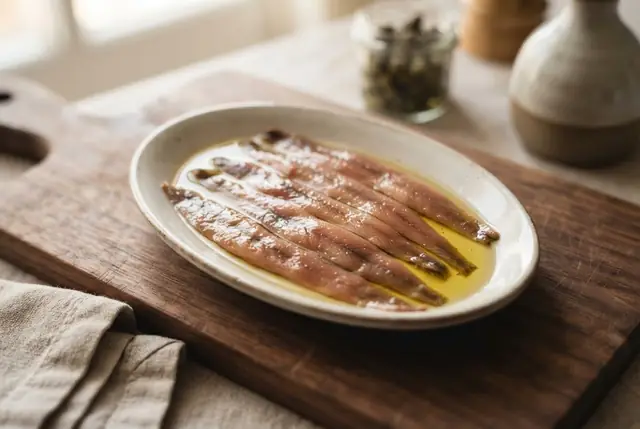
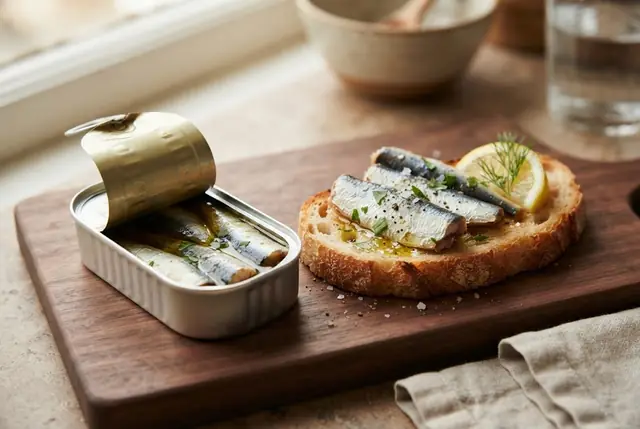
| Anchovies | Whole Foods, specialty | The other Mediterranean umami bomb — see its own page. |
| Any Italian specialty importer | Online | Best selection; availability in general grocery is poor. |
Label check: muggine means grey mullet, tonno means tuna. A whole block keeps far better than pre-grated.
Skip: treating it as a portion of fish. It's a seasoning with a place on a board, not a serving of seafood.
Quick FAQ
What is bottarga?
Salt-cured, pressed and dried fish roe — usually grey mullet or tuna — sold as a firm block and shaved thin.
Mullet or tuna?
Mullet is finer, more delicate and more expensive. Tuna is stronger, coarser and cheaper. Mullet first.
How much do I serve?
About a quarter ounce per person. It's the most concentrated item here.
Do I need olive oil with it?
Yes. Fat and acid are what carry the flavour — plain bottarga on a dry cracker just reads as salt.
Is it like caviar?
No. Caviar is loose fresh eggs; bottarga is the whole sac, pressed and dried into a firm block. Completely different texture and use.