Quick Answer: They come from different parts of the pig and do different jobs. Prosciutto is the cured hind leg, salted and air-dried for more than a year, then sliced paper-thin and eaten as is. Pancetta is cured pork belly, the same cut as bacon but not smoked, and it's mostly used as a cooking ingredient. On a charcuterie board, use prosciutto. Pancetta belongs in the pan, crisped for pasta, salads or a warm topping.
Are prosciutto and pancetta the same?
No. Both are Italian cured pork, but almost everything else is different:
- Prosciutto is the leg (ham). It's lean meat with a cap of fat on the outside.
- Pancetta is the belly. It's roughly half fat, layered through the meat.
Prosciutto vs. pancetta at a glance
| Prosciutto | Pancetta | |
|---|---|---|
| Cut | Hind leg | Belly (same cut as bacon) |
| Fat | Lean, with an outer fat cap | About half fat, in layers |
| Cure | Salt, then air-dried | Salt, pepper and spices, then dried briefly |
| Aging | More than a year (14 months minimum for Prosciutto di Parma) | Weeks to a few months |
| Smoked? | No | No (smoked versions exist but aren't traditional) |
| Eaten | Uncooked, sliced paper-thin | Usually cooked |
| Comes as | Thin slices | Diced, flat slab (tesa) or rolled (arrotolata) |
| Texture | Silky, melts in the mouth | Soft and fatty raw; crisp when cooked |
| Flavor | Sweet, delicate, nutty | Rich, porky, peppery |
| Price | $$ | $ |
How they're made
Prosciutto is salted, rested and hung in cool, dry air for well over a year. Prosciutto di Parma uses nothing but salt. The long, slow aging is what makes it safe to eat without cooking and gives it its sweet, nutty flavor.
Pancetta is rubbed with salt, black pepper and spices like juniper, nutmeg or garlic, then dried for a much shorter time. It comes flat (tesa) for cooking or rolled (arrotolata) into a spiral. Only properly aged rolled pancetta is ever served thinly sliced and uncooked, and most pancetta in US stores, especially the diced kind, is meant to be cooked.
Which belongs on a charcuterie board?
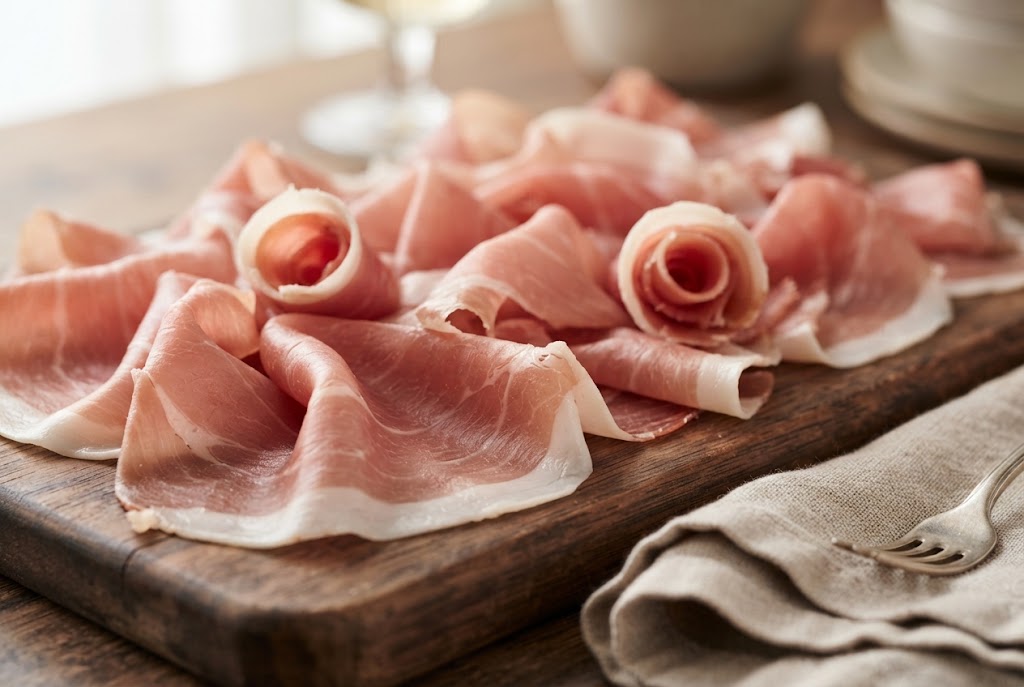
Prosciutto. It's one of the classic board meats: drape it in loose folds, wrap it around melon or figs, or roll it into a prosciutto rose. Pair it with burrata, fresh mozzarella, Parmigiano-Reggiano, melon, figs and Prosecco.
Pancetta can join a board cooked. Crisp thin slices in a pan or oven and serve them as "pancetta chips" next to soft cheese and honey, or scatter crisped pancetta over baked brie.
How to cook with each
- Pancetta: the base of carbonara and amatriciana, and great in soups, beans and roasted vegetables. Start it in a cold pan so the fat renders slowly.
- Prosciutto: add it at the end, or crisp it quickly in the oven. Cooking it for long makes it tough and salty.
Which should you buy?
- For a board: prosciutto, sliced to order. See the best prosciutto brands.
- For pasta and cooking: pancetta, diced.
- For a warm board topping: a few slices of pancetta, crisped.
- For pregnant guests: the CDC advises heating deli and cured meats until steaming hot. Crisped pancetta or prosciutto is a good option.
For pairings and serving, see the Prosciutto di Parma and pancetta guides.