The short version
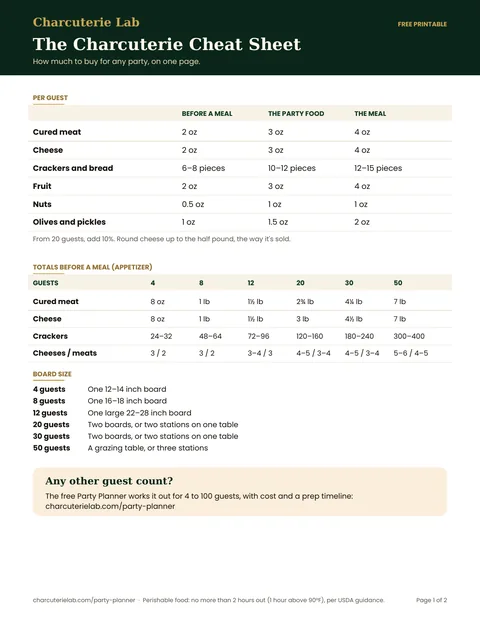
Cured pig cheek — fattier, more delicate and more expensive than pancetta, and the cut Roman cooks insist on for carbonara and amatriciana. On a board it's a small, rich curiosity rather than a volume meat. Half an ounce is a portion.
What it is
Guanciale is the jowl, cured with salt, black pepper and sometimes herbs, then air-dried for a few months. The jowl has a different fat structure from belly — softer, more evenly distributed, and it renders at a lower temperature. That's the reason Roman cooks won't substitute pancetta.
- Taste
- intensely porky, peppery, sweeter and more delicate than bacon
- Texture
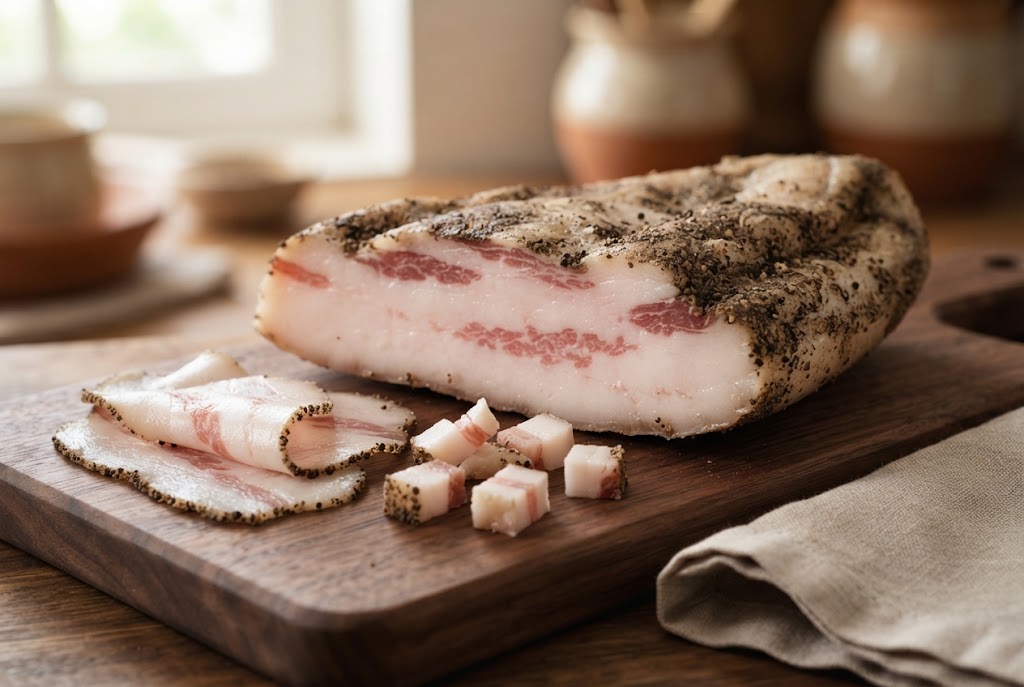
- very soft, almost creamy fat with a thin seam of meat
- Look
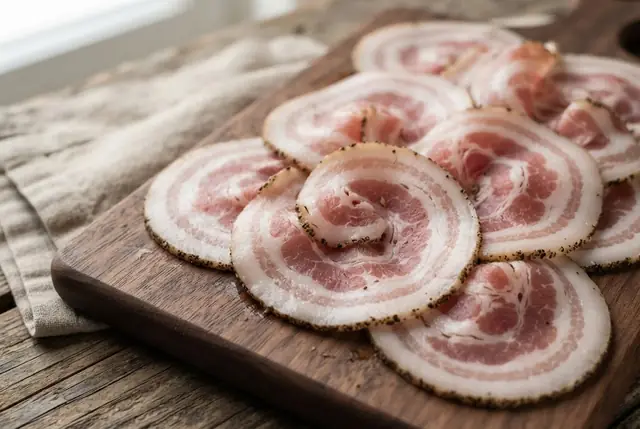
- a mostly-white triangular slab with a thin pink muscle line, edged in black pepper
Fat structure is the mechanism. Jowl fat is softer and lower-melting than belly fat, so it renders into liquid faster in a pan and melts on the tongue faster on a board. That's an advantage in cooking and a limit on a board — a large piece is overwhelming in a way pancetta isn't.
What it pairs with — and why
| Pair it with | Why it works |
|---|---|
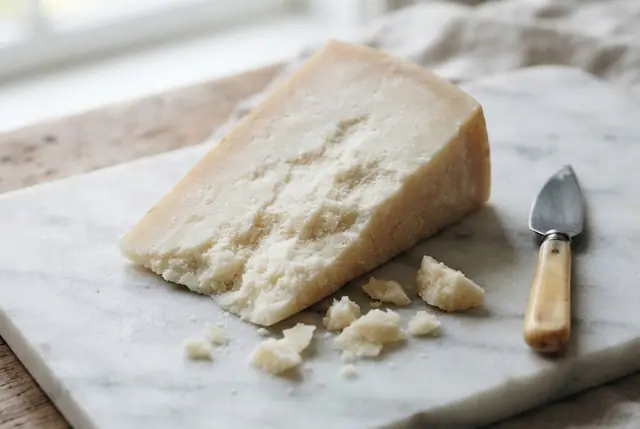
| Pecorino Romano | Salt and sheep's-milk tang against pure fat. Half of carbonara, uncooked. |
| Cracked black pepper | The other half. Guanciale is peppered already and it takes more. |
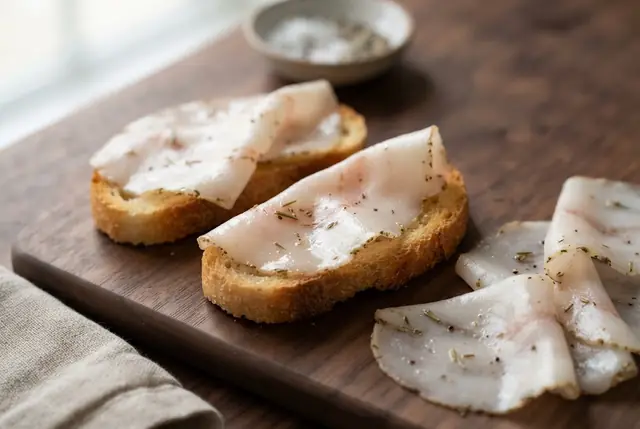
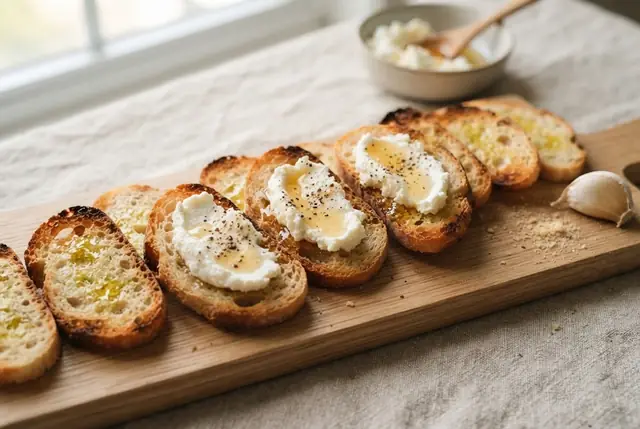
| Crostini, warm | Warmth softens the fat and the bread catches it. |
| Cornichons and pickled things | Vinegar cutting an extremely rich slice. |
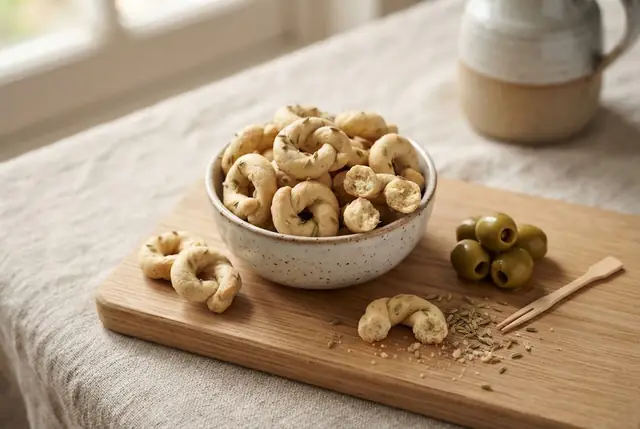
| Taralli | Dry, plain, Italian. Nothing competing. |
| Fresh fava beans or peas, in spring | Green sweetness against fat. A Roman spring pairing. |
| Frascati, Cesanese, Lambrusco | Roman and Emilian wines with acid. |
Skip it with: delicate fresh cheeses. And don't serve it alongside pancetta and lardo — pick one cured fat per board.
How to prep it for the board
- Slice it very thin. Thinner than pancetta. This is the fattiest item in the section and the slice thickness is what makes it pleasant or not.
- Serve about half an ounce per person, as a taste rather than a portion.
- Temper 20 minutes.
- Lay it flat, slightly overlapping, so the pepper-crusted edge shows.
- Put acid and something salty beside it — cornichons and pecorino.
- Consider crisping some of it instead. A few minutes in a dry pan turns it into crackling shards, which is a genuinely better board item than raw guanciale for most crowds.
- Fix: if raw guanciale is too rich for the room, crisp the rest. Nobody dislikes it crisped.
What to buy
| Product | Where | Notes |
|---|---|---|
| Imported Italian guanciale | Italian delis, specialty grocers | The real thing. Ask the counter to slice it thin. |
| La Quercia Guanciale | Whole Foods, specialty | Iowa-made and excellent. The easiest good one to find. |
| Fra' Mani or Tempesta guanciale | Specialty grocers, online | Small-batch American. Very good. |
| Pancetta | Grocery, Italian markets | The easier, less rich alternative — see its own page. |
| Lardo | Italian delis | Pure back fat, the next step in richness — see its own page. |
| Any Italian butcher | Local | Often cheaper than a specialty grocer and cut to order. |
Label check: guanciale should be mostly white fat with one thin muscle seam, and a dark pepper crust. If it looks like streaky bacon, it's belly.
Skip: buying a large slab for a board. It's expensive and half an ounce per person is genuinely the right amount.
Quick FAQ
What's the difference between guanciale and pancetta?
Guanciale is jowl, pancetta is belly. Guanciale is fattier, softer and more delicate; Romans consider it non-substitutable in carbonara.
Can I eat it raw?
Yes, thinly sliced — it's a dry cure. Many people prefer it crisped.
Why is it so expensive?
There are only two jowls per pig, and the cure takes months.
How much per person?
About half an ounce. It's the richest thing in this category.
Should I crisp it instead?
For most boards, yes. A few minutes in a dry pan makes shards that everyone likes.