The short version
Spanish blood sausage, most often made with rice, onion and paprika. It is not a slice-and-serve board meat — it wants a hot pan. Cut into cubes and crisped, it becomes something people who said no will eat several of.
What it is
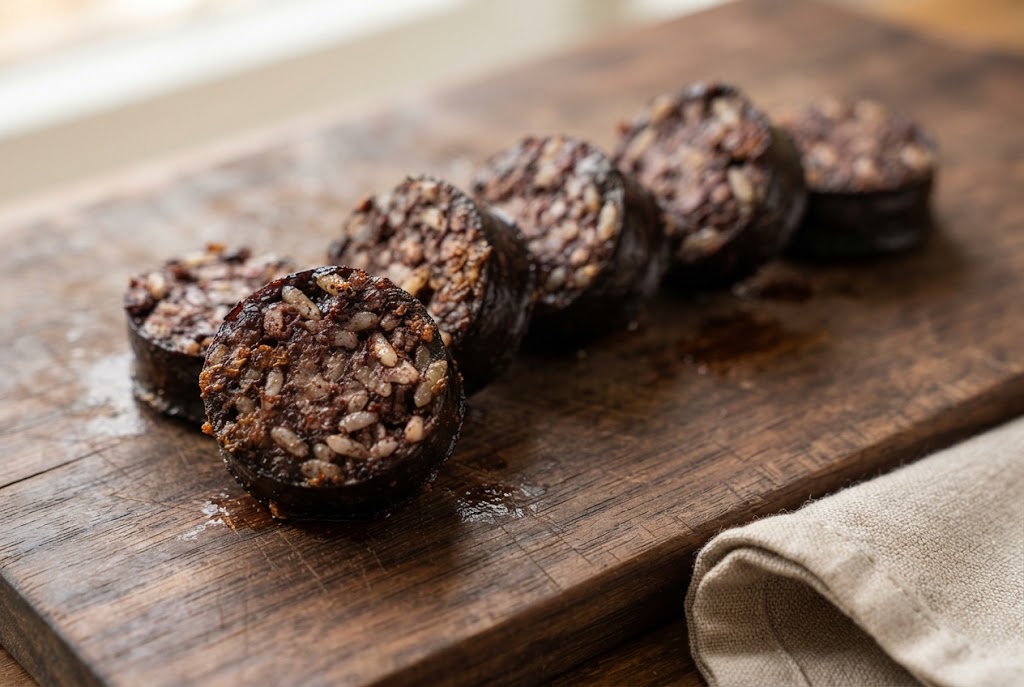
Morcilla is pork blood mixed with fat and a filler, seasoned and cooked in a casing. The two styles worth knowing: morcilla de Burgos uses rice and onion and is crumbly; morcilla de León uses more onion and paprika and is softer. Both are already cooked when you buy them — the pan is about texture, not safety.
- Taste
- rich, mineral, sweet-oniony, gently spiced
- Texture
- crumbly with rice, or soft and spreadable, depending on style
- Look
- near-black, sometimes with visible rice grains
Iron is the mechanism behind the flavour people find distinctive. Blood is protein and iron rather than fat, so morcilla reads as mineral and savoury rather than rich — closer to liver than to sausage. Crisping in a pan browns the surface and adds the Maillard sweetness that balances it.
What it pairs with — and why
| Pair it with | Why it works |
|---|---|
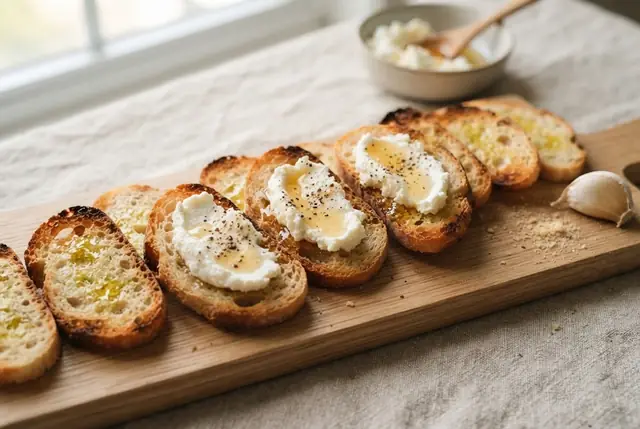
| Crisped, on crostini | The only board service worth doing. Cube it, fry it, pile it on toast. |
| Apple or quince | Sweet fruit against iron and onion. The classic partner for blood sausage anywhere. |
| Piquillo peppers | Sweet, smoky and Spanish. |
| A fried quail egg | If you're being ambitious — the yolk is the sauce. |
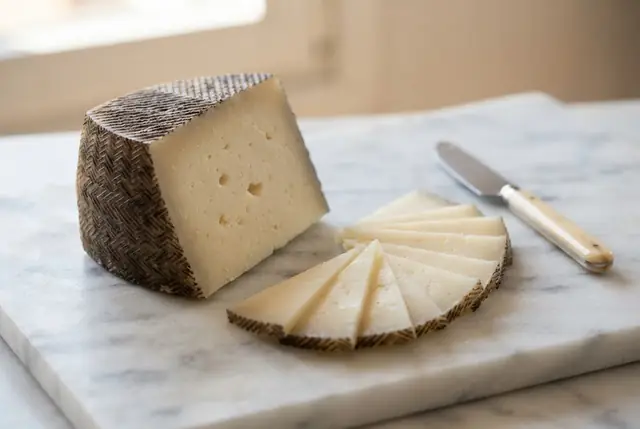
| Manchego | Nutty sheep's milk to follow it. |
| Pickled guindillas | Sharp acid resetting the palate. |
| Rioja, Ribera del Duero, cold cider | Structured Spanish reds, or Asturian cider. |
Skip it with: delicate fresh cheeses, and don't put it uncooked on the board. It also needs a warning label of sorts — see the prep notes.
How to prep it for the board
- Cook it. Always. Slice into half-inch rounds or cubes and fry in a dry hot pan for two to three minutes a side until crisp outside.
- Serve it warm, on crostini, not loose on the board.
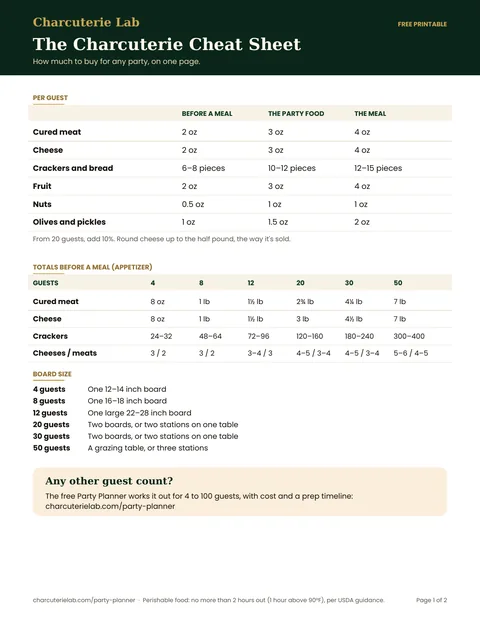
- Serve about 1 oz per person as a small hot item.
- Say what it is before people try it. Not to warn them off — the opposite. People who find out afterwards feel tricked; people told upfront usually try it.
- Put something sweet beside it — apple, quince, or a smear of jam.
- Peel the casing before cooking if it's plastic.
- Fix: falling apart in the pan? That's the Burgos rice style behaving normally. Serve it as a crumble on toast rather than as rounds.
What to buy
| Product | Where | Notes |
|---|---|---|
| Morcilla de Burgos | Spanish specialty grocers, online | Rice and onion, crumbly. The most common and the easiest to crisp. |
| Morcilla de León | Spanish grocers, specialty | Softer, more paprika. Good spread on toast. |
| Palacios morcilla | Whole Foods, Spanish grocers | The most widely distributed in the US. |
| Black pudding | British import shops | The British equivalent. Oatmeal instead of rice. |
| Boudin noir | French delis, specialty | The French version — smoother and richer. |
| Any Spanish or Latin market | Local | Often has it fresh and cheap. |
Label check: rice or onion listed as the filler tells you which style you have. It should be firm and dark, not soft and grey.
Skip: serving it cold and sliced like salami. It's a cooked sausage and it needs heat to be good.
Quick FAQ
Is morcilla safe to eat without cooking?
It's already cooked when sold, so yes — but it's much better crisped, and that's how it's eaten in Spain.
What does it taste like?
Mineral and savoury with sweet onion, rather than metallic. Closer to liver than to a regular sausage.
Burgos or León?
Burgos has rice and crumbles when cooked. León has more onion and paprika and stays softer.
How much per person?
About 1 oz, served hot in small pieces.
Will my guests eat it?
More than you'd expect, if you crisp it, put it on toast, and tell them what it is before they taste it rather than after.