The short version
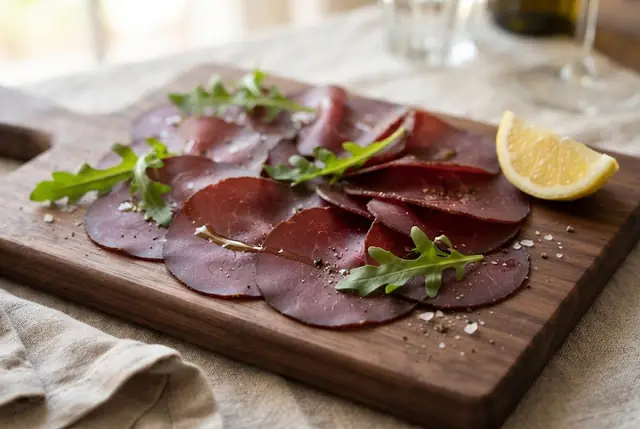
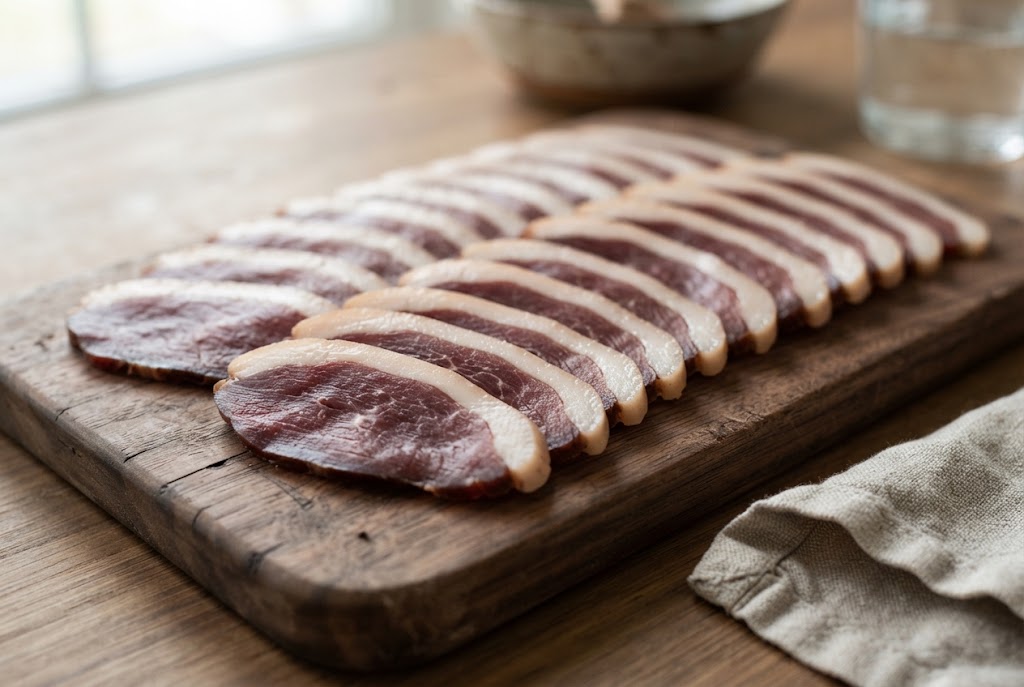
Duck breast salt-cured and air-dried until firm, then sliced thin with the fat cap on. Darker, denser and more mineral than pork charcuterie, with a wide band of fat that melts on contact. It's also, genuinely, the easiest cured meat to make yourself.
What it is
A whole duck breast — usually Moulard or Pekin — is buried in salt for a day, rinsed, seasoned with pepper and herbs, then hung in a cool humid place for one to three weeks until it loses about 30% of its weight. That's the entire process. Magret séché is the French name.
- Taste
- rich, mineral, gamey-sweet, more intense than pork
- Texture
- dense and firm meat with a soft melting fat layer
- Look
- deep mahogany-red muscle under a thick pale fat cap
Duck fat's low melting point is the mechanism. It softens well below body temperature — the same property that makes duck fat prized in cooking — so a thin slice arrives with a band of fat that liquefies immediately. That contrast, dense meat against melting fat, is the entire appeal.
What it pairs with — and why
| Pair it with | Why it works |
|---|---|
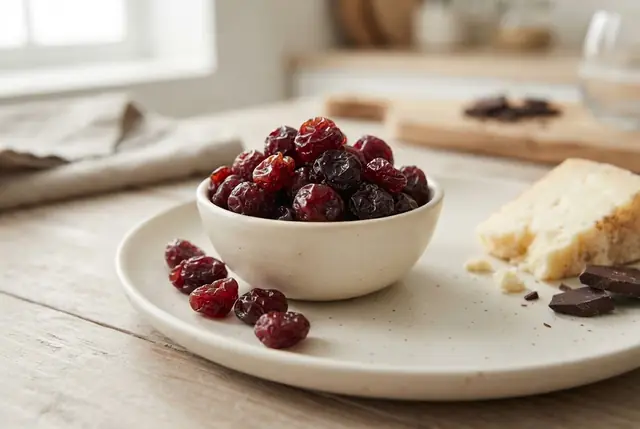
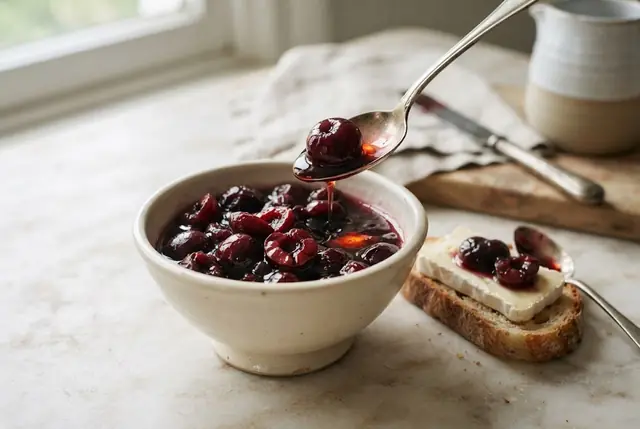
| Fig jam or cherry preserve | Duck and dark fruit is a permanent pairing. The sweetness cuts the richness. |
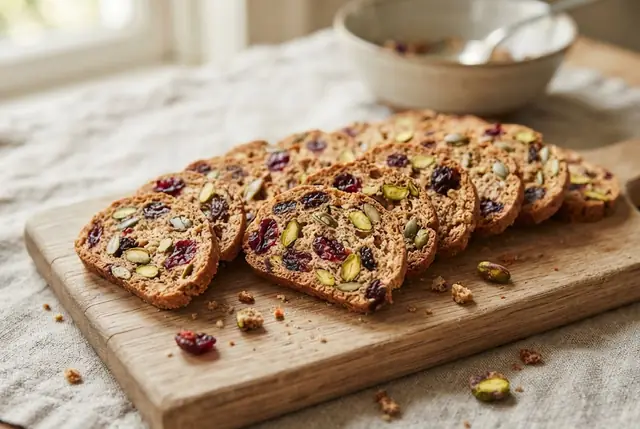
| Fruit and nut crisps | The cracker brings sweet and nut; the duck brings mineral fat. A complete bite. |
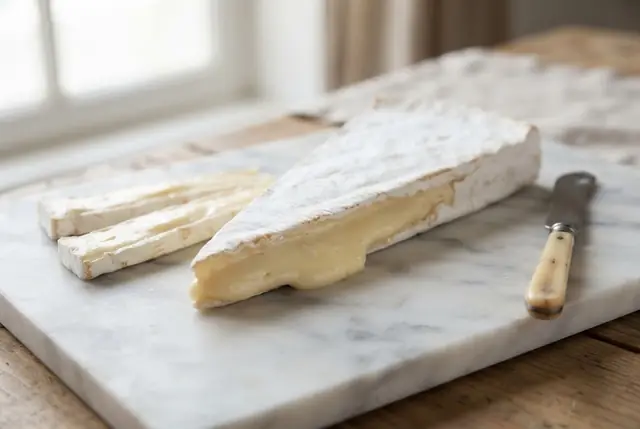
| Brie or triple-crème | Rich on rich, which works because the duck is savoury rather than fatty-sweet. |
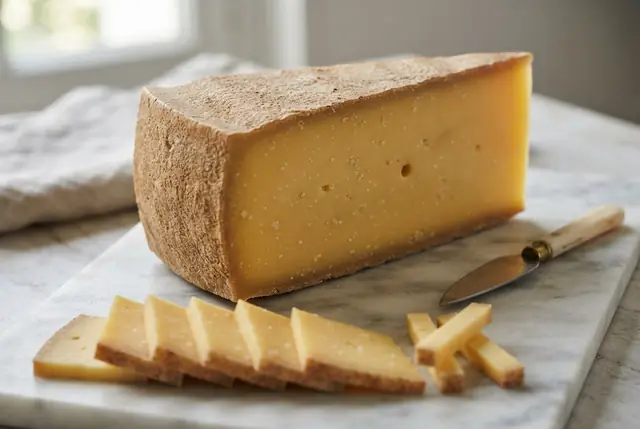
| Comté | Nutty and firm against dense and mineral. |
| Orange or pomegranate | Acid and sweetness — the classic duck accompaniments. |
| Pistachios and walnuts | Tannin against mineral duck fat, and crunch against a dense slice. |
| Pinot Noir, Madiran, Sauternes | Duck's traditional wines, from light red to sweet. |
Skip it with: smoked cheese and everything crackers. It's expensive and distinctive, and both flatten it.
How to prep it for the board
- Slice very thin, across the grain, keeping the fat cap on every slice. The fat is the point.
- Lay slices flat and slightly fanned so the dark meat and pale fat read as a band.
- Temper 20 minutes so the fat softens.
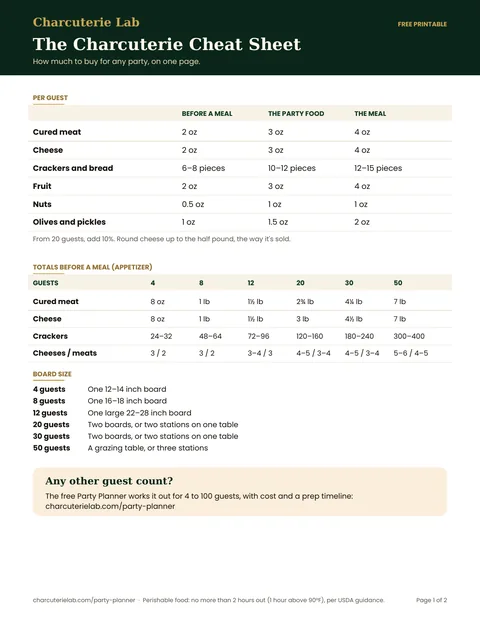
- Serve three-quarters of an ounce to an ounce per person. It's rich and costly.
- Put something sweet and dark beside it — fig jam, cherry preserve or pomegranate.
- Don't trim the fat. It's half the product.
- Fix: if the slices are chewy, they're cut too thick or with the grain. Slice across, thinner.
What to buy
| Product | Where | Notes |
|---|---|---|
| D'Artagnan Duck Prosciutto | Whole Foods, specialty, online | The most widely available in the US. Reliable. |
| Fabrique Délices magret séché | Whole Foods, specialty | California-made French charcuterie. Excellent. |
| Smoked duck breast | Whole Foods, specialty | A different product — cooked and smoked. Also good, more assertive. |
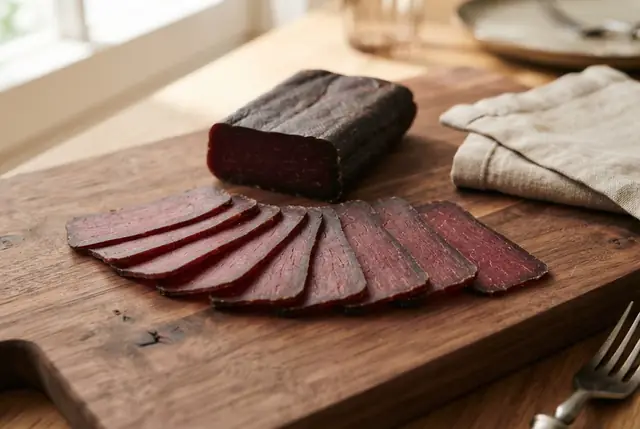
| Bresaola | Italian delis, Whole Foods | The lean beef equivalent — see its own page. |
| A duck breast and a box of salt | Any grocery | The DIY route. Genuinely the easiest home cure there is. |
| Bündnerfleisch | Swiss and German markets | Another air-dried whole muscle — see its own page. |
Label check: it should be a single whole breast, dark red with a thick pale fat cap. Cured duck sold pre-sliced in a tray dries fast — check the edges.
Skip: trimming the fat to make it look leaner. That's where the flavour and the texture live.
Quick FAQ
Is it actually prosciutto?
No — the name is borrowed. It's cured duck breast, called magret séché in France.
Can I make it at home?
Yes, and it's the standard first project for home curing. Salt for 24 hours, rinse, season, hang for one to three weeks until it loses about 30% of its weight.
Is it cooked?
No, cured — salt and drying, like prosciutto.
How much per person?
Three-quarters of an ounce to an ounce. It's rich and expensive.
What's the best pairing?
Fig jam or cherry preserve. Duck and dark fruit, as always.