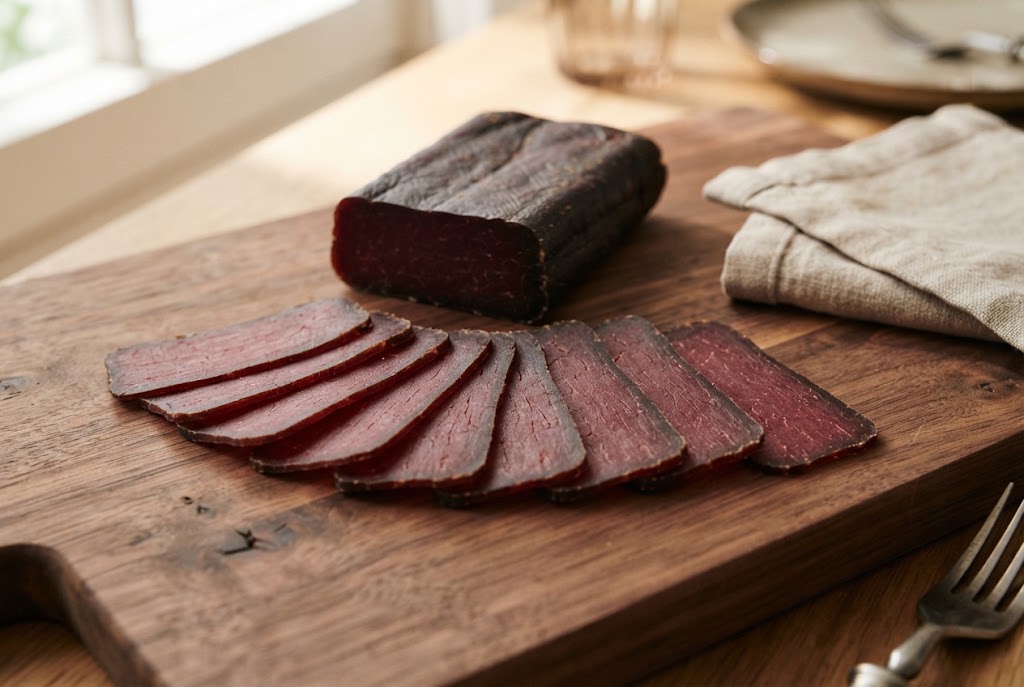
The short version
Air-dried beef from the Swiss canton of Graubünden, pressed flat during curing and sliced almost transparent. Drier and more mineral than bresaola, with a distinctive rectangular block shape. Serve it very thin and eat it quickly.
What it is
Bündnerfleisch IGP is made from lean beef round, salted and seasoned with alpine herbs, then dried in the cold dry air of the high Grisons valleys for several months. It's pressed repeatedly during drying, which flattens the muscle into a brick and drives out moisture evenly.
- Taste
- concentrated beef, mineral, herbal, moderately salty
- Texture
- very dry and firm, almost brittle at the edge
- Look
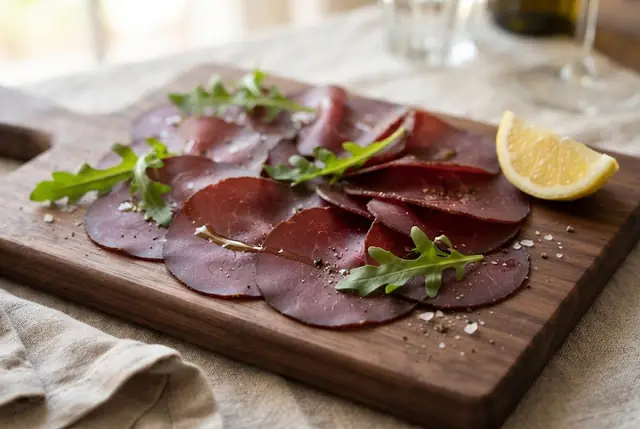
- deep burgundy-red pressed rectangular block, very lean, almost no visible fat
Altitude and cold are the mechanism. Grisons valleys sit high, dry and cold, which draws moisture out slowly without ever letting the meat warm enough to spoil. That produces a drier, denser result than Italian bresaola gets in the milder Valtellina — more concentrated, and more fragile once cut.
What it pairs with — and why
| Pair it with | Why it works |
|---|---|
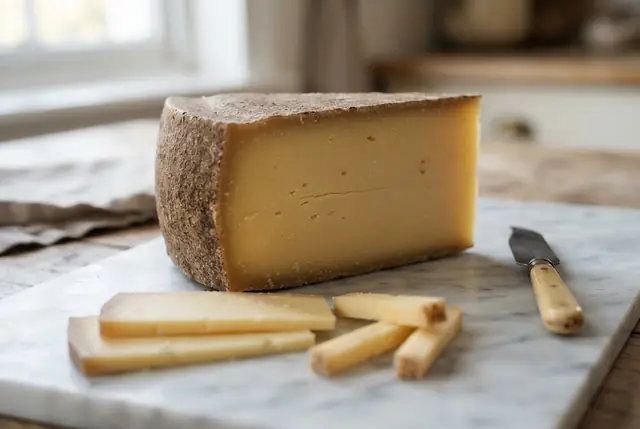
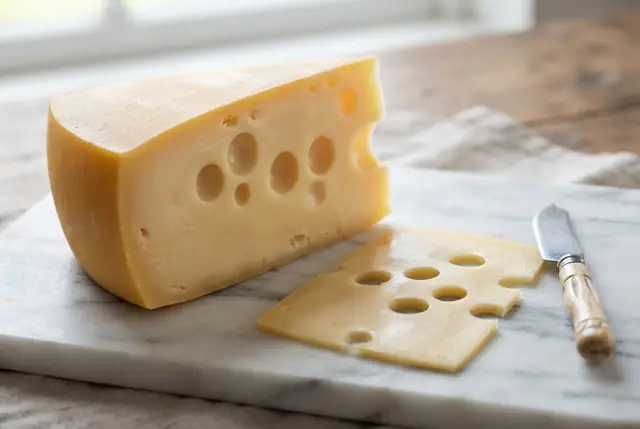
| Gruyère or Emmental | Swiss beef with Swiss cheese. The mountain plate. |
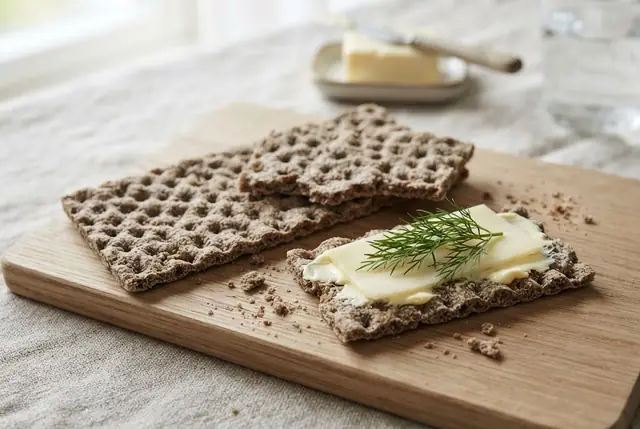
| Rye crispbread and dark bread | Dry and sour against dry and mineral. |
| Cornichons and pickled onion | Acid against concentrated salt. |
| Olive oil and cracked pepper | Same treatment as bresaola — it needs the fat. |
| Butter on dark bread | The Swiss service, and it supplies what lean beef lacks. |
| Apple and pear | Cold sweet water against dry salt. |
| Chasselas, Pinot Noir, Alpine whites | Swiss wines, high-acid. |
Skip it with: smoked cheese and blue cheese, both of which bury it. It's lean and delicate despite the intensity.
How to prep it for the board
- Slice as thin as your knife or the counter's machine allows. Thick Bündnerfleisch is genuinely tough — this is not a cut you can be casual with.
- Lay slices flat and overlapping, and serve within fifteen minutes. Lean dried beef curls fast.
- Dress it lightly with olive oil and pepper, exactly as with bresaola.
- Temper only 15 minutes. No fat to soften.
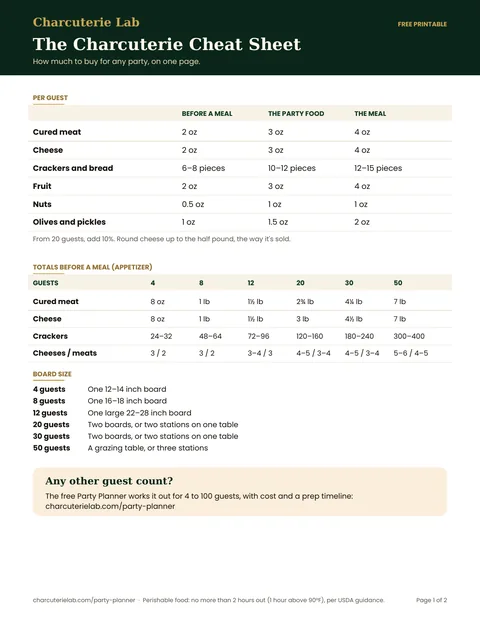
- Serve three-quarters of an ounce to an ounce per person.
- Buy it cut to order if you possibly can. Pre-sliced dries in the tray.
- Fix: curling at the edges? A brush of olive oil recovers the surface.
What to buy
| Product | Where | Notes |
|---|---|---|
| Bündnerfleisch IGP | Swiss and German markets, specialty grocers | The protected version. Look for the IGP mark. |
| Swiss deli counter, sliced to order | Specialty delis | Much better than pre-packed. |
| Bresaola della Valtellina | Italian delis, Whole Foods | The Italian equivalent, softer and easier to find — see its own page. |
| Cecina de León | Spanish specialty grocers | The Spanish smoked version. Bolder. |
| Biltong | Specialty, South African shops | A different tradition, similar dried-beef idea. |
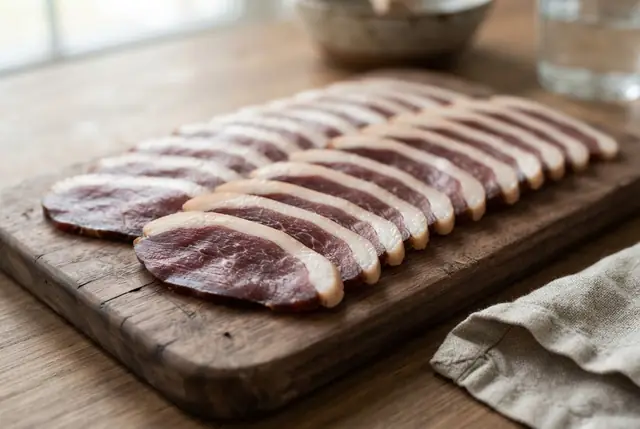
| Duck prosciutto | Whole Foods, specialty | The other air-dried whole muscle — see its own page. |
Label check: the IGP mark and Graubünden or Grisons origin. It should be a dense rectangular block, not a round.
Skip: buying it pre-sliced if the edges look dark and curled in the pack. Lean dried beef shows its age immediately.
Quick FAQ
How is it different from bresaola?
Bündnerfleisch is Swiss, drier, more concentrated and pressed into a rectangle. Bresaola is Italian, softer and rounder. Same idea, different climate.
Why is it rectangular?
It's pressed repeatedly during drying, which flattens the muscle and drives moisture out evenly.
Does it need dressing?
It benefits from olive oil and pepper, like bresaola. Lean cured beef has no fat of its own.
How much per person?
Three-quarters of an ounce to an ounce. It's dense and intense.
Why does it curl so fast?
Almost no fat to protect the cut surface. Slice it late and serve it quickly.