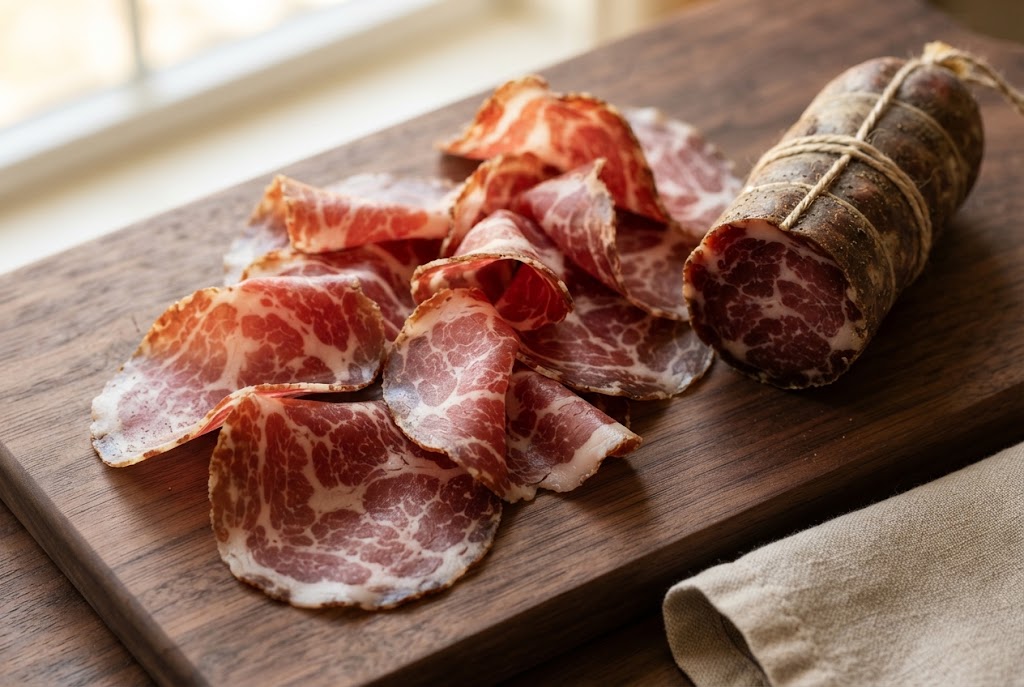
The short version
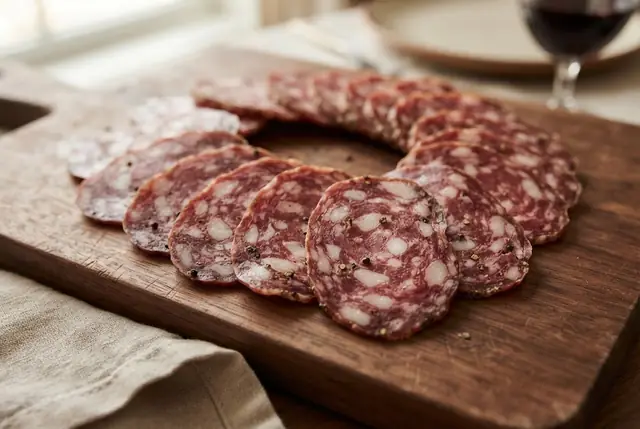
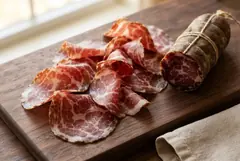
Whole pork neck and shoulder muscle, salt-cured and air-dried, sliced into rounds shot through with ribbons of fat. It's the most beautiful slice on most boards. Capicola, capocollo and gabagool are the same thing — the names differ, the meat doesn't.
What it is
Coppa is made from the capocollo — the muscle running from the neck into the shoulder, naturally marbled in a way the leg isn't. It's salted, seasoned (often with wine, garlic, fennel or paprika depending on region), cased and aged three to six months. Coppa di Parma IGP and Capocollo di Calabria DOP are the protected versions.
- Taste
- rich, sweet-savory, gently spiced, less salty than prosciutto
- Texture
- tender, buttery, the fat melting at room temperature
- Look
- deep red rounds with a lacework of white fat and a rim of it outside
Intramuscular fat is the mechanism. Where prosciutto is lean muscle with a fat cap on the outside, coppa's fat runs through the meat in ribbons. That fat melts at body temperature and carries flavor across the whole bite, which is why coppa reads as richer and rounder than a leaner ham at the same salt level.
What it pairs with — and why
| Pair it with | Why it works |
|---|---|
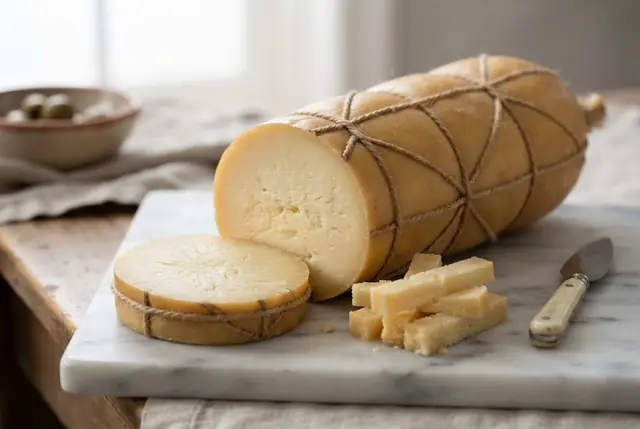
| Aged provolone or pecorino | Sharp salty cheese against sweet marbled pork. The Italian-American deli plate. |
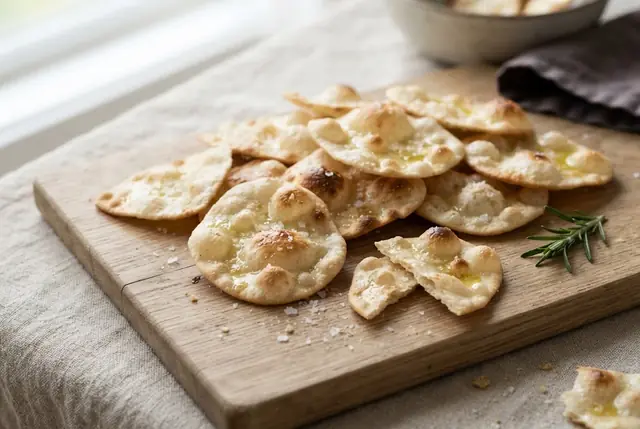
| Olive oil crackers and focaccia | Fruity, peppery, Mediterranean — nothing competing. |
| Marinated olives and roasted peppers | Oily and briny neighbors. |
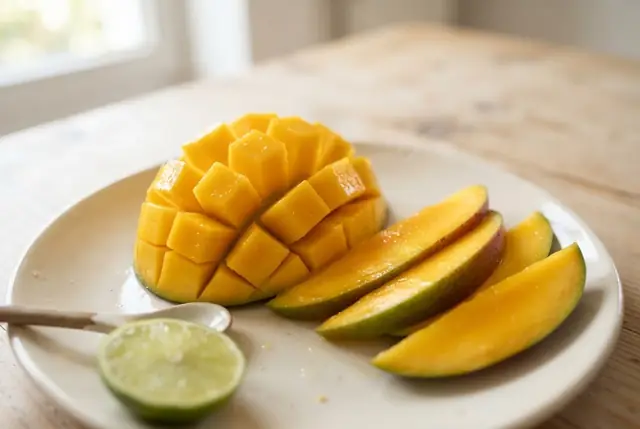
| Fresh figs and melon | Sweet fruit against rich fat, as with any dry-cured pork. |
| Grainy mustard | Sharpness cutting through marbling. |
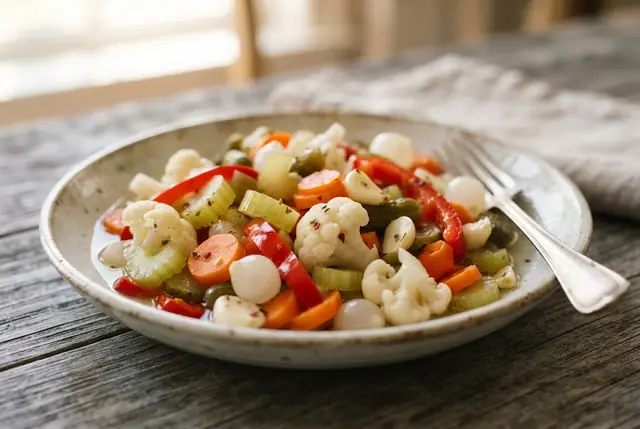
| Pickled cherry peppers | Heat and vinegar. The classic sub-shop pairing, and it belongs on a board. |
| Chianti, Nero d'Avola, Aglianico | Southern Italian reds with structure. |
Skip it with: delicate fresh cheeses, which lose to the spice and the fat. And don't serve coppa and capicola as two items — you'd be serving the same meat twice.
How to prep it for the board
- Slice thin, and keep the rounds whole. The marbling is the visual selling point — don't fold it away.
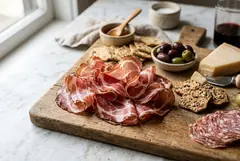
- Fan the rounds in an overlapping line so the fat lacework reads across the board.
- Temper 20 minutes. The fat needs to soften or the slices eat waxy.
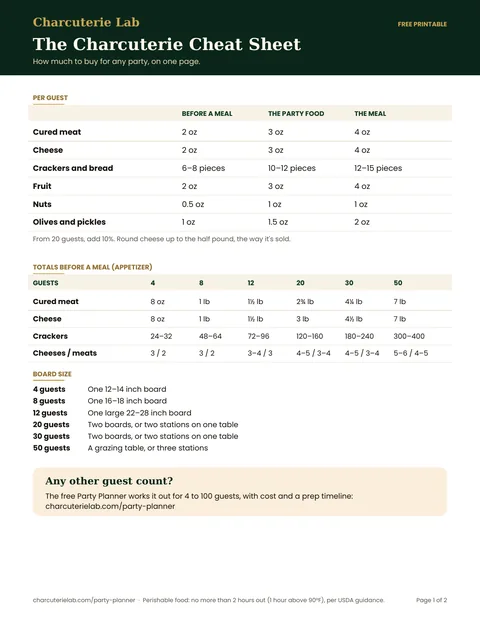
- Serve 1–2 oz per person.
- Leave the outer fat rim on. Trimming it makes the slice look tidier and taste worse.
- Know which version you bought — sweet (dolce) or hot (piccante, with chili). The hot one changes the pairings.
- Fix: slices sticking? Temper longer. Cold coppa welds together.
What to buy
| Product | Where | Notes |
|---|---|---|
| Coppa di Parma IGP | Italian delis, Whole Foods, specialty | The protected northern version. Mild and sweet. |
| Capocollo di Calabria DOP | Italian delis, specialty | Southern, often with chili. Bolder. |
| Volpi Coppa | Grocery, Whole Foods, Instacart | American-made in St. Louis since 1902. Widely available and good. |
| Creminelli or Olli capocollo | Whole Foods, Target, grocery | Excellent American salumi, easy to find. |
| Boar's Head Capocollo | Deli counters | The everyday deli version. Fine and cheap. |
| Fra' Mani | Specialty grocers, online | Berkeley-made, exceptional, expensive. |
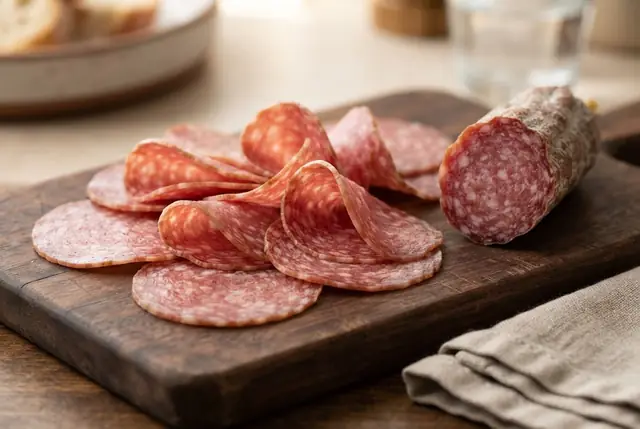
Label check: dolce means mild, piccante means spiced with chili. Look for whole-muscle appearance — real coppa shows one continuous muscle, not chopped and re-formed meat.
Skip: anything described as "capicola loaf" or that looks uniformly pink and pressed. That's a formed lunch meat.
Our buyer's guide: for a board, buy dry-cured coppa such as Volpi Sliced Coppa. At the deli, Boar's Head Hot Capocollo is the easy pick. See our capicola and coppa buyer's guide.
Quick FAQ
Is capicola the same as coppa?
Yes. Coppa, capocollo, capicola and gabagool are all the same cut and cure — regional and dialect names for one product.
Coppa or prosciutto?
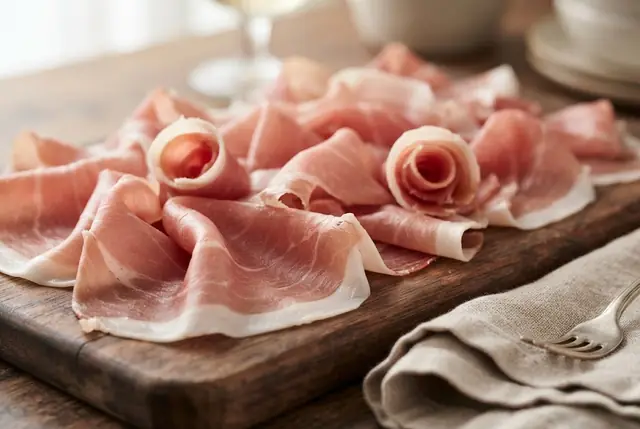
Coppa is neck muscle, marbled through with fat, richer and less salty. Prosciutto is lean leg with a fat cap. Both belong on a board.
Sweet or hot?
Dolce is mild and versatile. Piccante has chili and needs milder partners.
How much per person?
1–2 oz as one of several meats.
Should I trim the fat rim?
No. It's part of the flavor and part of the look.