The short version
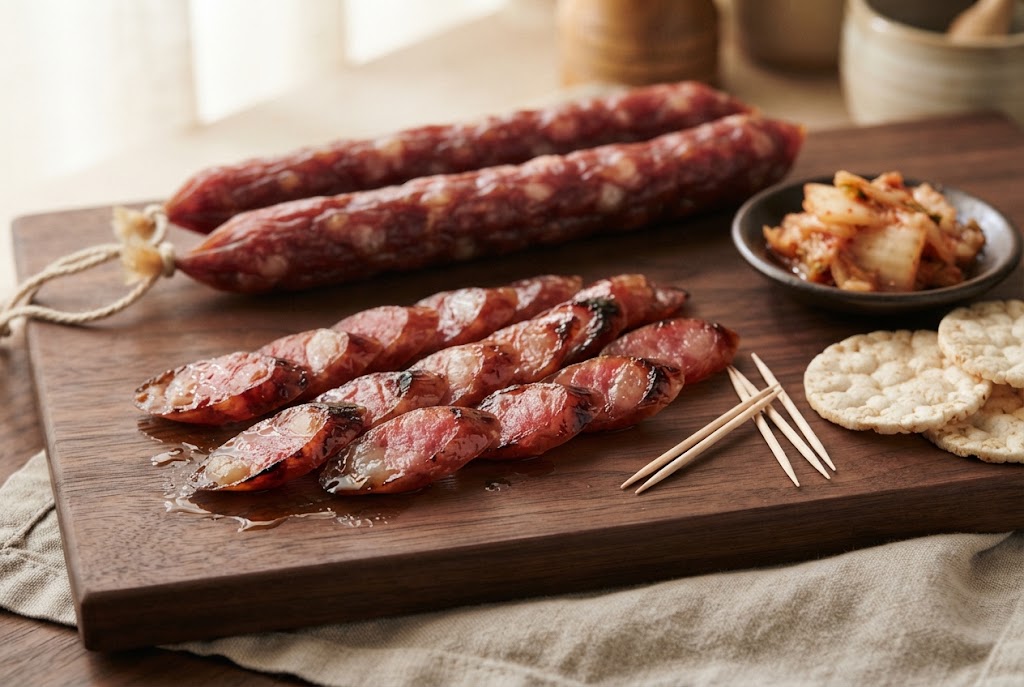
Chinese cured pork sausage, sweet and savory, with visible cubes of fat and a glossy red-brown casing. It has to be cooked, but that's the trick: seared slices come out caramelized at the edges and juicy inside. Served warm on a board, it's the bite everyone asks about.
What it is
Lap cheong (also lap chong or lạp xưởng in Vietnamese) is Cantonese for "waxed sausage." Coarsely chopped pork and pork fat are seasoned with sugar, soy sauce, salt and usually mei kuei lu chiew, a rose-scented sorghum liquor, then stuffed and air-dried. It's firm, almost hard, and sold in links tied in pairs.
- Taste
- sweet and salty, with a soy-savory depth and a faint floral note
- Texture
- firm raw; tender, juicy and crisp-edged once cooked
- Look
- thin dark red links with white cubes of fat showing through
The sugar is the mechanism. When the sliced sausage hits a hot pan, the sugar in the cure caramelizes and the fat renders around it, so the edges crisp and turn glossy. Sweet, salty and fatty all at once is a combination the brain is wired to like, which is why it disappears so fast.
What it pairs with — and why
| Pair it with | Why it works |
|---|---|
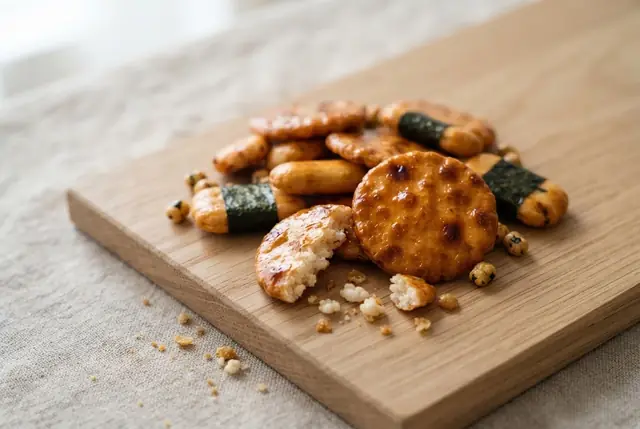
| Rice crackers | Light, crisp and gluten-free, a neutral base for a rich bite. |
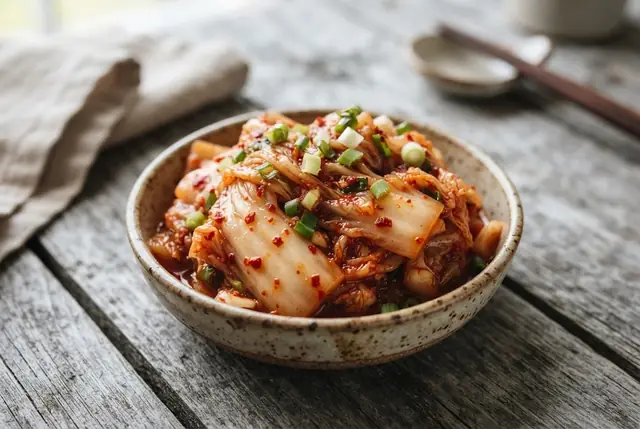
| Kimchi | Sour, spicy fermentation cuts through sweet pork fat. |
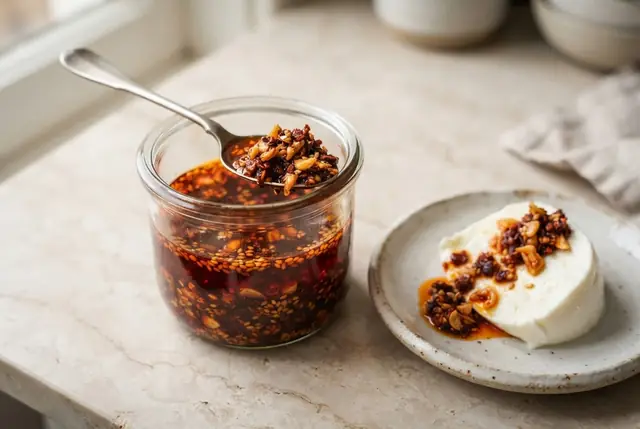
| Chili crisp or chili oil | Heat and crunch against sweet, caramelized meat. |
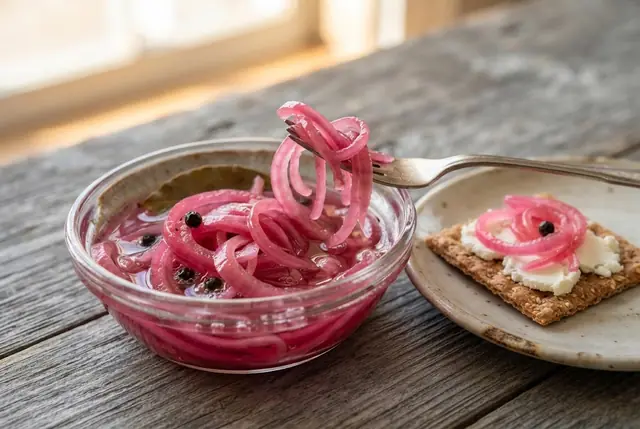
| Pickled red onions | Vinegar resets the palate between rich slices. |
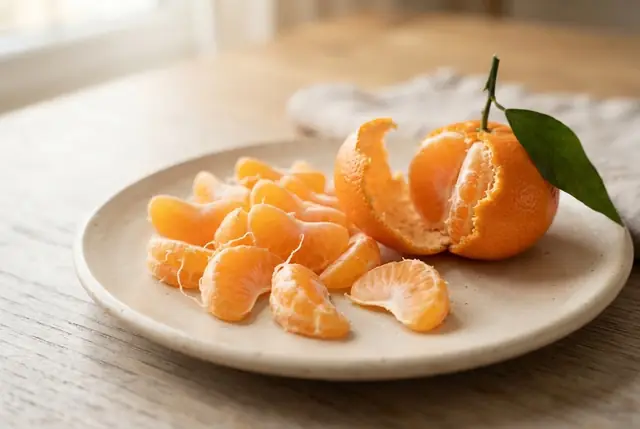
| Mandarins | Juicy citrus acid, and a nod to Lunar New Year boards. |
| Riesling, a crisp lager or jasmine tea | Off-dry wine and cold beer both handle sweet and salty. |
Skip it with: fig jam and other very sweet spreads. Lap cheong is already sweet, and stacking sugar on sugar makes it taste like candy.
How to prep it for the board
- Cook it. Steam whole links for about 15 minutes, or slice on the bias and pan-fry for 2 to 3 minutes until the edges caramelize.
- Slice on a sharp diagonal about a quarter inch thick for long, elegant ovals.
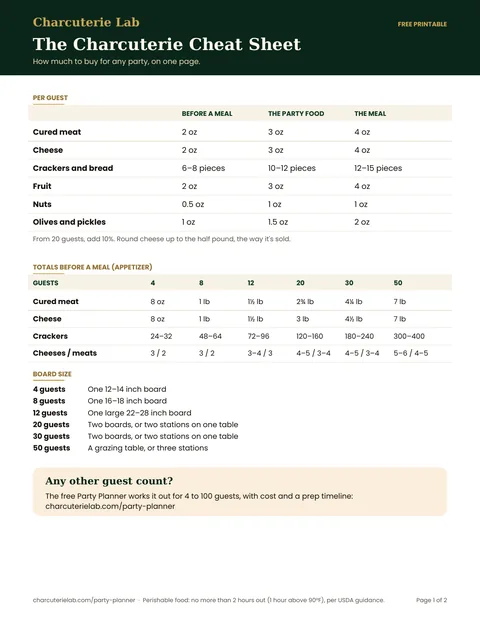
- Serve about 1 oz per person, roughly half a link.
- Place it warm on a small plate at the front of the board, with toothpicks.
- Blot it on a paper towel after frying so the fat doesn't spread to the crackers.
- Fix: if it cooled and firmed up, 20 seconds in a hot pan brings it back.
What to buy
| Product | Where | Notes |
|---|---|---|
| Kam Yen Jan Chinese Sausage | Costco, Asian markets | The most common brand. Often sold as a two-pack at Costco. |
| Wing Wing Chinese Sausage | Asian markets | A popular alternative with a slightly leaner mix. |
| Koon Chun Chinese Sausage | Asian markets | Another widely available brand. |
| Chicken or duck liver lap cheong | Asian markets | Richer, darker versions for the adventurous. |
| Rice crackers | Any grocery store | The natural base. See its own page. |
Label check: pork, pork fat, sugar and soy sauce near the top of the ingredient list. Look for rose wine or "mei kuei lu" for the classic flavor.
Skip: serving it raw. It's cured but not ready-to-eat like salami.
Quick FAQ
Can you eat lap cheong without cooking it?
No. It's cured and dried but meant to be cooked. Steam it for about 15 minutes or slice and pan-fry it before serving.
Why is it sweet?
The recipe uses sugar, soy sauce and usually rose wine. The sugar caramelizes when you cook it.
Where do I buy it?
Asian markets like H Mart and 99 Ranch, and Costco often sells Kam Yen Jan in a two-pack. It keeps for weeks unopened.
Is it gluten-free?
Usually not. Most brands use soy sauce made with wheat. Check the label.
What's the difference between lap cheong and pepperoni?
Both are cured, but lap cheong is sweet and is cooked before eating. Pepperoni is spicy and ready to eat.