The short version
Salt-cured sturgeon roe, served very cold, in a small quantity, with almost nothing done to it. It is the most expensive thing that will ever go on your board and the easiest to ruin: a metal spoon, a warm room or a strong ingredient beside it will all undo it. If the budget will not stretch, salmon or trout roe delivers most of the visual and textural effect for a tenth of the price.
What it is
Roe from sturgeon, screened, lightly salted and tinned. Beluga, ossetra and sevruga are the classic species; almost everything sold today is farmed, which is both legal and, increasingly, very good. Grain size, colour and firmness vary by species and grade.
- Taste
- clean salinity, butter, hazelnut, a long mineral finish
- Texture
- firm beads that pop, then dissolve
- Look
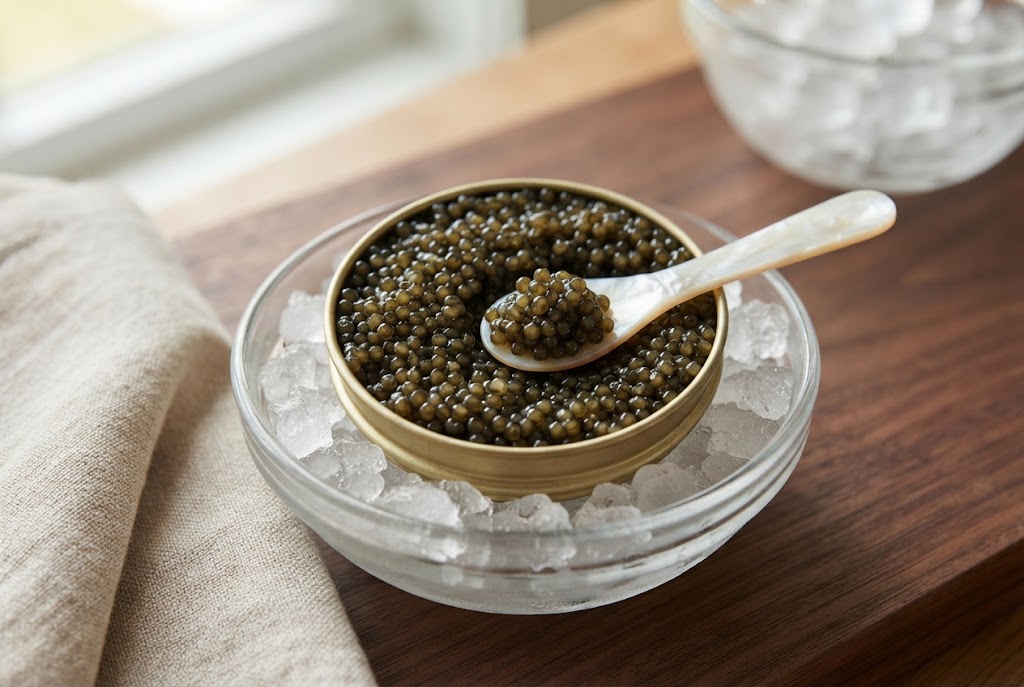
- glossy grey to olive-black spheres, uniform
The mechanism is a burst of concentrated marine salt. Each egg is a sealed membrane holding fat and salt, so nothing is released until it breaks against the palate. That delay is why caviar tastes like an event rather than a seasoning, and why it must never be spread or crushed — crushing releases everything at once and it just tastes salty.
What it pairs with — and why
| Pair it with | Why it works |
|---|---|
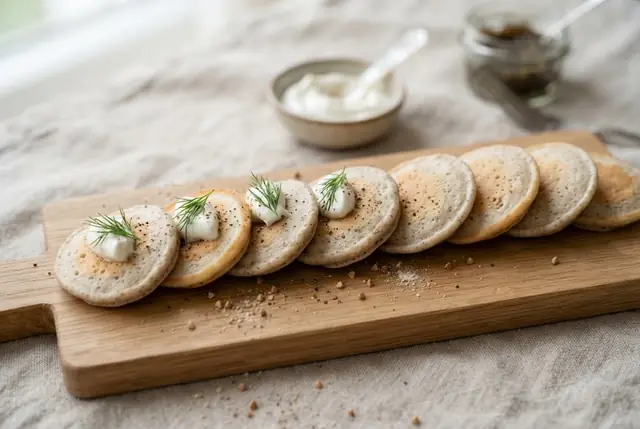
| Blini | The canonical base. Warm, soft, faintly yeasty, and structurally sound under a spoonful. |
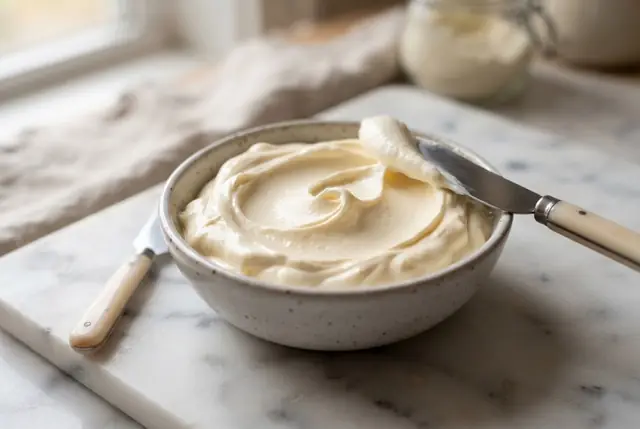
| Crème fraîche or mascarpone | Cool acid and fat. It buffers the salt and makes a small portion feel generous. |
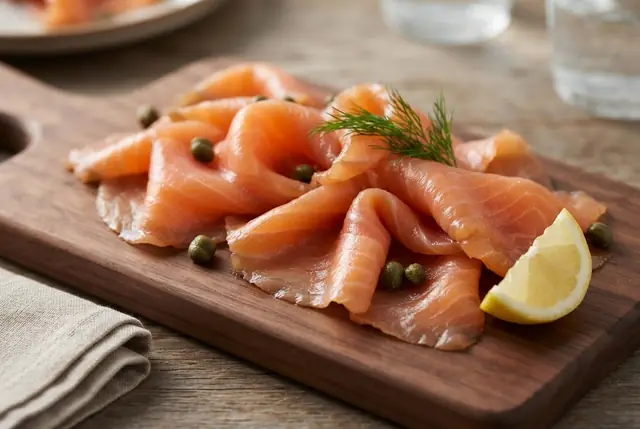
| Smoked salmon | Two cured fish, one smoked and one salted. A luxury board can hold both. |
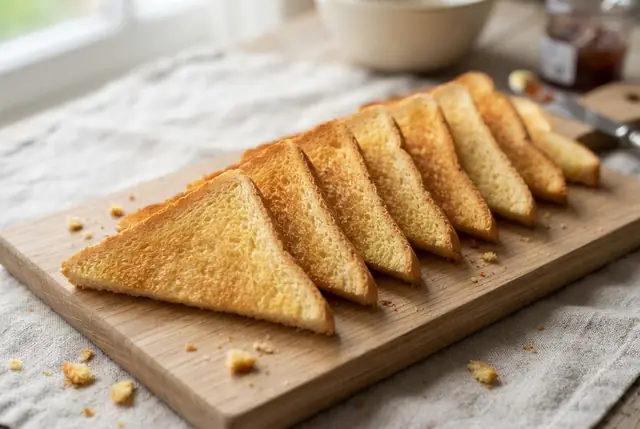
| Brioche toast points | Butter and a little sweetness. The classier alternative to a cracker. |
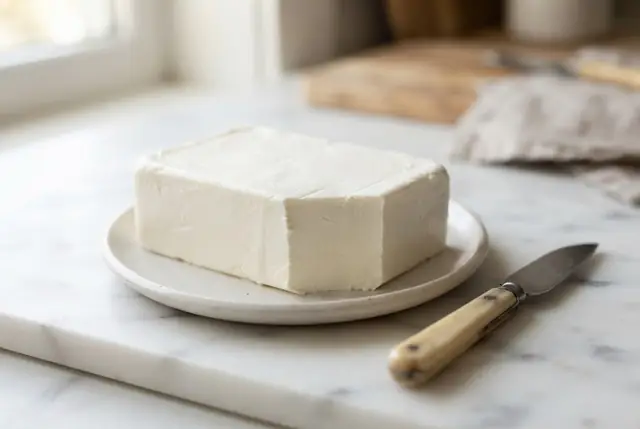
| Cream cheese | The bagel-board version. Less traditional, entirely reasonable. |
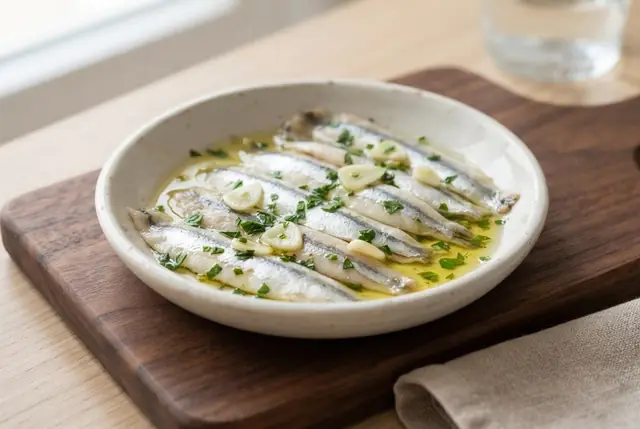
| Boquerones | If you are building a seafood board, the vinegar-cured anchovy is the low-cost partner that makes the caviar look deliberate. |
Skip it with: anything strong. Cheese, cured meat, pickles and chili all obliterate it. Caviar wants an almost empty corner of the board.
How to prep it for the board
- Keep it cold until the last moment. Nest the tin in crushed ice.
- Use a mother-of-pearl, bone or plastic spoon. Metal makes it taste metallic.
- Never stir or spread it. Lift, place, stop.
- Give it its own space at one end of the board.
- Serve 0.5 oz per person and open the tin at the table.
- Put the accompaniments beside it, not on it — blini, crème fraîche, chives.
- Fix: tasting flat? It is too cold or too warm. Straight from the freezer it is mute; above about 10C the fat goes greasy. Ice, not the freezer.
What to buy
| Product | Where | Notes |
|---|---|---|
| Farmed ossetra | Specialty fishmongers, online | The usual entry point. Nutty and firm. |
| Kaluga hybrid | Specialty, online | Large grain, close to beluga in style, considerably cheaper. |
| Farmed sevruga | Specialty | Smaller grain, more intense. Good value. |
| Salmon or trout roe (ikura) | Any good fishmonger, Japanese and Russian grocers | Large orange beads, bright and briny. A tenth of the price and excellent on a board. |
| Lumpfish or capelin roe | Supermarkets | Dyed and much saltier. Use it for colour, not for flavour. |
Label check: malossol means lightly salted. A packing date should be on the tin, and the roe should be glossy rather than dull.
Skip: wild-caught beluga, which is protected and largely illegal to import. Farmed hybrids are legal, ethical and good.
Quick FAQ
What is the difference between caviar and roe?
Strictly, caviar is salt-cured sturgeon roe. Salmon, trout and lumpfish roe are roe, and are a tenth of the price.
Why should you not use a metal spoon?
Metal reacts with the roe and adds a faint metallic taste. Mother-of-pearl, bone or plastic does not.
What does malossol mean?
Lightly salted, in Russian. It is the standard for good caviar — less salt, shorter shelf life, better flavour.
What is a good caviar to start with?
Farmed ossetra is the usual entry point. For a board on a budget, trout or salmon roe delivers most of the effect for a fraction of the cost.
How much per person?
Half an ounce is generous. An ounce shared between two people is a real serving.