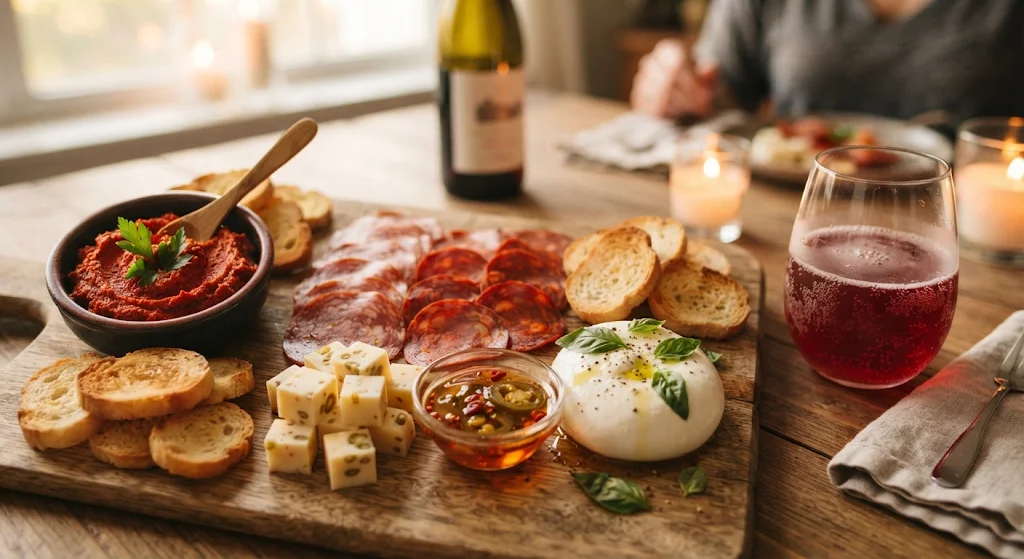
Quick Answer: Alcohol makes chili heat feel stronger. Capsaicin sets off a heat receptor in your mouth, and alcohol makes that receptor easier to trigger. So a 15% red with nduja burns more, not less. Pour lower-alcohol, fruity or slightly sweet drinks, and put creamy cheese, honey and fruit next to spicy meats to cool them down.
Love salami? Salami Tasting Party Kit $4 · printable PDF
The science, in three parts
1. Chili heat is a pain signal, not a taste
Capsaicin, the compound in chili peppers, doesn't hit your taste buds at all. It switches on TRPV1, a receptor on nerve endings whose real job is to warn you about burning heat. Normally TRPV1 fires at around 42°C (108°F). Capsaicin tricks it into firing at body temperature, so your brain reports "hot" even though nothing is.
That's why spicy salami, nduja and hot honey feel warm, and why the feeling builds with each bite.
2. Alcohol lowers the alarm threshold
In 2002, researchers publishing in Nature Neuroscience found that ethanol does two things to TRPV1. It strengthens the receptor's response to capsaicin, and it lowers its heat threshold from about 42°C to about 34°C, near the temperature inside your mouth.
In practice, a sip of high-alcohol wine or spirits makes the same bite of 'nduja feel hotter. The higher the alcohol, the bigger the effect. That's the reason a big Zinfandel or Shiraz can taste harsh and "hot" next to spicy meat, while a light, chilled wine doesn't.
3. Protein and sugar calm it down
Water spreads capsaicin around but doesn't remove it. In a 2019 Penn State study, people rated the burn from a spicy drink after rinsing with different beverages. Whole milk and skim milk reduced the burn the most, along with a sweet fruit drink. Seltzer and non-alcoholic beer helped less.
Fat isn't the main reason milk works: skim did about as well as whole. Later Penn State work found that milk proteins, especially casein, bind capsaicin so less of it reaches the receptor. Sugar helps too, as an older 1990 study also found.
On a board, the cooling crew is dairy and sweetness: creamy fresh cheese, honey, jam and fruit.
What to pour with spicy charcuterie
| Spicy bite | Best drinks | Why it works |
|---|---|---|
| Nduja | Lambrusco, off-dry Riesling | Low alcohol, fruit and a little sugar |
| Hot soppressata | Beaujolais, Chianti | Light, juicy reds, served cool |
| Spanish chorizo | Dry rose, Garnacha, cava | Fruity and fresh, moderate alcohol |
| Pepperoni | Lager, Extra Dry Prosecco | Cold, crisp, a touch of sweetness |
| Pepper jack | Off-dry Riesling, wheat beer | Sweetness and low alcohol cool the jalapeno |
| Pickled jalapenos | Sparkling cider | Sweet fruit against acid and heat |
| Harissa or hot honey | Rose, Gewurztraminer | Aromatic and fruity, not heavy |
Skip with the hottest meats: high-alcohol reds (14.5% and up), oaky Chardonnay, and spirits served neat. Save the bourbon for aged cheddar.
No alcohol? A sweet-tart drink, like sparkling cider or a fruit spritzer, follows the same logic. See our non-alcoholic pairings.
How to build a spicy corner on a board
- Put a cooling partner right next to each spicy item. Burrata or ricotta beside the nduja, cream cheese beside the pepper jelly, whipped feta beside the chorizo.
- Add sweet. Honey, fig jam, pears and grapes calm heat and contrast salt. Hot honey is the shortcut: sweet and spicy in one drizzle.
- Keep the heat to one area. Mild-loving guests can skip it, and spice-lovers know where to go.
- Label the heat. A small card ("spicy!") on nduja or hot soppressata saves surprises.
- Serve wine cool. Even reds for a spicy board taste better slightly chilled, around 55 to 60°F.
Try it in two minutes
Taste a small piece of spicy salami, then take a sip of a strong red or a little spirit. Notice the burn. Wait, drink some water, and try the salami again with a spoon of ricotta or a sip of milk. The difference is the science above, in your mouth.
Sources
- Trevisani et al., "Ethanol elicits and potentiates nociceptor responses via the vanilloid receptor-1," Nature Neuroscience (2002)
- Blednov & Harris, on TRPV1 and ethanol, PMC (2009)
- Nolden, Lenart & Hayes, "Putting out the fire," Physiology & Behavior (2019), PMC
- Penn State: The effect of dairy proteins on the oral burn of capsaicin (2023)
FAQ
Why does alcohol make spicy food taste hotter?
Chili heat comes from capsaicin, which switches on a heat and pain receptor in your mouth called TRPV1. A 2002 study in Nature Neuroscience found ethanol makes that receptor easier to trigger, lowering its heat threshold from about 42°C to about 34°C, close to body temperature. So alcohol adds to the burn instead of washing it away.
What wine goes with spicy salami?
Lower-alcohol wines with some fruit or a touch of sweetness: off-dry Riesling, Lambrusco, Beaujolais, dry rose, or Extra Dry Prosecco. Avoid big, high-alcohol reds like Zinfandel or Shiraz with very hot meat such as nduja.
What helps when spicy food is too hot?
Milk and other dairy. In a 2019 Penn State study, whole and skim milk cut the burn the most of the drinks tested, and a sweet drink also helped. Milk proteins such as casein bind capsaicin. On a board, creamy fresh cheese, honey and fruit play the same role.
Does beer help with spicy food?
Not much. In the Penn State study, non-alcoholic beer and seltzer did less than milk or a sweet drink, and regular beer adds alcohol, which can increase the burn. A cold, low-alcohol lager is still a fine match for mildly spicy meats.
What cheese goes with spicy salami?
Creamy, mild cheeses that cool the heat: burrata, fresh mozzarella, ricotta, whipped feta, cream cheese and young Gouda or Havarti. Sweet partners like honey, fig jam and pear also soften the burn.