The short version
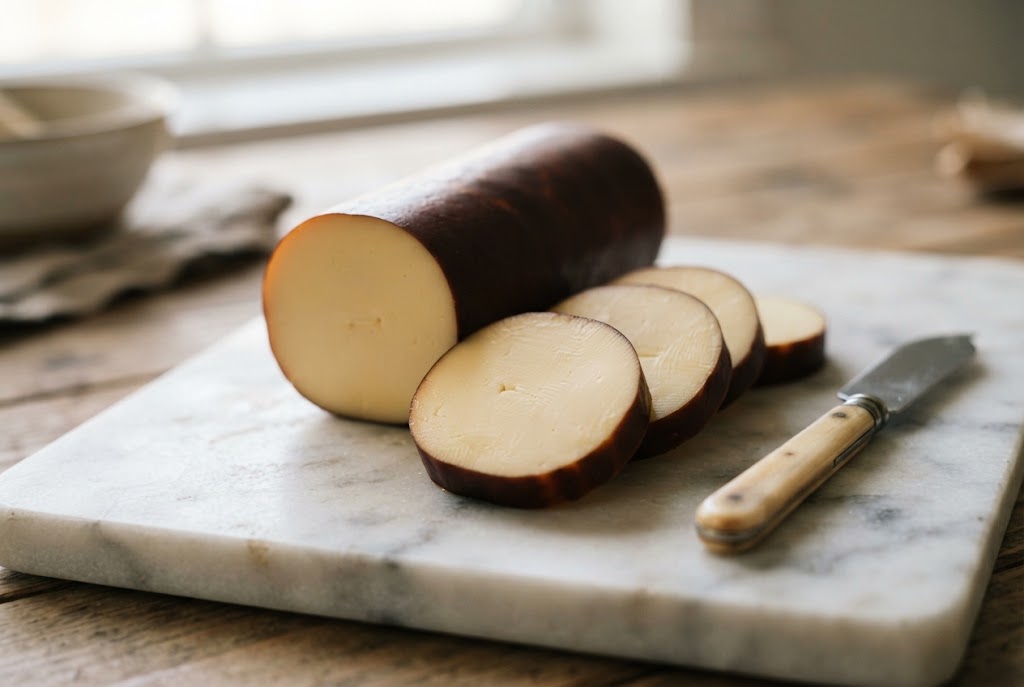
Young gouda with a smoky flavor and a brown edge. It's on more American charcuterie boards than any other flavored cheese, and most of what's sold has been dipped in smoke flavoring rather than actually smoked. The real version is worth finding.
What it is
Traditional smoked gouda is cold-smoked over hickory or beech after aging, which gives the rind a natural brown color and drives smoke a few millimeters into the paste. Most supermarket versions are instead coated with a brown edible casing containing liquid smoke — faster, cheaper and uniform.
- Taste
- smoky, mildly sweet, buttery, gentle
- Texture
- semi-firm, supple, easy to slice
- Look
- pale yellow paste with a distinct brown outer edge
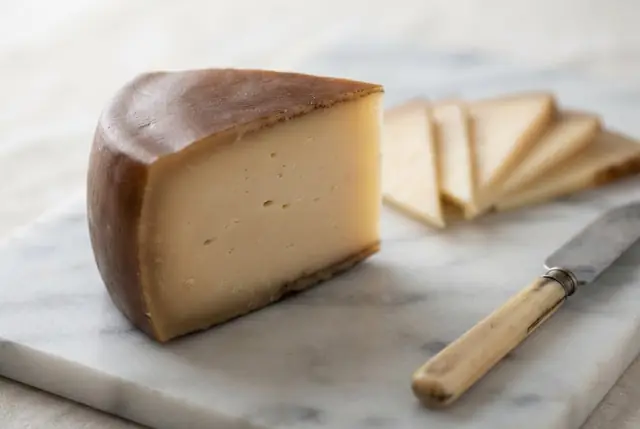
Surface treatment versus real smoke is the mechanism, and you can see it. Real cold-smoking produces a gradient — the color and flavor fade gradually inward. A dipped cheese has a sharp, even brown line where the casing sits, with pale paste right up against it. Cut a wedge and look at the edge.
What it pairs with — and why
| Pair it with | Why it works |
|---|---|
| Apple and pear | Fresh acid cutting smoke and fat. The most reliable pairing here. |
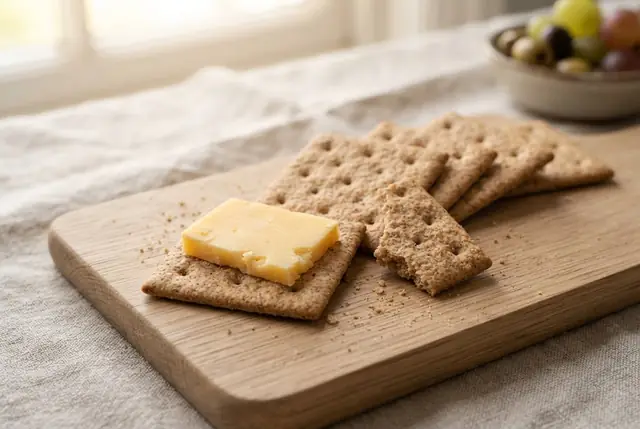
| Whole wheat crackers | Toasted grain against smoke. Same register. |
| Grainy mustard | Sharpness against a sweet smoky cheese. |
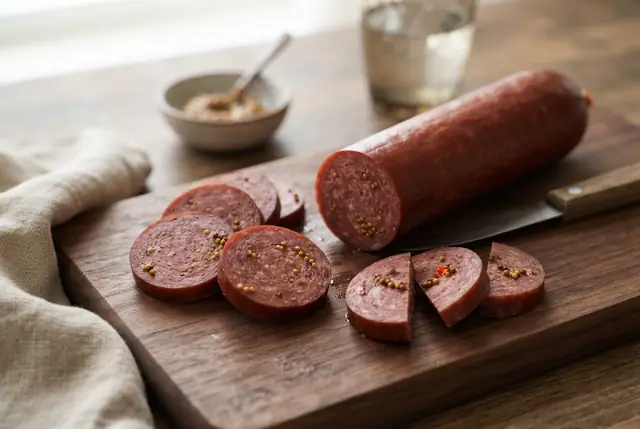
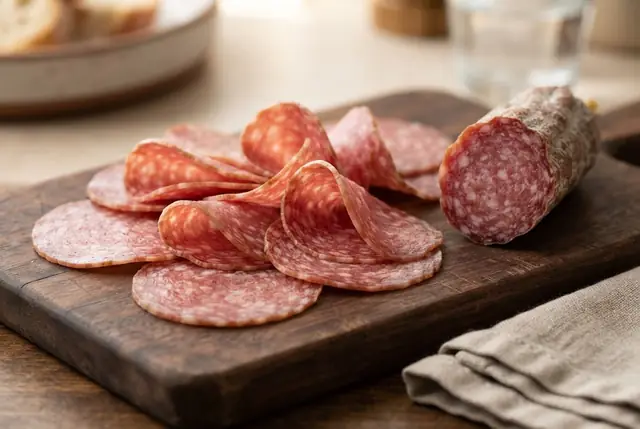
| Summer sausage and salami | Smoke and cure together — a casual board classic. |
| Dried apricots and cherries | Fruit sugar against smoke. |
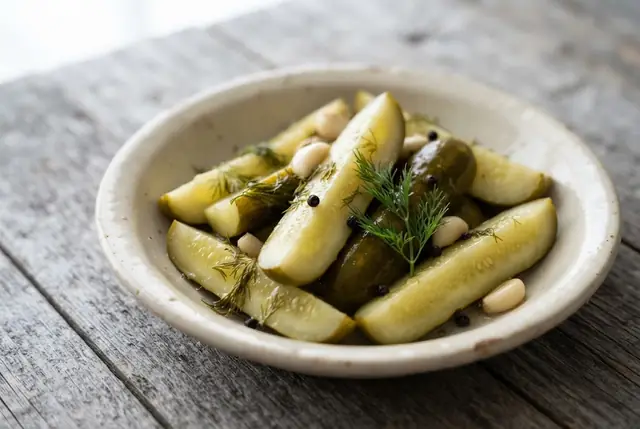
| Pickles and pickled onion | Acid resetting the palate. |
| Amber ale, bock, bourbon | Malt or oak matching the smoke. |
Skip it with: Idiazábal or any other smoked item — one smoked cheese per board. And skip it beside delicate fresh cheeses, which pick up the smoke by proximity.
How to prep it for the board
- Check the edge before you buy. A gradual brown gradient means real smoke; a sharp uniform line means a coating.
- Cut into cubes or thin slices. It's supple and slices cleanly.
- Temper 30 minutes.
- Serve 1–2 oz per person. It's mild and people eat plenty of it.
- Put it at one end of the board. Smoke transfers to whatever sits beside it.
- Trim the brown casing if it's the artificial kind — it's edible but waxy.
- Fix: if it tastes acrid rather than smoky, that's liquid smoke and there's nothing to be done. Buy a naturally smoked cheese next time.
What to buy
| Product | Where | Notes |
|---|---|---|
| Naturally smoked gouda | Cheese counters, Whole Foods | Ask specifically. Look for a gradient rather than a hard brown line. |
| Beemster Smoked | Whole Foods, cheese counters | Dutch, naturally smoked, genuinely good. |
| Supermarket smoked gouda | Any grocery cheese case | Usually coated. Fine for a casual board; don't expect much. |
| Idiazábal | Cheese counters | Naturally smoked Basque sheep cheese. Far better — see its own page. |
| Smoked cheddar | Grocery cheese case | Same category, sharper base. Same coating question applies. |
| Aged gouda | Whole Foods, Costco | The unsmoked version, and a much more interesting cheese — see its own page. |
Label check: "naturally smoked" or "smoked over [wood]" versus "smoke flavor" or "natural smoke flavor" in the ingredients. And look at the edge.
Skip: smoked gouda on a board that's meant to showcase cheese. It's a crowd-pleaser rather than a cheese-lover's choice, and that's fine as long as it's a deliberate call.
Quick FAQ
Is most smoked gouda actually smoked?
No. Most supermarket versions are coated with an edible casing containing liquid smoke rather than cold-smoked over wood.
How can I tell the difference?
Look at the cut edge. Real smoke fades gradually inward; a coating leaves a sharp, uniform brown line.
Is the brown rind edible?
The artificial casing is edible but waxy. Most people trim it.
What's a better smoked cheese?
Idiazábal — naturally smoked Basque sheep's milk, and a genuinely fine cheese.
How much per person?
1–2 oz. It's mild and popular.