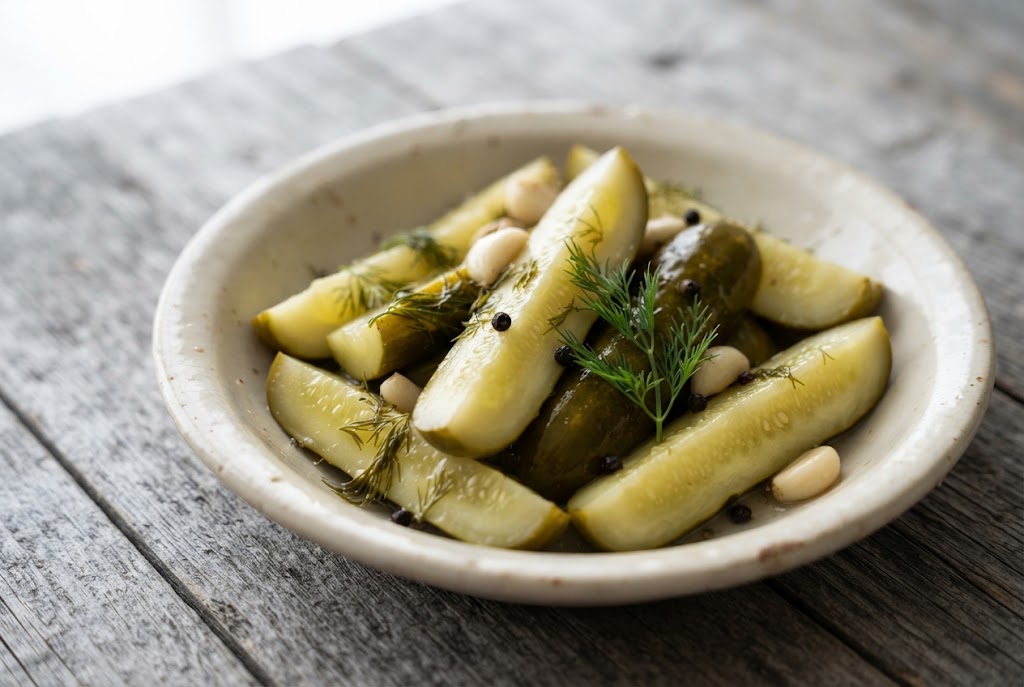
The short version
A dollar's worth of dill pickle does more for a rich board than most things costing ten times as much. Cut them into spears or coins, put them near the cheddar and the smoked meat, and buy them from the refrigerated section — shelf- stable pickles are soft, and softness defeats the purpose.
What it is
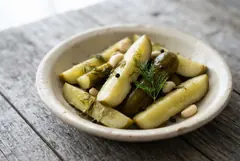
Cucumbers fermented in salt brine or quick-pickled in vinegar with dill, garlic and mustard seed. Fermented (barrel or kosher dill) are cloudy, sour and complex; fresh-pack are vinegar-pickled, sharper and simpler. Both are sold whole, in spears, or as coins.
- Taste
- sour, salty, garlicky, dill-forward
- Texture
- crunchy — the single most important quality
- Look
- deep green, sometimes cloudy in the jar
The mechanism is volume of acid. Where a cornichon delivers a small precise hit, a dill pickle spear delivers a large one — enough to reset the palate after smoked meat and aged cheddar, which are heavier and saltier than what a French board serves. It's the right pickle for a heavier board.
What it pairs with — and why
| Pair it with | Why it works |
|---|---|
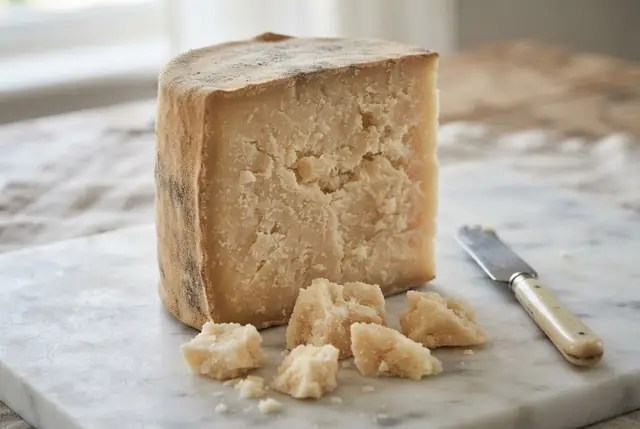
| Aged cheddar | Cheese and pickle. Sharp acid against sharp cheese, with the crunch breaking up the crumble. |
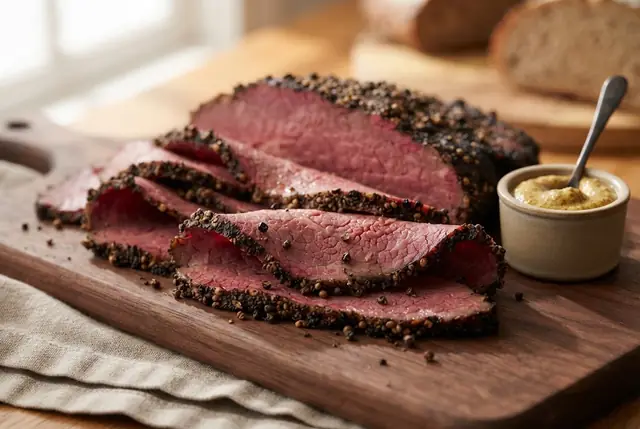
| Pastrami and smoked meats | The deli plate. Fat, smoke and salt, cut by sour crunch. Nothing else does this job. |
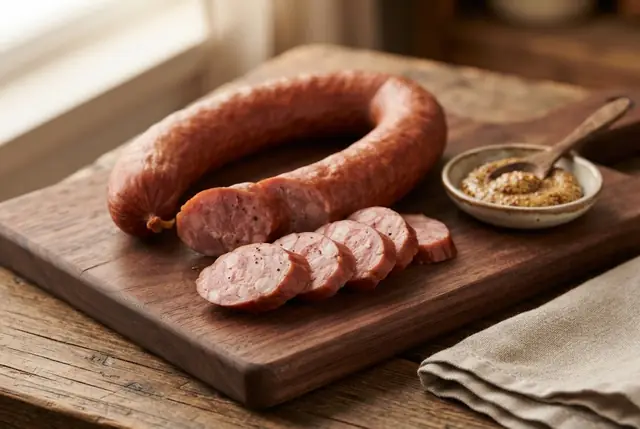
| Kielbasa and cooked sausage | Fatty smoked sausage needs acid; this is the traditional pairing. |
| Smoked gouda | Smoke against sour, with both being assertive enough to hold. |
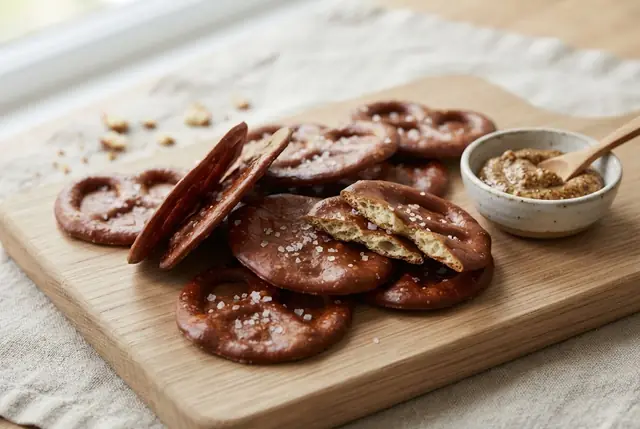
| Pretzel crisps and mustard | The beer board in four ingredients. |
| Pimento cheese | Rich and creamy against sharp and cold. A Southern combination. |
Skip it with: delicate cheeses, cured Italian meats, and anything subtle. Dill and garlic travel across a board.
How to prep it for the board
- Cut whole pickles into spears or coins. A whole pickle on a board is unmanageable.
- Blot the cut pieces. Pickle brine spreads further than any other liquid on a board.
- Serve on a small plate or in a bowl, not directly on wood — the brine stains and soaks crackers.
- Buy refrigerated. Shelf-stable pickles have been heat-processed and are soft.
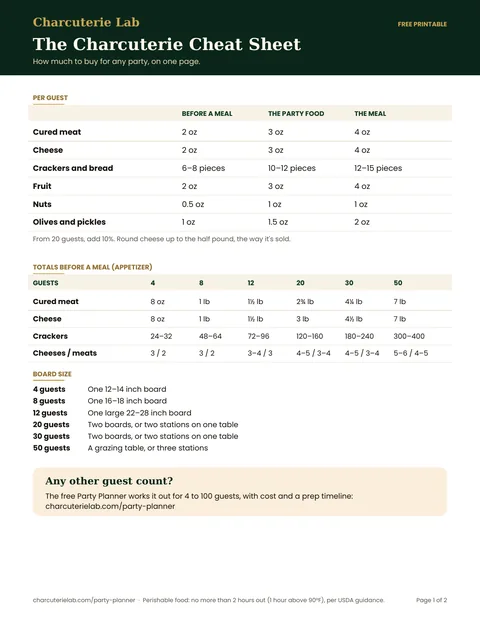
- Serve 1 oz per person.
- Serve cold. Unlike olives, pickles are better straight from the fridge.
- Fix: too soft? Nothing fixes a soft pickle. Buy a better jar next time.
What to buy
| Product | Where | Notes |
|---|---|---|
| Refrigerated kosher dill spears | Grocery, refrigerated section | The default. Crunchy and reliable. |
| Grillo's Pickles | Grocery, refrigerated | Fresh-pack, very crunchy, widely liked. |
| Bubbies kosher dills | Grocery, refrigerated | Naturally fermented, cloudy brine, sour and complex. |
| Half-sour pickles | Delis, refrigerated | Lightly fermented, still bright green and very crunchy. Excellent on a board. |
| Claussen | Grocery, refrigerated | The supermarket standard. Consistently crunchy. |
Label check: refrigerated over shelf-stable, every time. Naturally fermented versions will say so and taste more complex.
Skip: shelf-stable jars in the condiment aisle, and anything labelled "sweet" if you want acid.
Ranked picks: our top-rated pickles for a board are Mt. Olive Kosher Baby Dills (4.5 out of 5), and the best refrigerated pick is Claussen Kosher Dill Spears. See the full ranking of the best pickles.
Quick FAQ
What pickles go on a charcuterie board?
Dill pickle spears or coins for a heavier American or deli board; cornichons for a French board with pâté.
Why refrigerated instead of shelf-stable?
Shelf-stable pickles are heat-processed, which softens them. Crunch is what a pickle is doing on a board.
What's a half-sour pickle?
A lightly fermented pickle — still bright green, very crunchy, less sour than a full dill. Excellent on a board.
What cheese goes with dill pickles?
Aged cheddar above all, plus smoked gouda and pimento cheese.
Should pickles be served cold?
Yes. Unlike olives, they're better straight from the fridge.