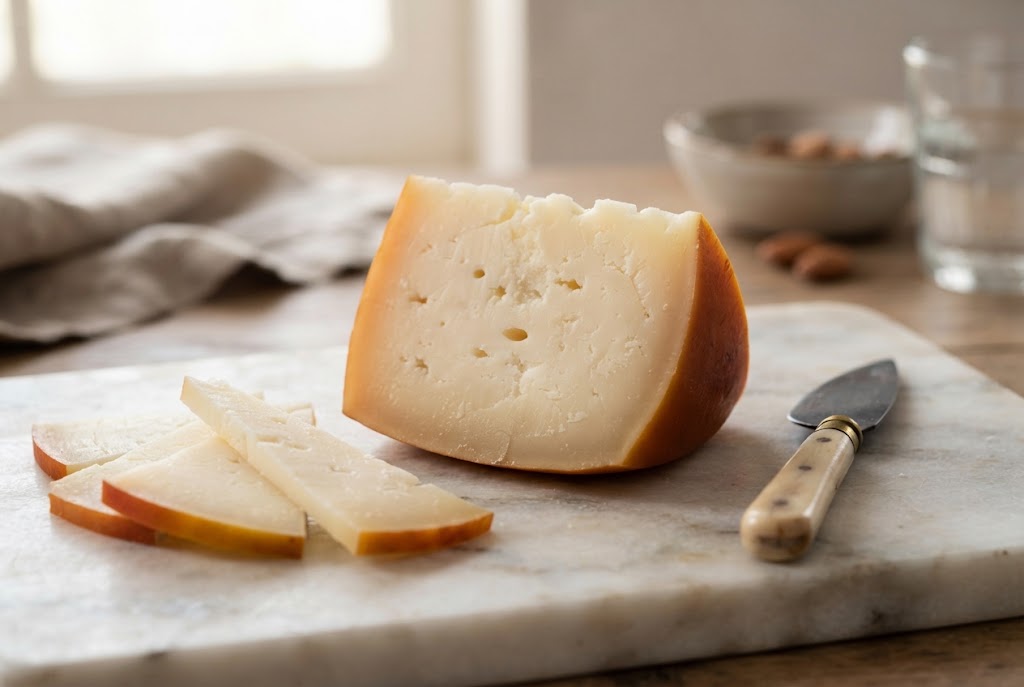
The short version
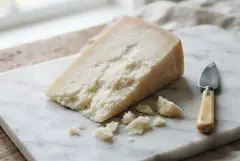
A Tuscan sheep's-milk cheese aged twenty days to six months. Mild, buttery and faintly sweet — genuinely nothing like the hard, salty Pecorino Romano most Americans know. If you decided you don't like pecorino, you probably met the wrong one.
What it is
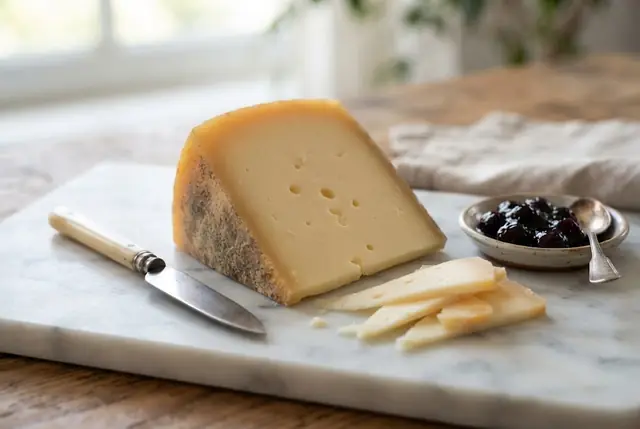
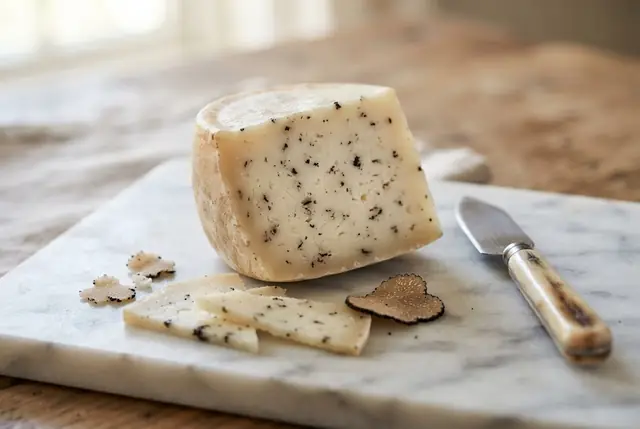
Pecorino Toscano DOP is made across Tuscany from sheep's milk, in two grades: fresco (aged 20 days minimum, soft and mild) and stagionato (aged four months or more, firmer and nuttier). Unlike Romano, it isn't heavily dry-salted — the salting is light and the aging short.
- Taste
- buttery, nutty, faintly sweet, mild sheep tang
- Texture
- semi-soft and supple when young; firm and slightly crumbly aged
- Look
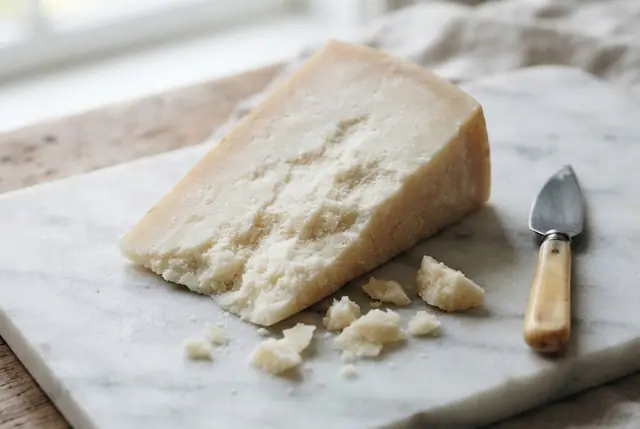
- ivory to pale straw paste, rind ranging from pale yellow to deep red or black
Salt handling is the mechanism, and it's the entire difference from Romano. Both are sheep's-milk cheeses from Italy; Romano is dry-salted repeatedly over weeks, Toscano is brined briefly. Same milk, opposite results — one is a seasoning, the other is a table cheese.
What it pairs with — and why
| Pair it with | Why it works |
|---|---|
| Fresh pear and apple | Sweet water against buttery sheep's milk. The Tuscan default. |
| Honey — especially chestnut | The traditional Italian sheep-cheese pairing. |
| Fava beans, in spring | Fresh, green and sweet against mild salt. |
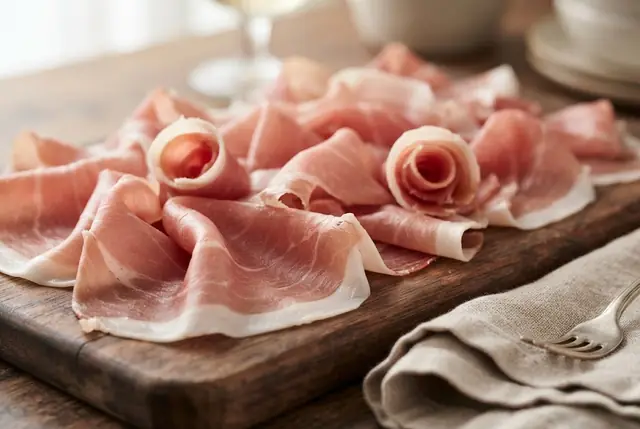
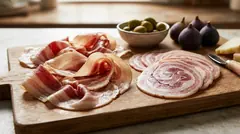
| Prosciutto and finocchiona | Tuscan cured pork with Tuscan cheese. |
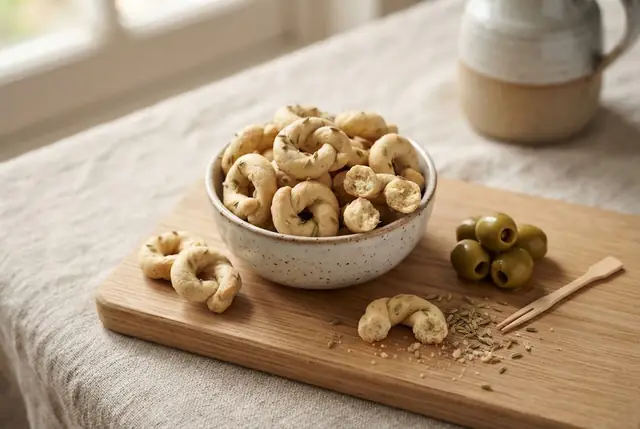
| Taralli and grissini | Plain Italian bread; nothing complicated needed. |
| Walnuts | Tannin and oil against a buttery paste. |
| Chianti, Vernaccia, Sangiovese | Tuscan wines, medium-bodied. |
Skip it with: delicate fresh cheeses in the same corner, and Pecorino Romano on the same board — the comparison makes Toscano taste bland even though it isn't.
How to prep it for the board
- Buy stagionato for a board. The young fresco is pleasant but soft and unremarkable; the aged version has the nuttiness worth serving.
- Cut into thin wedges with the rind on the outer edge.
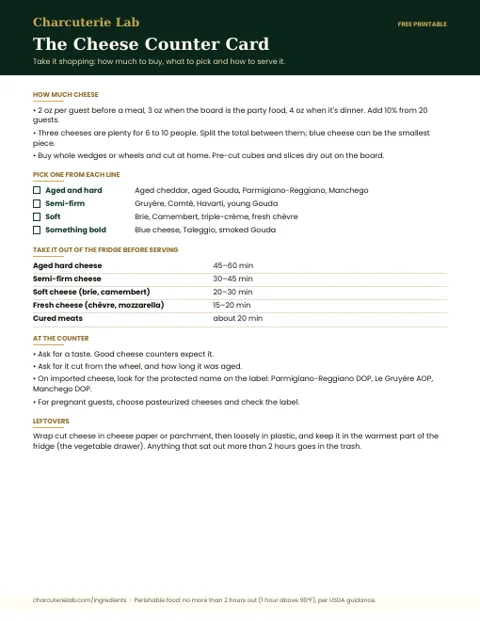
- Temper 30 minutes.
- Serve 1–2 oz per person.
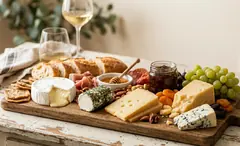
- Put honey and pear beside it. This cheese is mild enough that it wants a partner rather than working alone.
- Trim the rind — some are rubbed with tomato or ash and none are edible.
- Fix: flat and rubbery? That's fresco, and it's meant to be. Serve it with something sweet or buy the aged grade.
What to buy
| Product | Where | Notes |
|---|---|---|
| Pecorino Toscano DOP, stagionato | Cheese counters, Whole Foods, Italian delis | The aged grade. The one to buy for a board. |
| Pecorino Toscano DOP, fresco | Cheese counters | Young and soft. Pleasant, unremarkable. |
| Pecorino di Pienza | Italian delis, specialty | From the town of Pienza. Often rubbed with tomato or ash. Excellent. |
| Pecorino Sardo | Cheese counters | The Sardinian sheep cheese. Between Toscano and Romano in intensity. |
| Pecorino Romano | Most grocery | The hard salty one — a completely different cheese. See its own page. |
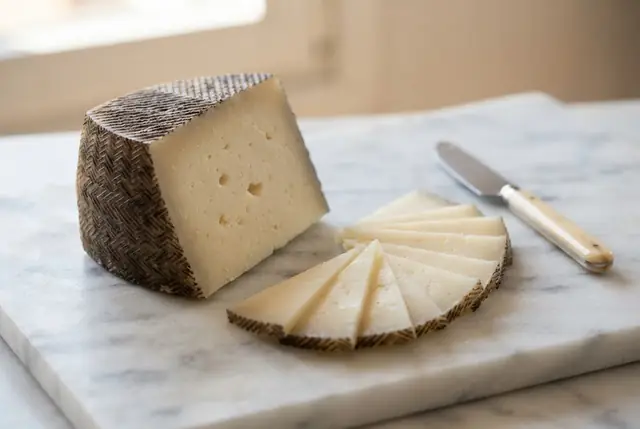
| Manchego | Most grocery | The Spanish sheep cheese, similar approachability. |
Label check: the DOP mark and the grade. Stagionato means aged; fresco means young. If it doesn't say, assume young.
Skip: buying Pecorino Toscano expecting Pecorino Romano, or the reverse. They're used for entirely different things.
Quick FAQ
Is Pecorino Toscano the same as Pecorino Romano?
No. Same milk, completely different cheeses. Romano is hard, dry and very salty. Toscano is mild, buttery and much softer.
Which grade should I buy?
Stagionato — aged four months or more — for a board.
Can you eat the rind?
No. Trim it, especially on wheels rubbed with tomato or ash.
Is it a good beginner sheep cheese?
Yes, probably the best. It's approachable in a way Romano isn't.
How much per person?
1–2 oz.