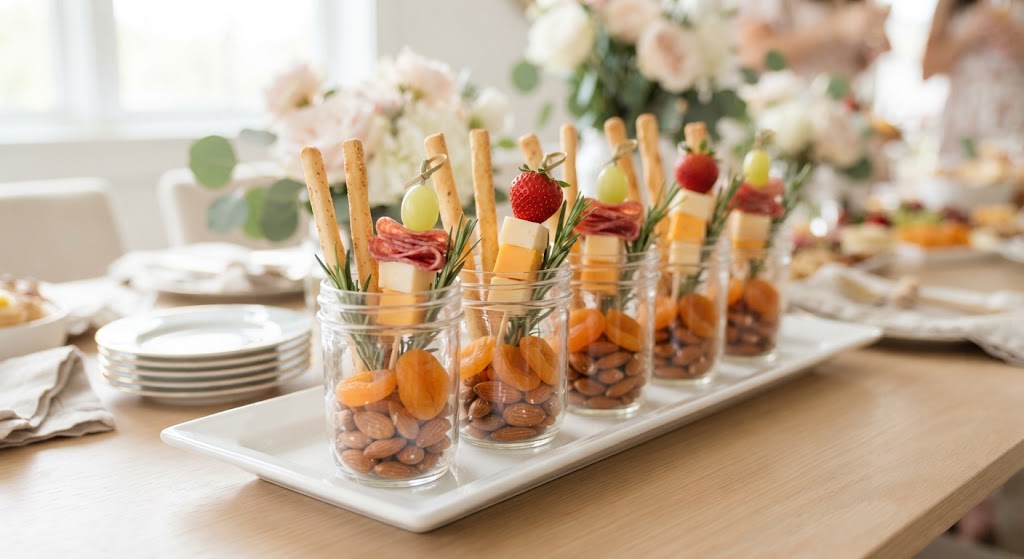
Quick Answer: Jarcuterie is charcuterie in individual jars. Use a 12 to 16 oz wide-mouth mason jar and build it in layers: nuts or dried fruit in the bottom, a 6-inch skewer of folded salami, cheese cubes and a grape, and breadsticks or crackers standing up along the side. Each jar holds about 1 oz of meat and 1 oz of cheese, so plan one jar per guest next to other food, or two per guest if the jars are the whole appetizer. Fill them the morning of and add the crackers last.
Jarcuterie solves the two problems with a big board at a standing party: nobody has to crowd around one table, and nobody's hands touch everyone else's food. A jar is also sturdier than a plastic cup, it looks lovely lined up on a tray, and with a lid and a tag it becomes a take-home favor. It's the go-to for showers, weddings, graduations, open houses and anywhere guests mingle.
If you'd rather use disposable cups, the method is the same; see our charcuterie cups guide.
What goes in a charcuterie jar
| Layer | What to use | Per jar |
|---|---|---|
| 1. Bottom | Nuts, dried apricots, a few olives in a small paper liner, or chocolate-covered almonds | About 2 tablespoons |
| 2. The skewer | Folded Genoa salami or prosciutto, 2 or 3 cheese cubes, a grape, olive or tomato | About 1 oz meat and 1 oz cheese |
| 3. Standing up | 2 breadsticks (grissini), pretzel rods or 3 or 4 crackers | Added last |
| 4. Top | A sprig of rosemary, a few berries, a small piece of chocolate | For looks |
Pick firm cheeses that hold a cube: aged cheddar, Manchego, Gouda, pepper Jack and mozzarella pearls. Soft brie squashes and smears the glass.
Jar size
| Jar | Best for |
|---|---|
| 8 oz jelly or wide-mouth jar | Kids, a lighter snack, a dessert jar |
| 12 oz wide-mouth jar | The standard adult jar, with a 6-inch skewer |
| 16 oz wide-mouth jar | A heartier jar, or when the jars are dinner |
Wide-mouth jars are easier to fill and easier to eat from. Use 6-inch bamboo skewers for 12 oz jars and 8-inch skewers for 16 oz jars.
Shopping list for 12, 24 or 50 jars
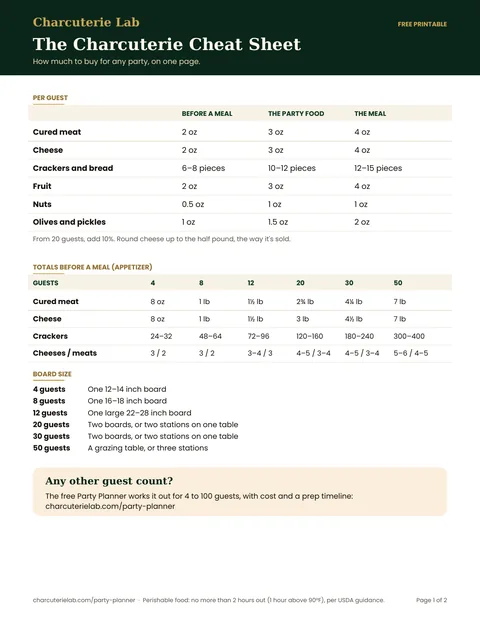
These follow the Lab standard (2 oz each of meat and cheese per guest before a meal), with one jar counted as half a serving, and 10% extra from 20 jars up.
| Item | 12 jars | 24 jars | 50 jars |
|---|---|---|---|
| Salami or other cured meat | 12 oz | 1¾ lb | 3½ lb |
| Firm cheese (2 kinds) | 12 oz | 1¾ lb | 3½ lb |
| Grapes, cherry tomatoes or olives (for skewers) | 1 lb | 2 lb | 4 lb |
| Breadsticks or pretzel rods | 24 | 48 | 100 |
| Nuts or dried fruit (bottom layer) | 1½ cups | 3 cups | 6 cups |
| Wide-mouth jars (12 oz) | 12 | 24 | 50 |
| Skewers (6 inch) | 12 | 24 | 50 |
Mason jars are usually sold by the case. If you're making 50, ask friends to save theirs, or look for bulk packs in canning season.
How to build them, step by step
- Set up an assembly line. Line the jars up on a sheet pan and work one layer at a time across all of them.
- Fill the bottoms. Add the nuts or dried fruit. If you use olives, put them in a small paper cupcake liner so the brine doesn't reach the crackers.
- Make the skewers. Thread the folded meat, the cheese cubes and a grape or tomato onto each skewer. Fold salami in quarters so it holds its shape.
- Add the skewers. Stand one in each jar, leaning against the side.
- Chill. Cover the jars with lids or plastic wrap and refrigerate until about 30 minutes before serving.
- Add crackers last. Stand the breadsticks or crackers up along the glass, away from anything wet, just before serving.
- Finish. Tuck in a rosemary sprig. For favors, add a lid, a ribbon and a tag.
6 jar ideas
- Bridal shower: white cheddar, prosciutto, green grapes, white chocolate almonds, a sprig of baby's breath on the outside of the jar (not in the food).
- Wedding cocktail hour: Manchego, chorizo, Marcona almonds and a fig on the skewer, with a tag for each table.
- Holiday: white cheddar stars, salami, cranberries and rosemary for red, green and white.
- Kids: an 8 oz jar with mild cheddar, turkey pepperoni, grapes and pretzel sticks; no hard nuts for children under 4.
- Game day: pepper Jack, pepperoni, a cherry tomato and pretzel rods.
- Dessert jar: strawberries, brownie bites, marshmallows and a chocolate-dipped pretzel rod.
Make-ahead timing and food safety
- The day before: cube the cheese, fold the meat and wash and fully dry the fruit. Store them separately.
- The morning of: fill the bottoms, make the skewers and put them in the jars. Lid and refrigerate.
- Just before serving: add crackers and breadsticks.
- Once out: serve within 2 hours, or 1 hour above 90°F. For a long event, put out half the jars and refill from the fridge.
For pregnant guests, make a few jars with pasteurized cheeses and crisped (cooked) prosciutto or pepperoni; see the pregnancy-safe board guide.
What it costs
Jarcuterie costs about the same per serving as charcuterie cups in food. Jars cost more than disposable cups the first time, but you can reuse them or send them home as favors. Warehouse clubs keep the per-jar cost low; see our Costco and Sam's Club guides.
FAQ
What is jarcuterie?
Jarcuterie is charcuterie served in individual jars: a skewer of cured meat, cheese and fruit, a breadstick or crackers standing up, and nuts, olives or berries in the bottom. Each guest gets their own, so it's tidy and easy to carry around a party.
What size jar is best for jarcuterie?
A 12 to 16 oz wide-mouth mason jar fits a 6-inch skewer and breadsticks standing up. Use 8 oz jars for kids or for a lighter snack.
How much meat and cheese goes in each jar?
About 1 oz of meat and 1 oz of cheese per jar. Plan one jar per guest alongside other food, or two per guest if the jars are the whole appetizer.
How far ahead can you make jarcuterie?
Fill the jars the morning of the party, lid or cover them and refrigerate. Add crackers and breadsticks just before serving so they stay crisp, and serve within 2 hours.
How do you keep crackers crisp in jarcuterie?
Put dry items like nuts in the bottom, keep wet items like olives and berries on the skewer or in a small cup, and stand crackers and breadsticks up along the side so they don't touch anything wet. Add them last.
Get one board idea a week, plus the free charcuterie cheat sheet, when you join the Charcuterie Lab newsletter.