The short version
The loudest fruit you can put on a board. Pineapple has enough acid to cut through anything, which makes it excellent beside sharp aged cheese and cured pork — and a bad idea next to cream, where its enzymes actively break protein down and turn soft cheese slimy within the hour.
What it is
A bromeliad, not a single fruit — each "eye" is a separate flower fused into one body. Sold whole, pre-cut, or canned. Golden / MD-2 is the sweet, low-acid variety in most supermarkets; the older Smooth Cayenne is sharper.
- Taste
- very sweet, very acidic, faintly resinous
- Texture
- fibrous, extremely juicy
- Look
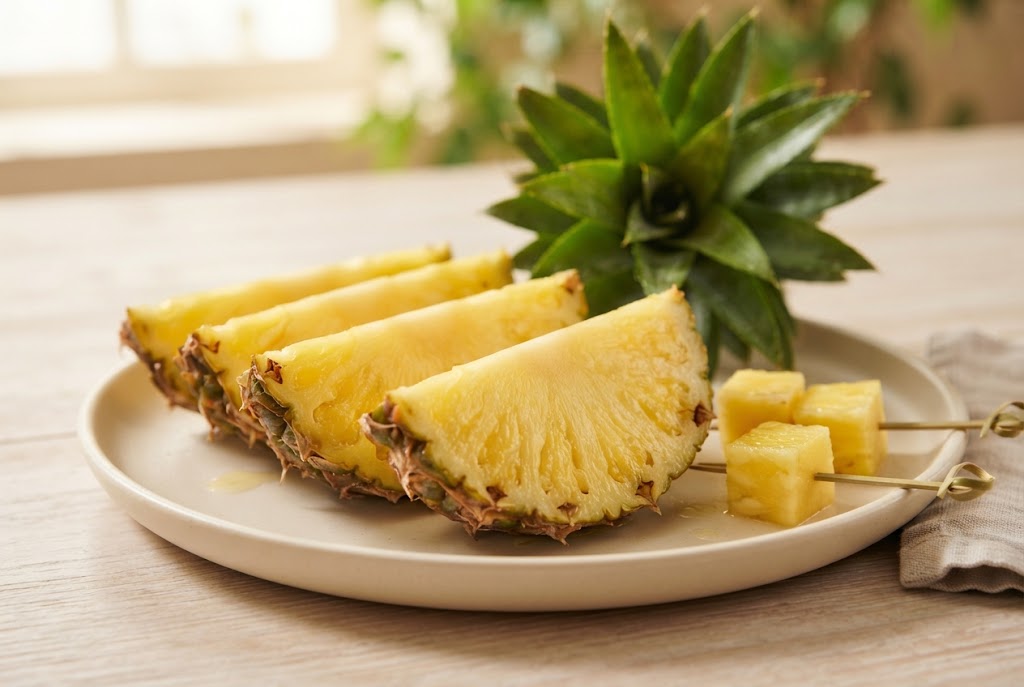
- gold wedges with a paler firm core
The mechanism is bromelain — a protease that breaks down protein. It's why fresh pineapple stings your tongue after a few pieces, why it won't set in gelatine, and why it should never sit against burrata. It's also why it cuts fatty cured pork so cleanly: it's doing chemistry, not just contrast.
What it pairs with — and why
| Pair it with | Why it works |
|---|---|
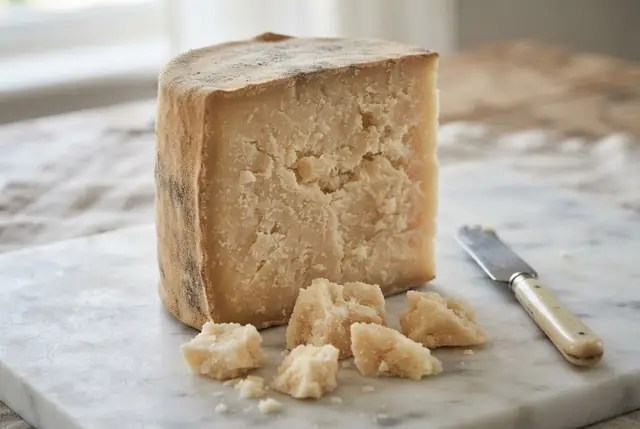
| Aged cheddar | Sharp against sharp. The cheddar's crystalline crunch survives the acid where a soft cheese wouldn't. |
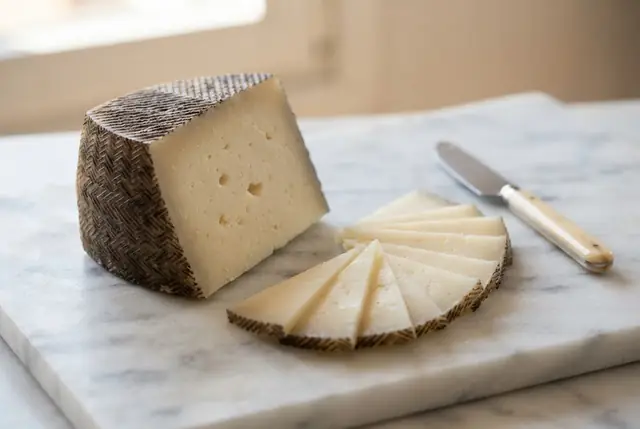
| Manchego | Sheep-milk fat and salt, cut hard by the acid. |
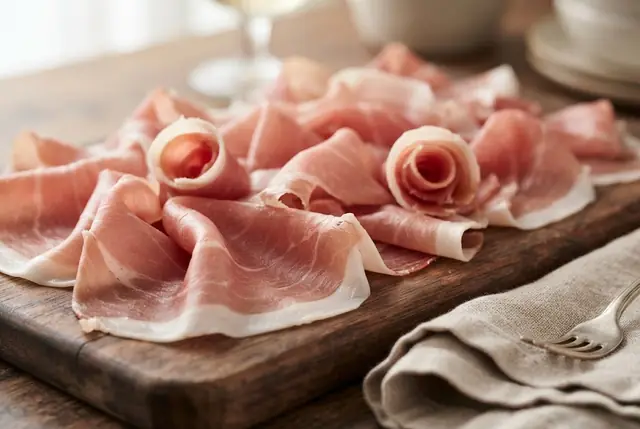
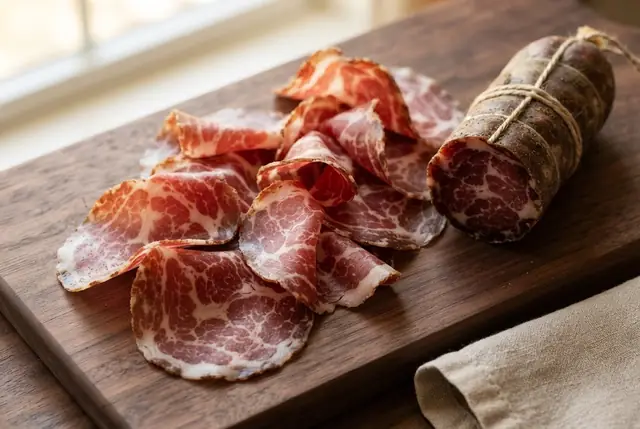
| Prosciutto and coppa | Fatty cured pork is what pineapple is best at. Pineapple and ham is a cliché because it works. |
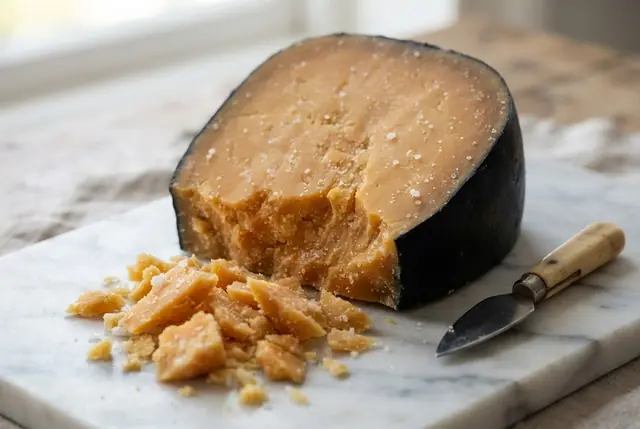
| Aged gouda | Caramel notes plus tropical sugar; the cheese is dry enough to stand up. |
| Chilli and lime | Tajín on pineapple is a legitimate board move — salt and heat against sugar. |
| Grilled, with blue cheese | Grilling deactivates the enzyme and caramelises the sugar. Then it works with soft cheese. |
Skip it with: burrata, fresh mozzarella, ricotta, and brie. The enzyme degrades them and the acid drowns them.
How to prep it for the board
- Cut top and bottom flat, stand it up, and slice the skin off in strips from top to bottom.
- Dig out the remaining eyes with the tip of a knife, in diagonal rows.
- Quarter lengthwise and cut the core out. The core is edible but woody.
- Cut small wedges, not chunks — thin triangles about an inch across. Chunks are too much acid in one bite.
- Blot well. Pineapple juice runs further than any other board fruit.
- Serve it in a small bowl or on its own plate, not touching cheese.
- Fix: underripe and mouth-burning? Grill or broil the wedges for a few minutes. Heat kills the bromelain and concentrates the sugar.
What to buy
| Product | Where | Notes |
|---|---|---|
| Whole golden pineapple | Any grocery | Cheapest and best. Buy it gold-skinned, not green. |
| Pre-cut pineapple spears | Grocery refrigerated section | Fine, and a real time-saver. Cut the spears down into wedges. |
| Grilled pineapple | Make it | Different ingredient — caramel, no sting, safe next to soft cheese. |
| Dried pineapple | Bulk bins, Trader Joe's | Chewy and intense. Buy unsweetened; the sweetened kind is candy. |
| Canned rings in juice | Any grocery | Bromelain is destroyed by canning, so these are safe near soft cheese. Blot hard. |
Label check: smell the base. A ripe pineapple smells sweet at the bottom. Pull test on the leaves is unreliable — go by colour and smell.
Skip: entirely green pineapples — they don't ripen further after picking, they just soften.
Quick FAQ
Why does pineapple hurt my tongue?
Bromelain, an enzyme that breaks down protein. Cooking or grilling destroys it.
What cheese goes with pineapple?
Aged cheddar, manchego, aged gouda — anything hard and sharp. Avoid soft fresh cheeses; the enzyme degrades them.
How do I cut pineapple for a board?
Skin it, quarter it lengthwise, cut out the woody core, then cut small thin wedges rather than chunks.
Can I use canned pineapple?
Yes, and it's safer next to soft cheese since canning destroys the enzyme. Buy it in juice, not syrup, and blot it dry.
How do I know if a pineapple is ripe?
Gold rather than green skin, heavy for its size, and a sweet smell at the base.